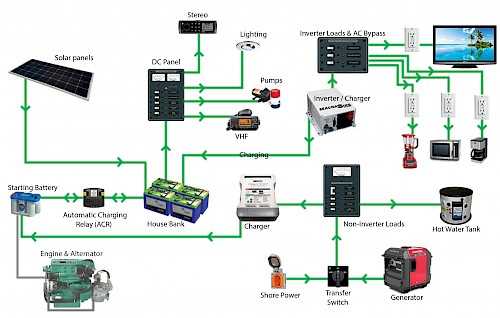
Disconnect the main battery before touching any circuits. Verify zero current with a tester to prevent accidental shocks during installation.
Identify each conductor by color: red for positive power, black for negative or ground, and blue or yellow for auxiliary circuits. Accurate identification prevents short circuits and protects onboard equipment.
Strip insulation carefully without damaging the metal core and insert each conductor fully into its terminal. Tighten screws to ensure secure connections. Loose terminals can cause flickering lights or blown fuses.
For multiple devices, use pigtail extensions and wire connectors. Wrap junctions with electrical tape to maintain insulation and prevent corrosion. This keeps circuits safe in a damp environment.
Check continuity across all circuits with a multimeter and ensure grounding leads are properly attached to the hull or frame. Reliable grounding protects equipment and prevents electrical faults.
Route all cables along the frame or bulkheads to avoid sharp bends or pinch points. Secure with clips or zip ties to prevent wear over time. Proper routing reduces risk of accidental disconnection and extends system life.
After completing connections, test all circuits individually including lights, pumps, and navigation devices. Verification ensures each system operates correctly before setting out.
Label each conductor after installation, especially if modifications are made. Clear documentation simplifies future troubleshooting and prevents misconnection.
Basic 12 Volt Electrical Connections on a Vessel
Disconnect the main battery before handling any circuits. Confirm zero current with a tester to prevent shocks and accidental shorts during installation.
Identify positive and negative conductors by color coding: red for power, black for ground, and other colors for auxiliary systems. Correct identification prevents misconnection and protects onboard electronics.
Strip insulation carefully and insert each conductor fully into its terminal. Tighten screws securely without damaging the metal strands. Loose connections can cause intermittent operation or sparks.
For multiple devices, use pigtail leads and secure with wire connectors. Wrap junctions with electrical tape to maintain insulation and reduce exposure to moisture. Proper splicing ensures long-term reliability in damp environments.
Route all conductors along bulkheads or frames, avoiding sharp edges and pinch points. Use clips or zip ties to hold cables in place. Proper routing reduces wear and prevents accidental disconnection.
Test each circuit individually, including lights, pumps, and auxiliary devices, before re-energizing the main battery. Verification confirms correct operation and safety for all onboard systems.
Identifying Battery Ground and Positive Leads
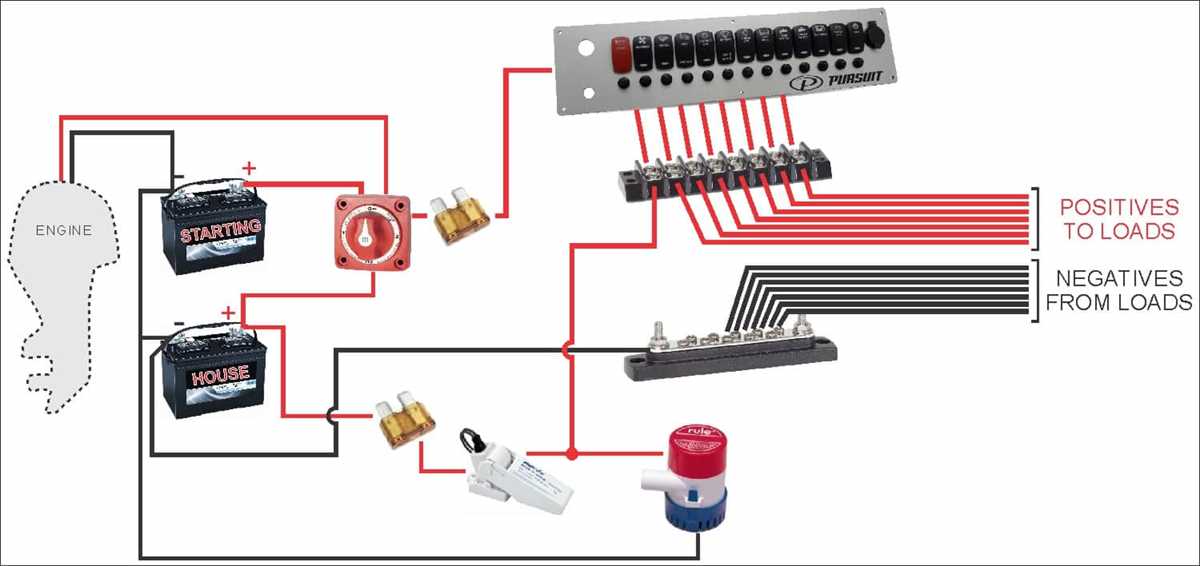
Always disconnect the main power source before inspecting any circuits. Use a multimeter to verify zero current and avoid accidental shocks.
Identify leads by color coding and labeling: red indicates positive terminals, black indicates negative or ground, and other colors may serve auxiliary functions. Accurate identification prevents short circuits and protects onboard devices.
- Check continuity from the positive lead to connected components.
- Verify that ground conductors attach securely to the hull or frame.
- Inspect for corrosion or frayed insulation before final connections.
After identification, label each conductor clearly and secure terminals. Proper labeling simplifies future maintenance and prevents misconnection.