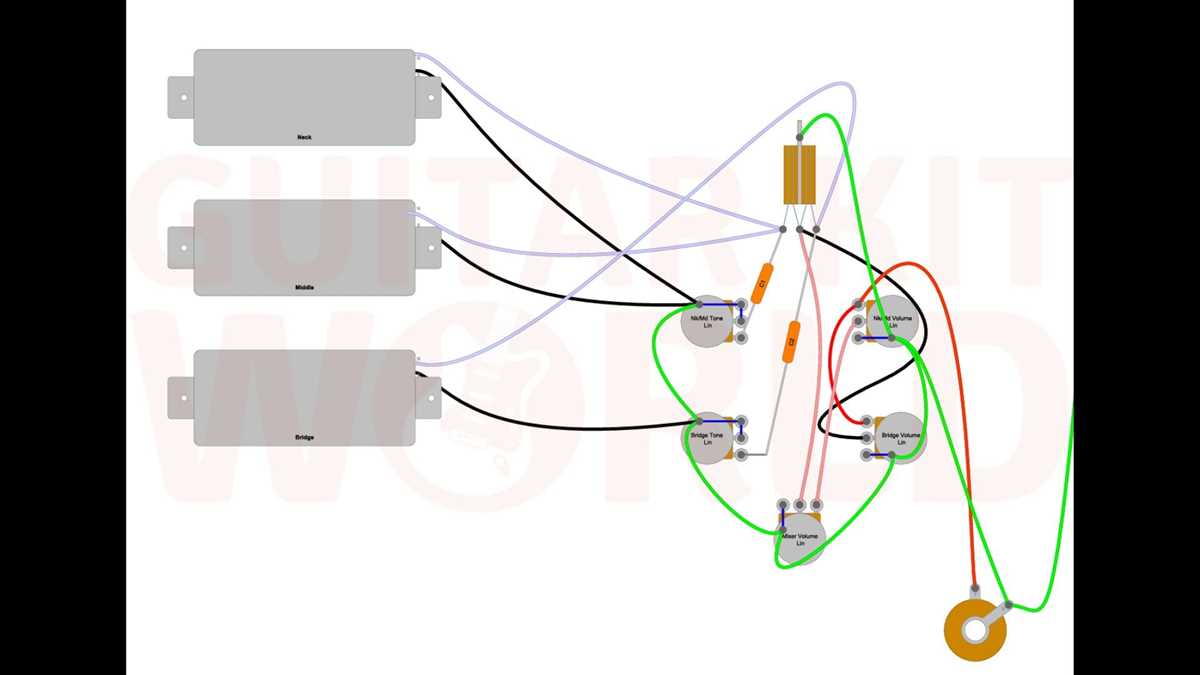
Use consistent color codes for each pickup lead to prevent misrouting signals between bridge, middle, and neck pickups. Identify hot and ground leads before making any connections to the control unit.
Secure all solder joints and avoid cold connections as these often cause intermittent tone loss or unwanted noise. Apply a small amount of flux and heat the pad adequately before inserting the lead.
Label each terminal according to position to simplify adjustments later. Mark positions as top, middle, and bottom to maintain clarity during assembly or future modifications.
Check continuity between pickups and output using a multimeter. Ensure that only the intended pickup engages in each selector position to maintain precise tonal control.
Use short, neat lead lengths to reduce crosstalk between signals. Route wires along the body cavity edges and keep them away from potentiometers and capacitors that could introduce hum.
Test each position before closing the cavity to confirm smooth operation. Listen for consistent volume and tone transitions between positions to catch misrouted connections early.
Apply heat shrink tubing or insulation to exposed connections to prevent shorts. Proper insulation ensures long-term reliability and protects the instrument from accidental grounding issues.
3 Position Toggle Setup and Connection Guide
Attach the hot lead from the neck pickup to the upper terminal of the lever component and the bridge lead to the lower terminal; this ensures direct signal routing without interference. Ground the common lug to the instrument’s chassis to eliminate hum and preserve clarity.
For a middle position that blends both pickups, bridge the terminals using a short jumper wire. This creates a parallel combination that maintains output balance while allowing tonal variety between the extremes.
Ensure the terminals are free of solder bridges or excess flux, as this can introduce intermittent signal loss. Use a fine-tipped iron and rosin-core solder for secure connections.
Selecting Conductor Types
Employ shielded cable for leads running across the cavity to prevent electromagnetic interference. Solid-core wire works best for short connections to the terminals, providing rigidity and easier routing.
Double-check continuity with a multimeter before closing the cavity. Each position should complete a distinct circuit path, confirming that the toggle distributes the signal exactly as intended without crossover.
Mount the lever firmly using the supplied bushing and washer, then tighten the nut just enough to prevent rotation but allow smooth movement. Test all three positions under amplified conditions to confirm correct signal flow and tonal response.
Identifying Terminals and Lead Colors for Accurate Connections
Connect each pickup according to its designated lead color to prevent tonal mismatch. Common standards assign:
- Neck pickup: white for hot, black for ground
- Bridge pickup: red for hot, black for ground
- Middle pickup: green for hot, bare or black for ground
Terminals on the lever assembly follow a consistent layout: top lug usually carries the neck signal, bottom lug the bridge, and the central lug serves as the common output. Verify each point with a multimeter to avoid accidental shorts before soldering.
Checking Continuity and Polarity
- Strip insulation carefully to expose only the necessary wire length.
- Attach leads to their corresponding terminals and lightly solder to prevent cold joints.
- Measure continuity from each pickup to the output lug to confirm proper routing.
- Polarity alignment ensures pickups combine constructively in the middle position; reverse any inverted leads.
Label wires inside the cavity for future maintenance. Consistent color coding reduces errors when upgrading or replacing components, maintaining clean signal paths and tonal integrity.