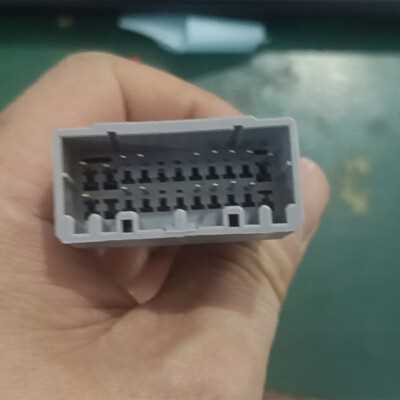
Check the color codes of each conductor before attempting any installation. This prevents mismatched connections that can cause shorts or signal loss. Standard harnesses use red for switched power, yellow for constant power, and black for ground, while speaker leads often follow white, gray, green, and purple pairs with positive and negative variations.
Use a multimeter to verify voltage and continuity across each pin to ensure correct contact points. This step avoids damage to head units or amplifiers and helps confirm that factory connectors are intact. Secure all terminal connections with crimp connectors or soldering for stable long-term performance.
Plan the layout before inserting aftermarket components. Identify the left and right channel outputs, and map front and rear speaker feeds to avoid channel inversion. Label each wire during disassembly to simplify reinstallation and reduce the risk of miswiring.
Address grounding issues separately. A poor chassis connection can produce static, humming, or intermittent sound. Use bare metal surfaces, clean paint or corrosion, and tighten all screws to create a reliable return path for audio signals.
Vehicle Audio Connection Complete Guide for Accurate Installation
Verify all power and ground leads before connecting any aftermarket unit. Use a digital multimeter to check for 12 volts on the switched and constant circuits and confirm that the chassis ground is solid. This prevents blown fuses and intermittent operation.
Label each speaker conductor during disassembly. Left front, right front, left rear, and right rear outputs follow specific color codes, usually with solid colors for positive and striped for negative. Keeping track of these ensures correct channel orientation and avoids phase issues.
Follow the factory harness layout to maintain signal integrity.
- Red – switched ignition power
- Yellow – battery constant power
- Black – chassis ground
- White/White with black stripe – left front speaker
- Gray/Gray with black stripe – right front speaker
- Green/Green with black stripe – left rear speaker
- Purple/Purple with black stripe – right rear speaker
Use crimp connectors or solder joints for each connection. Insulate with heat shrink tubing to prevent short circuits. Avoid twisting wires without secure connectors, as vibrations from vehicle operation can loosen bare strands.
Check for interference before final assembly. Route signal cables away from power lines and ignition components. This reduces hum or static in the audio channels. Keep speaker pairs bundled separately from high-current wires.
Integration with Aftermarket Amplifiers
Match the preamp outputs to amplifier inputs using RCA connectors. Verify that signal polarity aligns with the original channel mapping. Incorrect connections can reduce bass response and create imbalanced sound staging.
Final Testing and Troubleshooting
Power on the system and cycle through each function. Listen for distortion, hum, or dead channels. Confirm that volume controls and fader settings operate correctly. Address any grounding or loose connector issues immediately before securing panels and trim pieces.
Identifying Conductor Colors and Functions for Vehicle Audio
Start by inspecting each harness for standardized color coding. Solid red typically indicates switched ignition power, yellow shows constant battery feed, and black provides a reliable ground connection. White and gray pairs control front speakers, while green and purple pairs manage rear outputs. Striped variations signal negative terminals for each channel.
Use a voltmeter to confirm the purpose of each line. Measure voltage on the power leads with the ignition on and off to distinguish between constant and switched circuits. Check continuity from the chassis to the black lead to verify ground integrity before connecting any external modules.
Label each identified conductor immediately to prevent confusion during installation. Keep track of left and right channels, front and rear assignments, and positive/negative orientation. Accurate identification reduces the risk of reversed channels, phase issues, or blown fuses once the aftermarket unit is integrated.