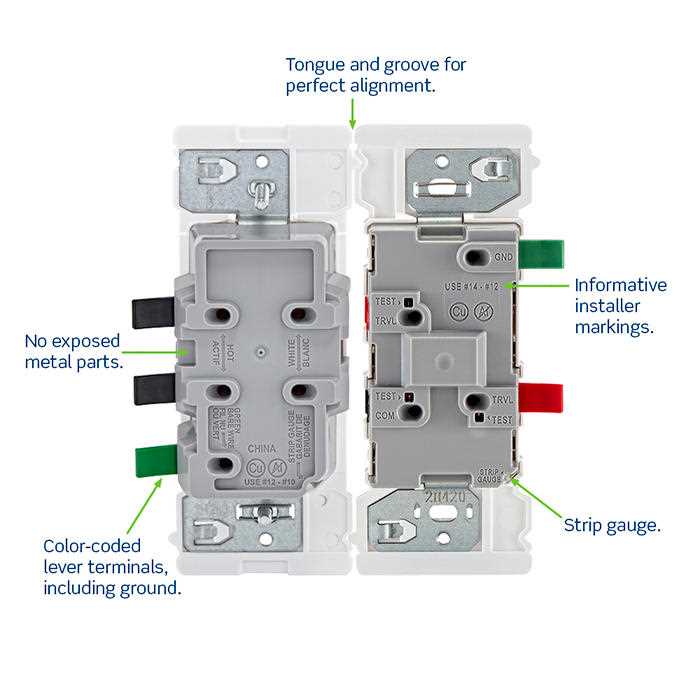
Connect the hot, neutral, and ground conductors to their corresponding terminals to prevent short circuits and maintain safe operation. Use a voltage tester to verify each lead before securing screws.
Follow the color coding carefully: black for live, white for neutral, and green or bare for grounding. Ensure stripped wire lengths are consistent to avoid loose contacts and minimize risk of arcing.
For duplex installations, align the wiring on both sockets so each plug point receives proper polarity. Tighten terminal screws evenly and check for stable mechanical connection without excessive force.
Consider mounting orientation and box depth to allow wires to bend naturally without stressing insulation. Avoid overlapping conductors to maintain airflow and reduce heat accumulation inside the enclosure.
Outlet Terminal Connections and Installation Guide
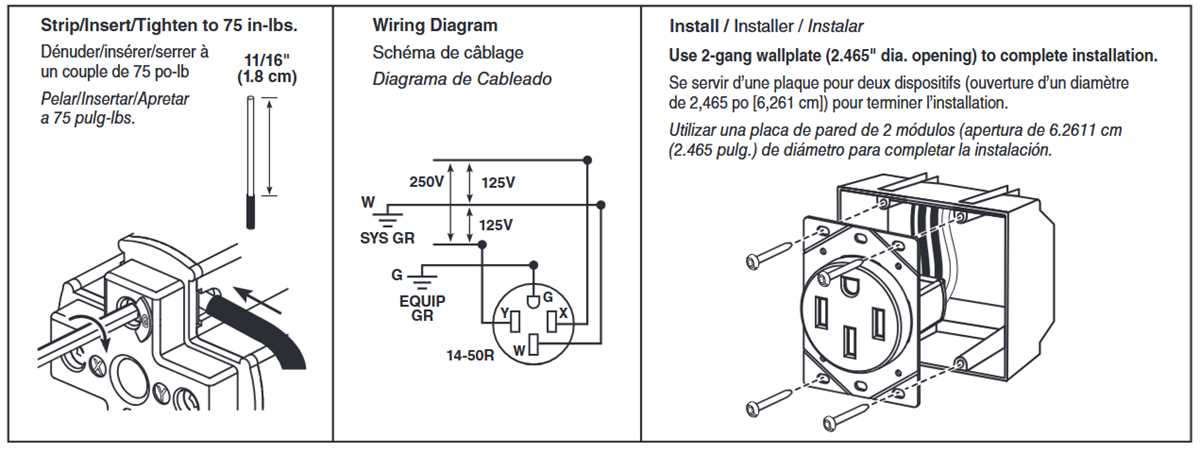
Identify the line, neutral, and ground terminals before connecting any conductors. Black or red leads attach to the live terminal, white to neutral, and green or bare copper to the grounding screw.
Strip insulation precisely so only the intended length of conductor is exposed, usually about ¾ inch. Excess bare wire can cause short circuits or contact issues, while too little may lead to loose connections.
Use the screw terminals for solid wires and the backstab holes for stranded conductors only when manufacturer instructions permit. Apply firm pressure when tightening screws to secure each lead without deforming the metal.
Maintain proper polarity throughout the installation to ensure that switches control the hot side and receptacles operate safely. Incorrect alignment can create shock hazards or equipment malfunctions.
For multiple installations in a single box, loop the conductors neatly, avoiding crossings that could stress insulation or reduce airflow. Label each wire if needed to track connections during troubleshooting.
Test continuity and voltage after connecting to verify each terminal carries the correct potential. A multimeter or non-contact voltage tester can confirm proper configuration before restoring power.
Mount the device securely in the electrical box, ensuring screws are snug but do not distort the enclosure. Proper alignment prevents strain on wires and ensures consistent contact with the cover plate.
Final inspection should include checking torque on screws, correct polarity, and grounding integrity. Confirm that all connections are tight and that conductors are not nicked or pinched, reducing the risk of long-term failures or hazards.
Identifying Each Wire and Terminal for Proper Outlet Setup
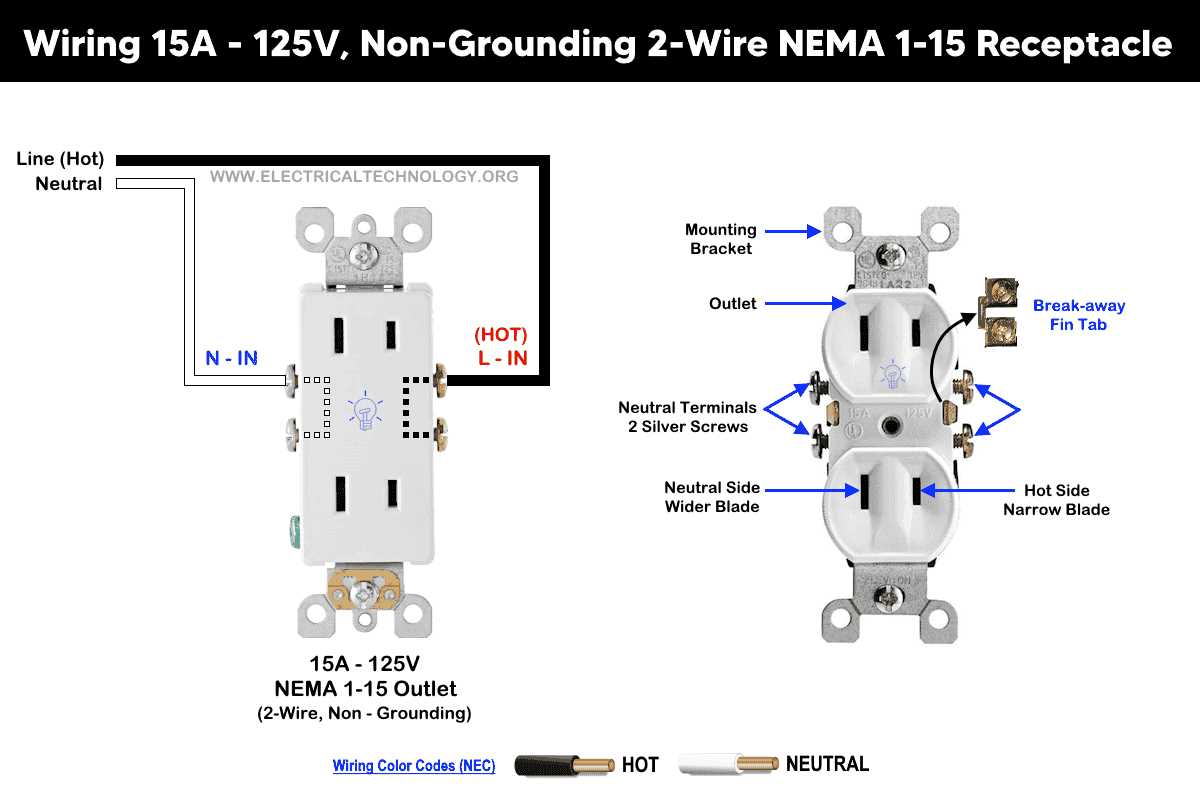
Confirm the hot conductor first by checking color and continuity. Typically, black or red wires connect to the brass-colored terminal, providing power to the device.
Locate the neutral lead marked with white insulation and attach it to the silver-colored terminal. Ensuring correct alignment prevents reverse polarity and maintains safe operation for connected appliances.
Identify the grounding conductor using green or bare copper wire. Secure it to the green terminal screw to create a continuous path for fault current, reducing the risk of electrical shock or fire hazards.
Verify each connection visually and mechanically before closing the box. Tighten screws firmly, avoid wire overlap, and check that stripped lengths are consistent, which ensures long-term reliability and proper functionality.