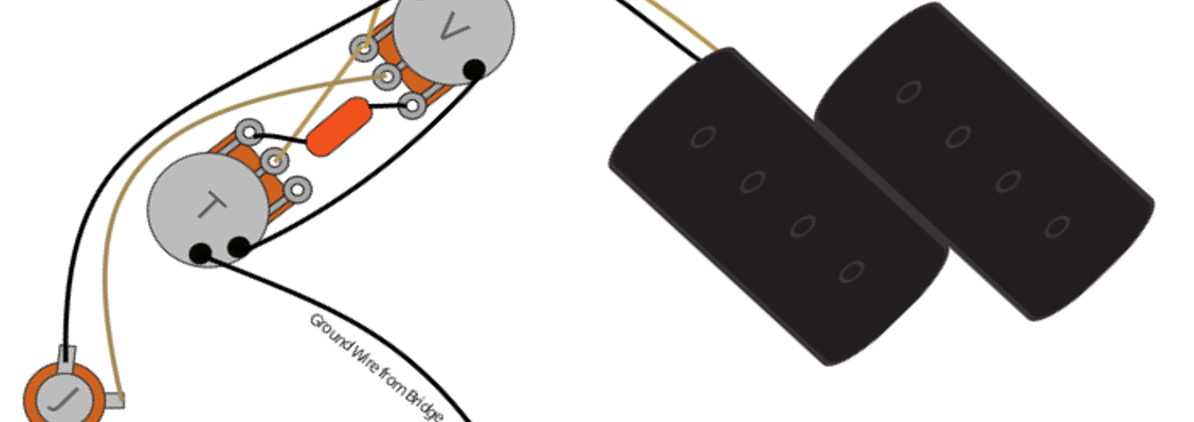
Use shielded copper leads for all pickup and tone connections to reduce noise and maintain signal clarity. Keep lead lengths under 12 inches where possible to prevent signal degradation.
Install 250k potentiometers for volume and tone controls with linear taper for smoother adjustment. Mount them firmly to the pickguard to avoid movement that could loosen solder joints.
Connect the bridge ground wire directly to the back of the volume pot casing. This provides a continuous grounding path and eliminates hum caused by floating metal parts.
Use color-coded soldering for hot and ground connections: red for hot output, black for ground, and bare for shielding. Label each point for quick identification during future modifications or repairs.
Check continuity and signal flow before assembling the instrument. Measure voltage between output and ground while tapping the pickup with a small metallic object to ensure each coil responds correctly.
Secure all solder joints with heat shrink or electrical tape to prevent accidental shorts. Avoid cold joints by heating the component and wire together until solder flows smoothly across the connection.
P Bass Connection Layout Guide
Use short, shielded leads for all pickup and tone connections to minimize interference. Keep each run under 12 inches and avoid sharp bends to maintain signal integrity and reduce noise pickup.
Volume and Tone Pot Installation
Install 250k potentiometers for both volume and tone controls. Solder the hot output from the pickup to the input lug of the volume pot, and connect the output lug to the output jack. Attach the tone capacitor directly between the tone pot and ground to shape treble response.
Bridge Grounding must connect to the back of the volume pot casing. This ensures a continuous path to the main ground and eliminates hum caused by floating metal parts on the instrument body.
Signal Verification
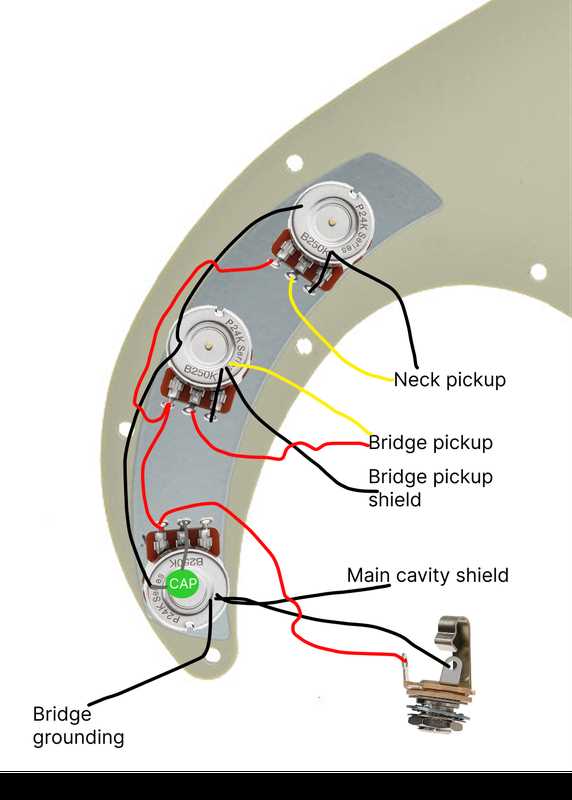
Test each connection with a multimeter before final assembly. Check continuity from pickups to output jack and confirm no shorts between hot and ground. Tap each pickup lightly with a metallic object to verify signal response before closing the pickguard.
Secure and Protect Connections using heat shrink tubing or small sections of electrical tape over solder joints. Avoid cold solder joints by heating both wire and lug simultaneously until solder flows evenly, ensuring long-term reliability and stable tone performance.
Selecting Proper Pickup and Tone Pot Connections
Use 250k potentiometers for both volume and tone controls and connect pickups with short, shielded leads to minimize interference. Solder the hot output from each pickup to the input lug of the volume pot, and connect the output lug to the output jack. Attach tone capacitors directly to the tone pot and ground to control treble response accurately.
Follow this sequence for reliable connections:
- Strip wire ends carefully without nicking the conductor.
- Solder each connection with sufficient heat so the solder flows evenly.
- Connect bridge ground to the back of the volume pot casing.
- Label leads for hot, ground, and shielding to simplify future maintenance.
- Test continuity from pickups to output jack before final assembly to confirm proper signal flow.