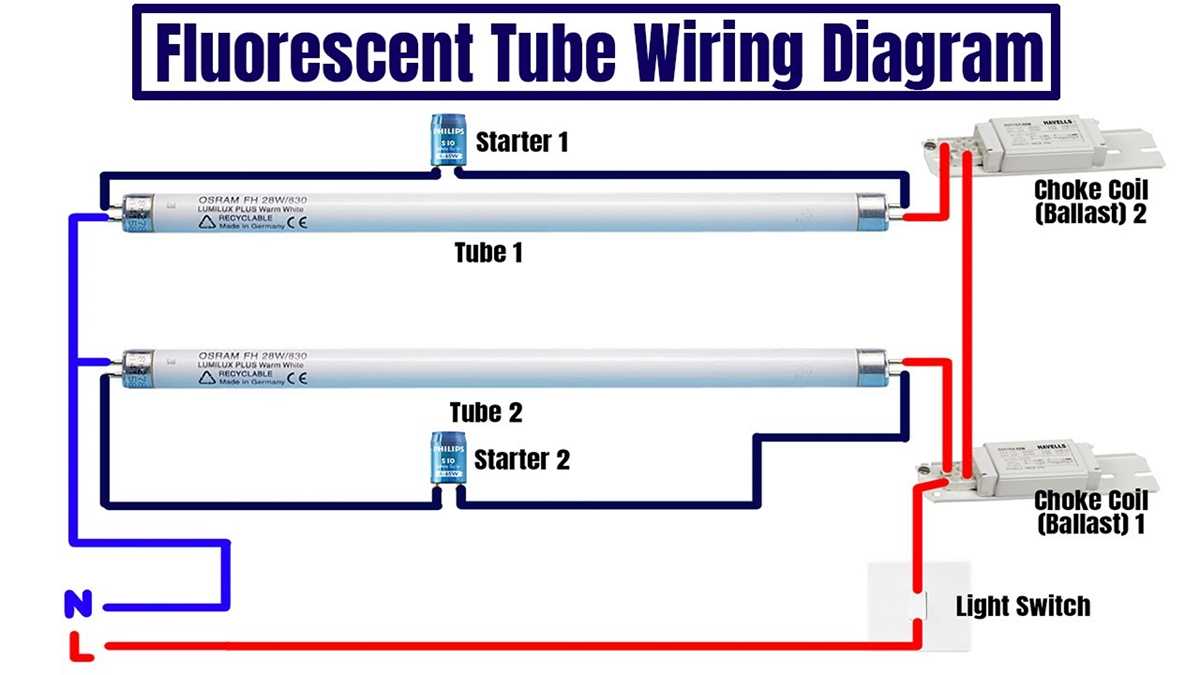
Match each conductor to its correct terminal using the color codes provided by the manufacturer. Typically, black or brown wires carry line voltage, white wires serve as neutral, and blue or red wires connect to the starter and auxiliary circuits.
Strip insulation carefully to prevent damage to copper strands. Insert the conductor fully into the terminal slot and tighten screws to ensure secure contact without cutting the wire.
Verify polarity and connections before applying power. Use a multimeter to confirm continuity between line, neutral, and starter connections to prevent shorts or flickering during operation.
Test the complete setup after all connections are secured. Apply power briefly and observe the filament glow, current draw, and overall illumination to ensure stable and reliable performance.
Fluorescent Lamp Ballast Wiring Guide
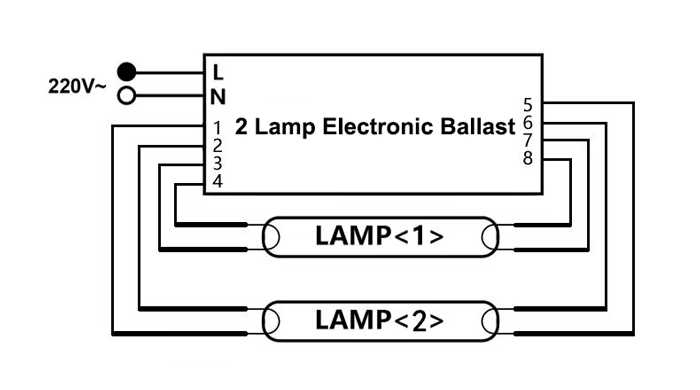
Identify each conductor by color and function before making connections. Black or brown typically carries line voltage, white serves as neutral, and blue or red connects to the starter or auxiliary circuits. Confirm labels on the fixture for proper matching.
Follow a step by step connection process to avoid shorts or flickering.
- Turn off power supply before handling terminals.
- Strip insulation 1/4 inch from the wire end.
- Insert conductors fully into each slot.
- Tighten screws to secure contacts without cutting strands.
Test the complete assembly after all conductors are connected.
- Use a multimeter to verify continuity across line and neutral paths.
- Apply power briefly and check that filaments glow steadily.
- Observe for abnormal heating or flickering to identify loose or incorrect connections.
Identifying Each Conductor and Its Function
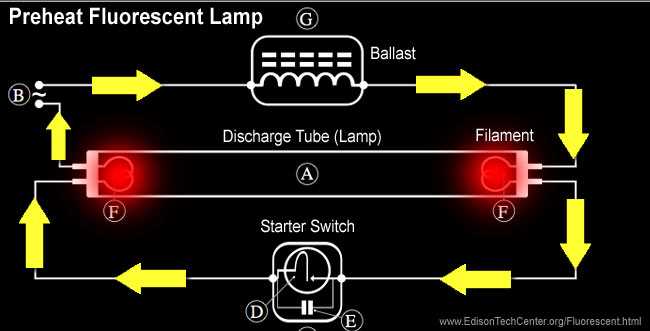
Confirm line and neutral connections by matching black or brown conductors to the live terminal and white conductors to neutral. Incorrect placement can cause flickering or prevent startup entirely.
Locate auxiliary conductors which typically use blue, red, or yellow insulation. These carry current to the starter or capacitor components and must be inserted into their designated slots to maintain proper operation.
Inspect conductor labels printed on the fixture or connector. Labels indicate voltage rating, current capacity, and purpose. Use these markings to ensure each lead reaches the correct terminal without guessing.
Separate high and low voltage conductors physically to avoid interference or shorts. Maintain a minimum of 1/2 inch spacing and route them along opposite paths inside the fixture housing.
Verify insulation integrity before connection. Look for nicks or exposed strands and trim damaged sections. Damaged conductors can create heat buildup and pose a fire hazard.
Check continuity for each path using a multimeter. Measure between line, neutral, and auxiliary terminals to confirm the conductor conducts properly without resistance spikes or breaks.
Color code consistency is critical for future maintenance. Keep black/brown for line, white for neutral, and blue/red for starter or auxiliary. Document any deviations for reference during repairs or upgrades.
Test the entire assembly under controlled power conditions. Observe filament glow, current draw, and response time. Misconnected conductors often show delayed startup, uneven brightness, or overheating components.