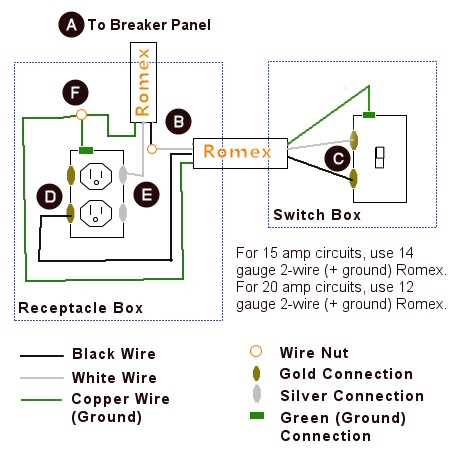
Turn off the breaker and verify zero voltage with a tester before connecting conductors to a wall receptacle. Standard residential power points operate on 120 volts AC in many homes and use three conductors: a live line, a neutral return, and a grounding conductor attached to the metal box or green terminal.
The brass terminal screw on a duplex receptacle connects to the live conductor, usually insulated in black or red. The silver screw connects to the neutral conductor, commonly white. A green grounding screw attaches to the bare copper or green insulated conductor that protects against fault current and directs it safely to the electrical panel.
Each receptacle contains two plug positions connected by internal metal tabs. These tabs allow both sockets to share the same power feed unless intentionally removed. Electricians sometimes break the tab on the hot side when creating a half-switched receptacle controlled by a wall control.
Residential branch lines commonly use 14 AWG or 12 AWG copper conductors. A 15-amp breaker typically pairs with 14-gauge conductors, while a 20-amp breaker uses 12-gauge. Matching conductor size with breaker rating prevents overheating during high current loads such as heaters, kitchen appliances, or power tools.
Electrical Outlet Wiring Diagram With Hot Neutral and Ground Connections
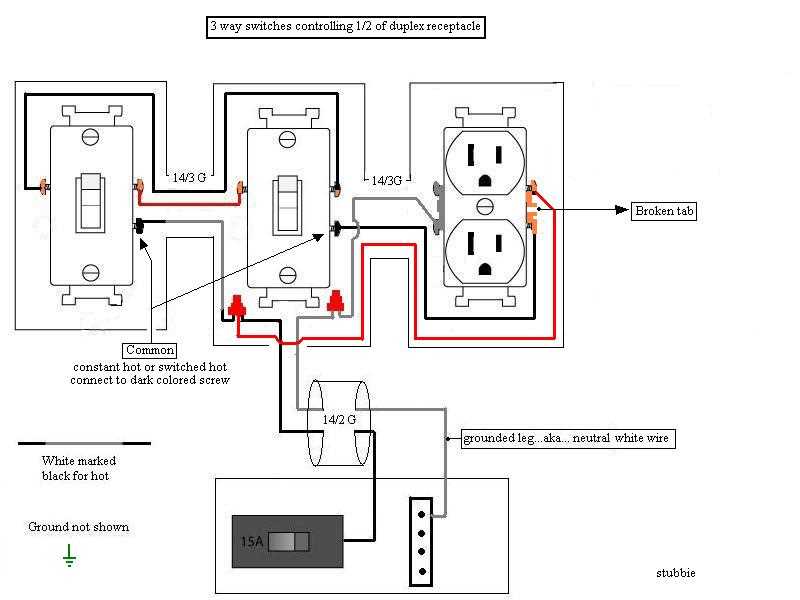
Connect the live conductor to the brass terminal, the neutral return to the silver terminal, and the grounding conductor to the green screw on a standard duplex receptacle. This terminal arrangement ensures correct polarity and safe operation for household appliances connected to the wall power point.
Typical conductor identification used in residential branch lines appears as follows:
- Black or red – live line carrying 120 V from the breaker panel
- White – neutral return path connected to the service neutral bar
- Bare copper or green – equipment grounding conductor attached to the metal box and green screw
The live conductor delivers current from the distribution panel, the neutral path completes the electrical loop, and the grounding conductor provides a low-resistance path during a fault. Maintaining correct placement prevents reversed polarity, which can damage electronic equipment or create shock hazards when metal appliance parts become energized.
How to Connect Hot Neutral and Ground Wires to a Standard Wall Outlet
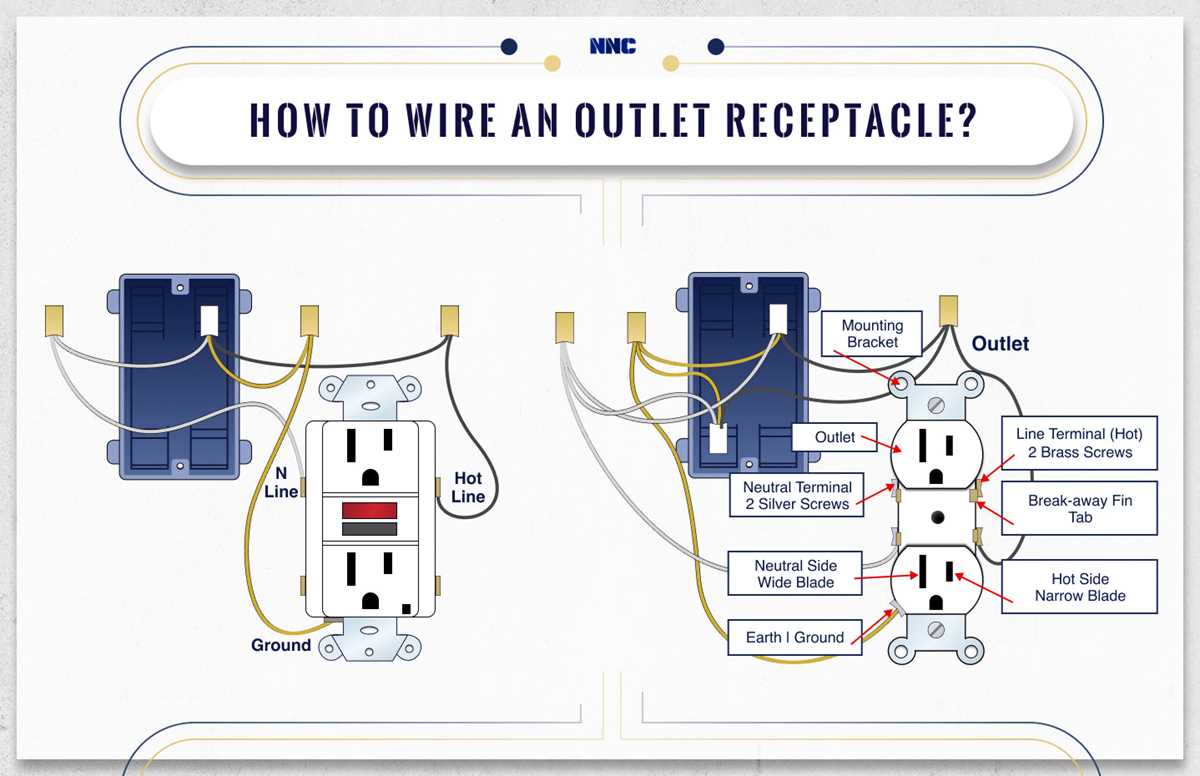
Turn off the breaker and confirm zero voltage with a tester before attaching conductors to a duplex receptacle. Strip about 12–15 mm of insulation from each conductor and bend the exposed copper into a clockwise hook so it tightens under the terminal screw. Attach the black or red live conductor to the brass screw, connect the white neutral return to the silver screw, and secure the bare copper or green grounding conductor to the green terminal bonded to the metal frame.
Push the conductors neatly into the electrical box after tightening each screw firmly. Avoid placing two conductors under a single terminal unless the receptacle design supports it. Verify that the live conductor sits on the brass side, the neutral path remains on the silver side, and the grounding conductor stays attached to the green screw and metal box.