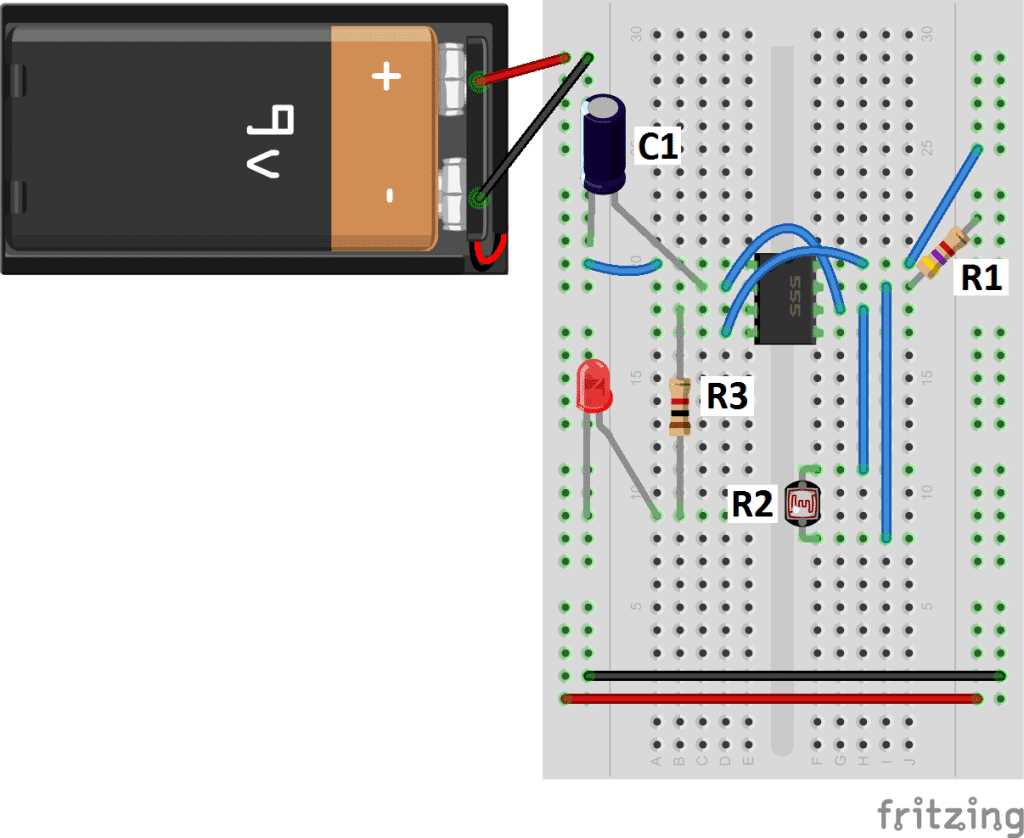
To properly set up a 555 timer IC, begin by understanding its pin configuration and how each pin interacts within a configuration. The most common applications include oscillators, pulse generation, and time delays. Knowing the exact layout and wiring process is crucial for achieving reliable functionality. Ensure that the connections are made with the correct voltage supply to avoid damaging the integrated circuit.
In any setup, selecting the right resistors and capacitors is key to controlling the timing intervals. The resistor and capacitor values determine the frequency or pulse width in different modes. Make sure the components are rated correctly to match the specifications needed for your project. Follow the typical connections closely, particularly the threshold, discharge, and reset pins, as these manage the behavior of the entire system.
When using the IC in astable mode, the configuration allows for continuous output pulses. For a more controlled, single-pulse operation, monostable mode should be used, where a single output pulse is generated for a defined time period when triggered. Understanding these differences and how to wire the components accordingly is vital to achieving the desired results in your circuit setup.
Circuit Setup for 555 Timer Operation
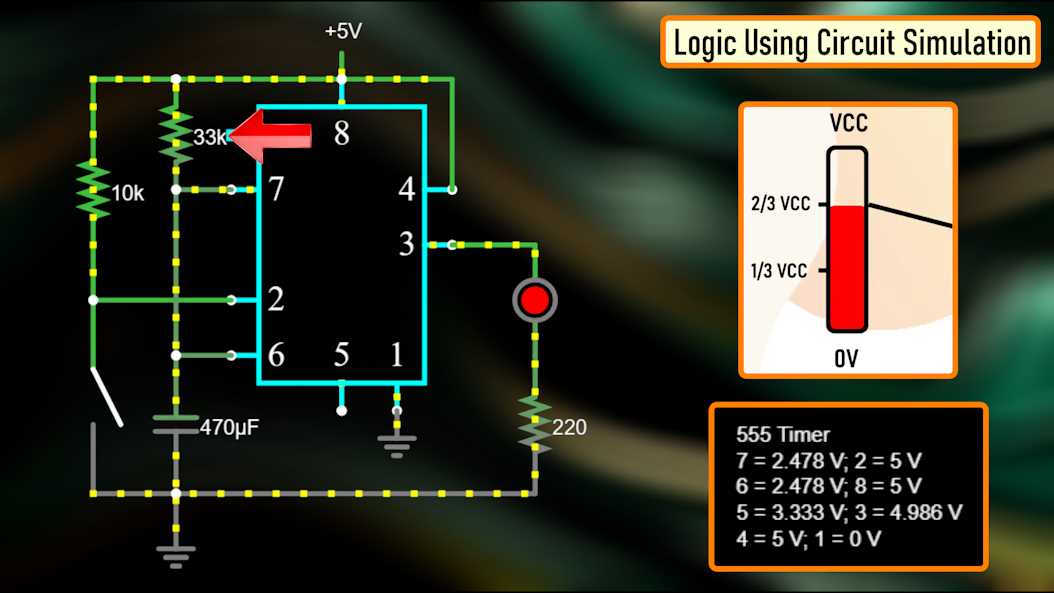
To begin constructing your setup, you need to correctly identify the function of each pin on the integrated circuit. The primary pins to focus on include the ground, trigger, threshold, discharge, and output. These pins will determine how the system behaves, either as an astable multivibrator or a monostable multivibrator. Pay careful attention to their connections to ensure the functionality matches the intended operation.
Ensure that pin 8 is connected to the positive voltage supply, typically 5V or 9V depending on the requirements of your project. Pin 1 must be grounded to complete the circuit and provide a reference voltage. The trigger pin (pin 2) should be connected to the capacitor in most configurations, controlling the timing of the pulse. Be sure that the capacitor’s value is chosen based on the desired frequency.
Pin 4, which is the reset pin, should be either grounded or tied to a voltage supply, depending on whether you want to control the reset function. If you intend to use the 555 timer in an astable configuration, leave the reset pin unconnected or pull it low. In monostable mode, the reset pin controls when the output pulse is generated.
The discharge pin (pin 7) plays a critical role in timing. In a monostable setup, it is used to discharge the capacitor. In an astable configuration, this pin helps in the charging and discharging cycle of the timing capacitor. It is vital to connect the discharge pin to the appropriate resistor to regulate the timing period.
The output pin (pin 3) is where you get the signal output. In an astable configuration, it will continuously output a square wave, while in monostable mode, it will generate a single pulse when triggered. Ensure that the load connected to the output pin is suitable for the current requirements of the circuit.
To finalize the setup, adjust the timing components. The values of the resistor and capacitor connected to the threshold and discharge pins determine the frequency in an astable circuit or the duration of the pulse in monostable mode. Use a potentiometer for adjustable timing, or choose fixed values based on the timing requirements.
Test the assembly thoroughly by powering it up and measuring the output with an oscilloscope or multimeter to ensure the desired waveform is generated. Make adjustments as needed, particularly with the timing components, to fine-tune the results to your specifications.
Understanding the Basic Components of a 555 Timer Circuit
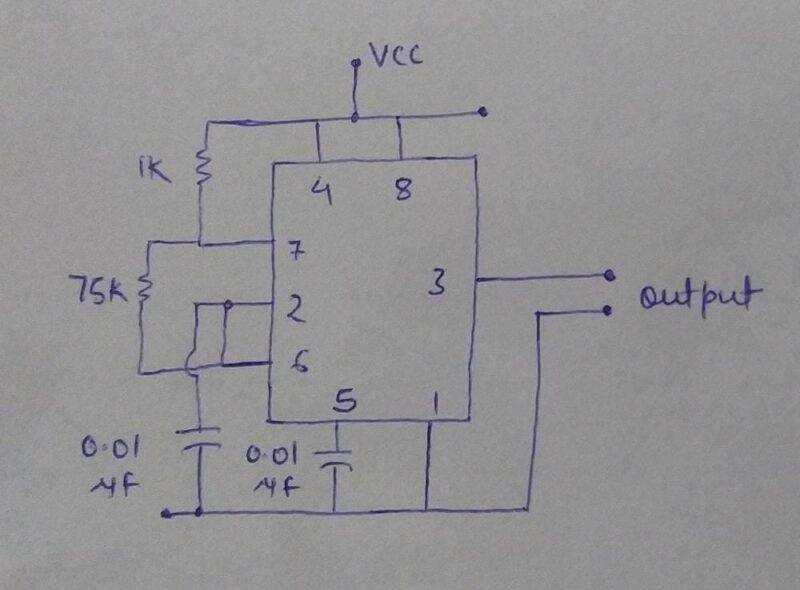
The 555 integrated circuit relies on key components to function. The most important elements are the resistors, capacitors, and the IC itself. Understanding how each part interacts will help you build a stable setup for timing and oscillating applications.
The resistor controls the charging and discharging of the capacitor, determining the timing cycle. For accurate timing, select resistors with appropriate resistance values. The larger the resistance, the longer the timing interval, as it directly affects the charging time of the capacitor.
The capacitor stores energy and is responsible for timing the charge-discharge cycle. When the capacitor is connected to the threshold and discharge pins, it plays a role in controlling the output signal. The value of the capacitor also determines the frequency of oscillation in astable mode.
The IC itself has several crucial pins, including the ground and power pins. Pin 1 must be grounded, while pin 8 connects to the positive power supply. These pins create the basic operational power for the system. Without proper grounding and voltage, the timer will not operate effectively.
Pin 2 (the trigger) and pin 6 (the threshold) manage the timing cycle, working in conjunction with the capacitor. Pin 7, known as the discharge pin, is responsible for discharging the timing capacitor, allowing for the cycle to reset. These pins interact dynamically to control the output.
Pin 3 (the output) is where the signal is generated. It produces a square wave output when the system operates in astable mode and generates a single pulse in monostable mode. This output can be connected to other circuits, such as LED drivers or relay controls, depending on the project needs.