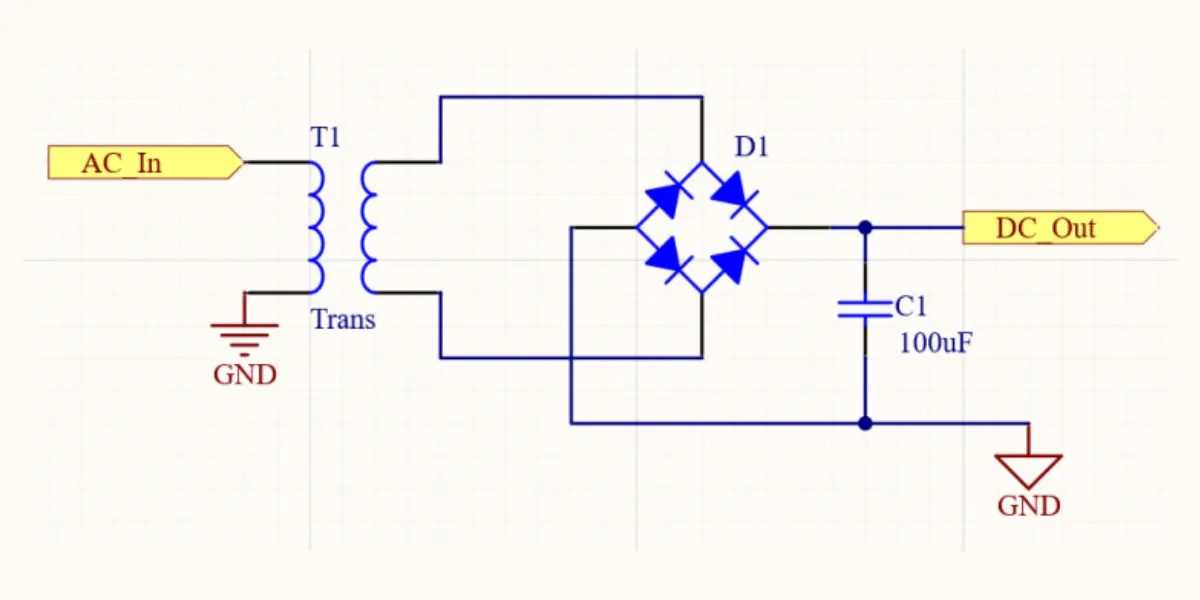
Use a regulated 12V DC source to achieve a stable alternating output. Select MOSFETs rated for at least 30% above the load current and ensure the heat sinks are properly mounted to prevent thermal shutdown.
Step up the voltage carefully with a transformer matching your desired output, typically 220V or 110V AC depending on regional standards. Avoid exceeding the rated primary or secondary voltage to prevent insulation failure.
Capacitor selection matters for smoothing and reducing ripple in the switching section. Electrolytic capacitors with low ESR and at least 25% higher voltage rating than the DC input provide stable performance under load.
Pulse generation must maintain symmetry for sine-like output. A simple H-bridge with proper dead-time settings prevents cross-conduction and ensures the alternating waveform remains within safe parameters.
DC to AC Converter Layout and Connection Guide
Place power MOSFETs close to the transformer primary to minimize inductive losses. Ensure proper insulation between high-voltage AC traces and low-voltage DC paths to prevent short circuits and arcing.
Connect the DC input terminals using thick wires rated for at least 1.5 times the expected current. Include a fast-acting fuse on the positive line to protect against accidental overcurrent conditions.
Position the gate driver components near the MOSFETs to reduce propagation delay. Keep signal traces short and avoid running them parallel to high-current lines to limit electromagnetic interference.
Install smoothing capacitors across the DC input terminals to filter voltage spikes. Use low-ESR electrolytic capacitors rated at 25-30% higher than the input voltage to maintain stable operation under load.
Wire the transformer secondary output to the AC load terminals with adequately rated insulation. Check that polarity markers align with load requirements and that the connections are mechanically secure to handle repeated plug-in cycles.
Test the setup with a small resistive load before applying full power. Measure voltage and current at each stage, verify proper waveform shape, and ensure no components exceed their thermal limits during operation.
Selecting Components and Voltage Ratings for the Converter
Choose MOSFETs and transistors with voltage ratings at least 30% higher than the maximum DC input to prevent breakdown during transient spikes. Ensure the current rating exceeds the load by a similar margin to avoid overheating under continuous operation.
Select capacitors with low equivalent series resistance and voltage tolerance above the peak input voltage. For electrolytic types, a 25-40% safety margin protects against ripple and short-term surges without degrading lifespan.
Inductors and transformers must handle peak currents without saturating. Use cores rated for the operating frequency, and verify that insulation and wire gauge match calculated RMS currents to maintain efficiency and prevent insulation failure.
Resistors, diodes, and other passive components should be rated for continuous power dissipation higher than the expected load. Prefer high-temperature tolerant materials and include a safety margin of 20-50% to maintain reliability under prolonged operation.