Use the official exploded schematic before any repair to match fasteners, housings, and drive elements by position and sequence. This approach prevents misalignment of the crank assembly, avoids uneven wear on the blade clamp, and reduces the risk of reinstalling incompatible screws that can crack the gearbox shell.
Identify the tool by model code, then compare the assembly order shown in the layout with the unit on your bench. Pay close attention to the counterweight orientation, the stroke linkage pin, and the bearing stack around the output shaft. These elements determine vibration levels and cutting stability, and a reversed washer or spacer changes clearances immediately.
For replacements, cross-check component numbers from the schematic with vendor listings and verify dimensions such as bore diameter, thread pitch, and material grade. Motors vary by winding count, switches differ by amp rating, and blade holders change across revisions. Accurate matching shortens downtime and keeps torque transfer within factory tolerances.
During reassembly, follow the layout step by step and torque fasteners evenly across the gear case. Apply the specified grease volume to the drive train only where indicated, keeping vents and contacts clean. This method restores factory balance, preserves insulation life, and ensures the cutter delivers consistent strokes under load.
Exploded View for a Back-and-Forth Cutting Tool by a Popular Yellow Brand
Check the exploded view before any repair: it shows how the drive housing, stroke rod, shoe mount, and power switch align, which prevents misassembly that leads to vibration or premature wear.
The motor section sits behind the front gearbox; carbon brushes press against the armature via spring carriers, and incorrect seating reduces torque. Replace brush sets when length drops below 6 mm to avoid arcing.
At the nose, the blade clamp uses a cam and retaining pin; wear on the cam face causes slippage under load. Inspect the pin for flat spots and rotate it 90 degrees during service to extend service life.
The counterweight rides on a guide track parallel to the stroke rod; grease only the track with lithium-based compound, keeping lubricant away from the armature vents to prevent dust buildup.
The adjustable shoe assembly locks through a detent plate and release lever; rounding on the detent teeth leads to creep during plunge cuts. Swap the plate rather than the entire front assembly to save cost.
Fasteners vary by length across the clamshell housing; follow the visual layout to return each screw to its original bore, since longer hardware can crack the polymer shell.
Electrical routing shows strain relief placement and trigger linkage travel; confirm wire slack at full trigger pull to prevent insulation fatigue near the switch contacts.
Identifying Motor, Gear Housing, Shoe, Blade Clamp, and Trigger Assembly in the Diagram
Match each component by tracing the power path from the handle forward: the electric motor appears directly behind the grip, aligned with the armature shaft and cooling vents.
The gear housing sits ahead of the motor casing; look for a compact metal shell enclosing reduction gears and a crank that converts rotary motion into a back-and-forth drive.
Locate the shoe at the nose of the tool body: it is the flat, adjustable contact plate with slotted mounting points that sets cutting depth and stabilizes against the work surface.
The blade clamp is fixed at the front of the drive rod; identify it by the spring-loaded collar or lever that locks the cutting accessory without a wrench.
Find the trigger assembly inside the handle shell; it includes the variable-speed switch, return spring, and wiring leads routed toward the motor terminals.
Confirm orientation by checking fastener patterns: long through-bolts tie the motor to the gear case, short screws secure the shoe bracket, and a single pivot pin anchors the clamp mechanism.
Using the Exploded View to Match Numbers for Blade Holder, Motor Brushes, and Base Shoe Replacement
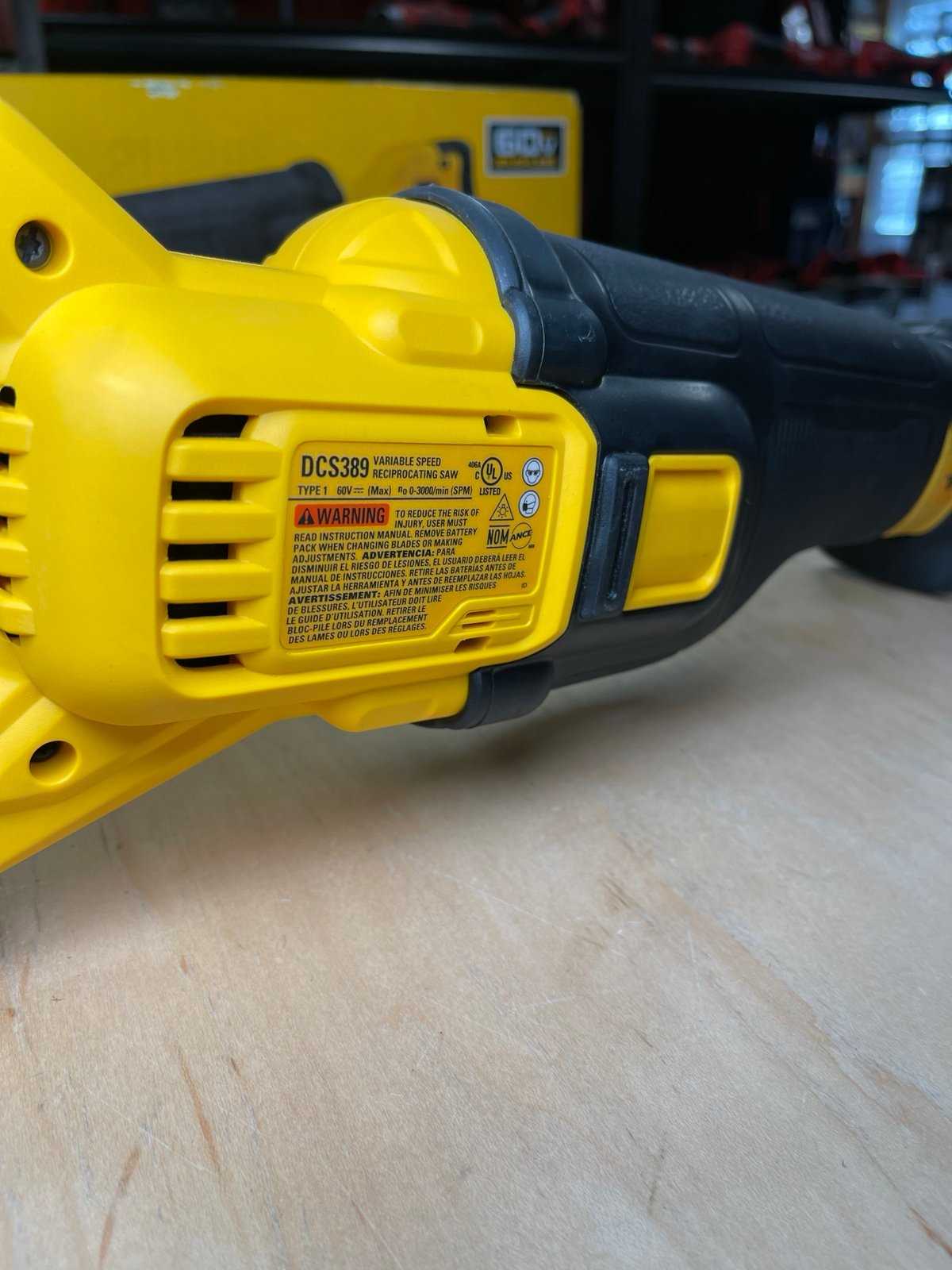
Verify the tool’s model code and production revision on the nameplate, then align that code with the exploded view to pull the exact reference numbers for the blade holder, motor brushes, and base shoe.
For the blade holder, trace the assembly path in the exploded view from the nose housing to the retention pin and spring. Match the pin diameter and spring free length shown there; a mismatch causes blade wobble or release under load. Confirm the holder variant that accepts tool-free release versus hex-fastened retention by checking the callout labels.
For motor brushes, locate the brush caps and leads in the exploded view and note the reference numbers for left and right sides if listed separately. Replace when the carbon length falls below 6 mm (1/4 in). Cross-check the lead style–spade or soldered–and the chamfer orientation shown, as reversed geometry accelerates commutator wear.
For the base shoe, follow the exploded view to identify the shoe plate, slide rails, pivot pin, and locking lever. Match the rail profile and hole spacing exactly; some revisions differ by a few millimeters. Tighten the shoe fasteners to 10–12 Nm and confirm smooth travel across the full stroke without binding.
After matching numbers, order all subitems tied to each assembly–springs, pins, caps–listed adjacent in the exploded view. Installing a single item without its paired hardware often leads to repeat teardown.