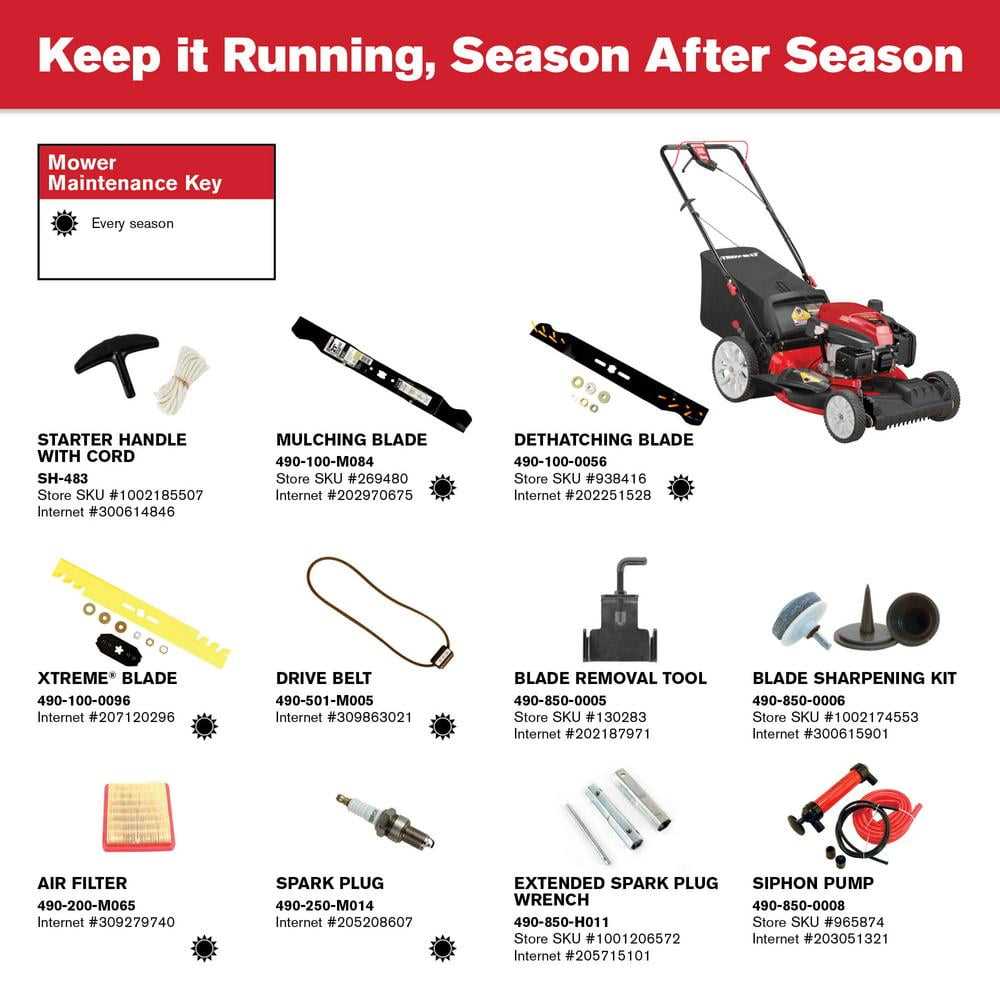
Use an exploded view to identify each component by position and fastener size before disassembly. This approach prevents mismatched hardware and speeds up reassembly by matching shafts, seals, and housings exactly as installed at the factory. Pay attention to bolt grades, washer order, and thread direction on rotating assemblies to avoid premature wear.
A clear schematic highlights how the drive train links the engine output to the tine shaft through pulleys, belts, and reduction gearing. Check belt length markings and pulley diameters against the layout, then confirm bearing orientation and spacer placement. Small deviations–such as reversing a flanged bearing–can trigger vibration and belt tracking issues.
Frame and control sections benefit from a labeled layout that shows cable routing and spring anchor points. Match cable sheath lengths and lever ratios as shown, then set free play to the specified range for smooth engagement. Consistent routing prevents kinks and keeps throttle response predictable under load.
For routine service, the visual map helps cross-check wear items like tines, guards, and skid shoes with mounting geometry. Measure tine thickness and edge profile against the reference to decide between sharpening and replacement, and torque all fasteners evenly to maintain alignment across the working width.
Assembly Breakdown for Garden Cultivator Model
For accurate maintenance, consult a detailed chart outlining the individual components of your cultivator’s assembly. Ensure you have the correct identifiers for the following sections: engine, transmission, wheels, handlebars, and gear assembly. Identify the position and function of each piece–check for wear or damage regularly. If an attachment is loose, verify the connection with its corresponding bracket or housing unit.
Engine parts, like the air filter and spark plug, should be replaced periodically to maintain optimal performance. The transmission should be inspected for fluid leaks or clogs that could hinder operation. Adjust the tension of belts and chains as needed to avoid unnecessary friction that could cause premature wear.
Wheel assemblies, including tires and axles, require routine checking to ensure they rotate freely. Lubricate bearings and replace cracked or damaged rubber. Ensure proper tire pressure to optimize traction during use.
Handlebars should be checked for stability and securely fastened to the frame. Ensure all control cables are properly adjusted to avoid slack, which can impair responsiveness. Regularly inspect the throttle and brake mechanisms for smooth operation.
Examine the gear assembly closely. Worn teeth or a misaligned gear system can cause slipping, reducing the efficiency of the machine. Keep the gears lubricated to minimize friction and noise. Regularly check for signs of rust or corrosion, particularly in moist environments, and apply appropriate rust inhibitors as needed.
Identifying Key Components in the Equipment Assembly Diagram
Examine the engine and transmission assembly first, focusing on components like the drive belt, clutch, and pulley system. The drive belt is crucial for power transfer, connecting the engine to the rotating mechanism. The clutch ensures smooth engagement and disengagement of the rotating tines, which are vital for soil cultivation.
Pay attention to the tines’ attachment, which plays a central role in the depth and efficiency of tilling. The tine shaft, connected to the axle, rotates the blades, so a thorough check of this section can prevent operational issues. Verify the condition of the bearings and seals that support the shaft to prevent unnecessary friction or wear.
The control panel, often located near the handle, houses throttle and gear shift levers. These components regulate engine speed and tilling depth. Ensure that cables connecting to the throttle and gearshift mechanisms are intact and moving freely.
Inspect the frame and wheels. These parts ensure proper balance and mobility. Check the wheel axles for any damage or wear, which could hinder movement or stability during use.
Lastly, the fuel system components like the tank, fuel lines, and filters need to be checked for clogging or leaks. A clean and functional fuel system supports optimal engine performance. If needed, replace clogged fuel filters to maintain smooth operation.
How to Use the Visual Guide for Equipment Maintenance and Repairs
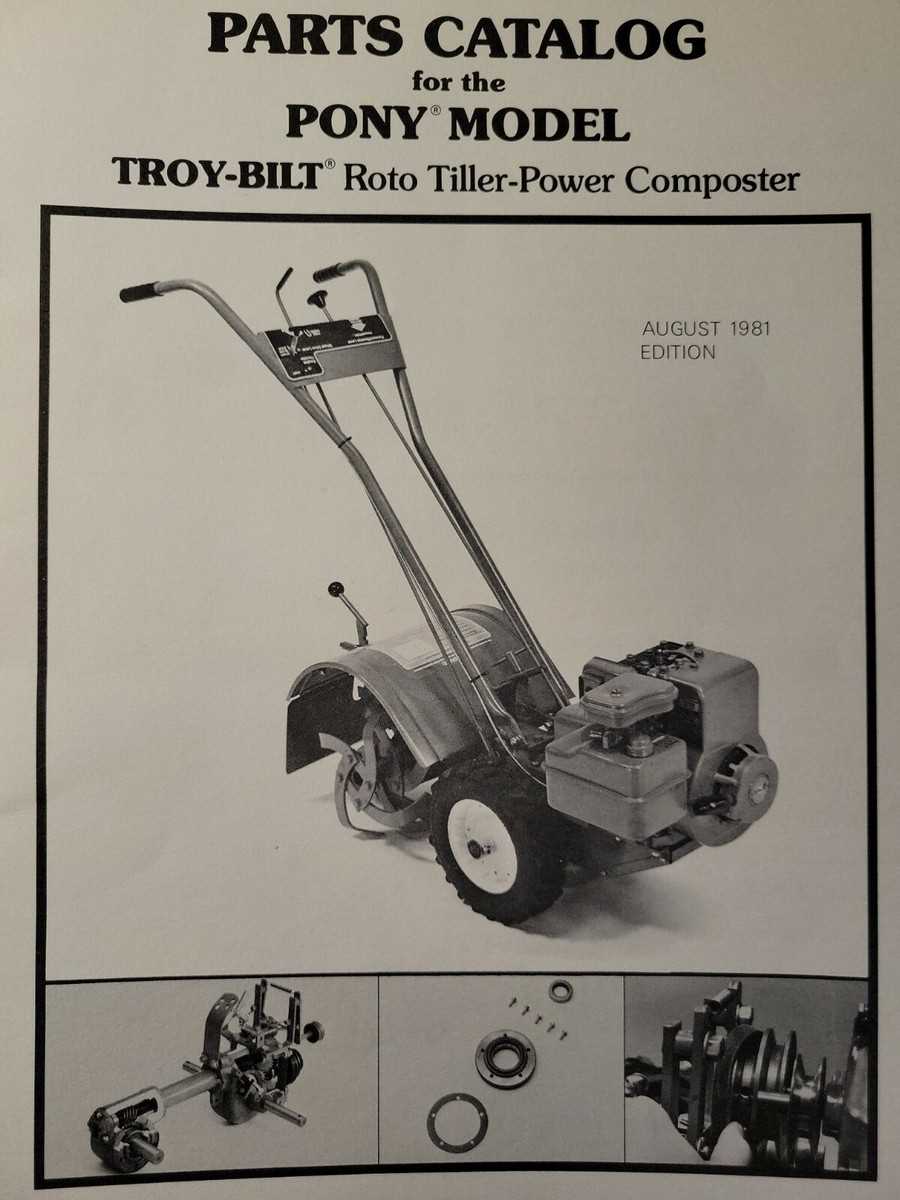
Identify the malfunctioning component by cross-referencing it with the visual guide. Start by focusing on areas that undergo significant wear, such as drive components, belts, and controls. Look for any visible damage, like cracks or signs of friction.
Disassemble the equipment following the order shown in the guide to prevent damage and ease the reassembly process. Pay attention to the positioning of each piece as you remove them.
Verify that the replacement component matches the specifications listed in the reference, ensuring it aligns in size and function with the original part. If unsure, compare the part number and check for any subtle variations that may impact performance.
Use the visual reference for troubleshooting. It highlights common failure points and provides insight into where misalignments or issues may arise, making it easier to locate the source of the problem.
Reassemble the equipment, following the reverse order from the visual guide. Tighten all connections securely and perform a test run to confirm the system is operating properly.