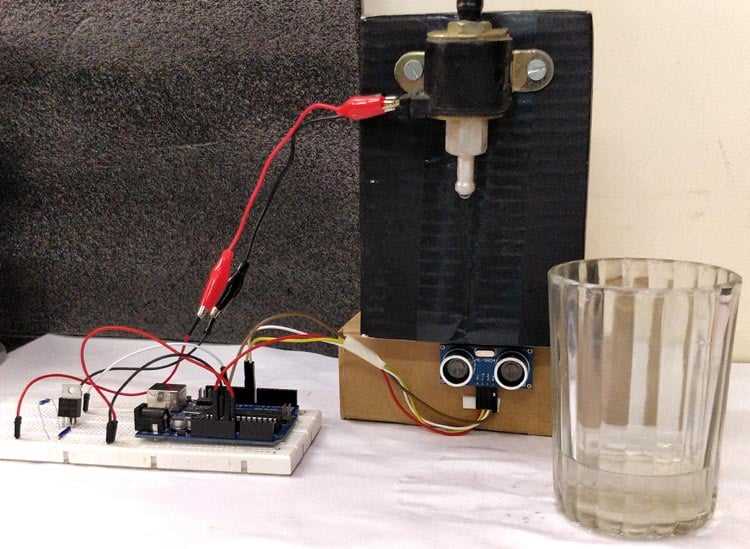
Use a labeled schematic layout to trace liquid flow before service. This step cuts guesswork during fault checks, shows intake control position, reveals storage tank volume, marks pump direction, flags heating zone location.
The inlet valve holds pressure near 0.3–0.6 MPa, feeding a sealed reservoir with food-grade liner, capacity from 3 to 20 liters. A circulation motor rated 12–24 V drives fluid toward cooling plate or heating coil, while nonreturn gates block reverse flow.
Thermal control relies on a metal exchange block plus temperature probes tied to a control board. Sensors keep outlet liquid within ±1 °C from setpoint, reducing scale buildup, extending seal life beyond 50 000 cycles.
Read the layout as a chain of roles, not isolated elements. Electrical lines, safety fuses, grounding nodes appear beside fluid paths, enabling fast isolation of leaks, shorts, valve wear.
Schematic of Cooler Unit Components, Operational Roles
Use a clear schematic that labels each module with flow direction arrows, temperature markers; this speeds troubleshooting within minutes.
The intake valve regulates liquid entry from the supply line, maintaining steady pressure. A pre-filter cartridge traps sediment down to 5 microns, reducing scale inside the system. The storage vessel buffers volume for peak demand while preventing air ingress.
Thermal control relies on two paths. A chilling chamber pairs a metal coil with a refrigerant loop to drop temperature to 4–8 °C. A heating chamber surrounds a resistance coil, raising temperature to 85–95 °C for hot output. Independent thermostats govern each path, preventing thermal crossover.
Fluid routing occurs through food-grade tubing linked to a tap assembly. Solenoid gates open only during user activation, limiting backflow. A drip tray beneath the outlet captures overflow, protecting internal electronics.
Power distribution flows from a control board equipped with thermal fuses, current sensors, relay switches. A cooling fan evacuates heat from the compressor zone, extending service life. Level probes inside the vessel signal refill cycles, avoiding dry heating scenarios.
For maintenance, match the schematic to physical layout before disassembly. Replace filtration media every 6 months, inspect seals quarterly, verify thermostat calibration annually using a contact thermometer.
Cold plus Hot Liquid System Components: Compressor, Heating Element, Thermostat Roles
Select a compressor rated for continuous duty at 120–150 W with R134a refrigerant to secure rapid chilling without excessive power draw.
Choose a heating element between 420–550 W using stainless steel sheath to reach 85–95°C within 5–7 minutes.
Install a bimetal or capillary thermostat calibrated to ±2°C tolerance to prevent overheating plus reduce scale buildup.
- Compressor role: compresses refrigerant gas, raises pressure, drives heat release at condenser coil.
- Key specs: displacement 3–5 cc, noise below 45 dB, copper windings for thermal stability.
- Heating element role: converts electrical input into thermal output for hot liquid delivery.
- Mounting advice: isolate element from plastic surfaces via ceramic spacers.
- Thermostat role: cycles power supply based on probe feedback to hold target temperature.
- Calibration tip: verify cut-off at 95°C, restart near 85°C using external thermometer.
Service interval every 6 months: inspect refrigerant charge, check electrical resistance of heater, test thermostat response time.
Water Flow Path in the Dispenser Diagram: From Bottle Inlet to Faucet Outlet
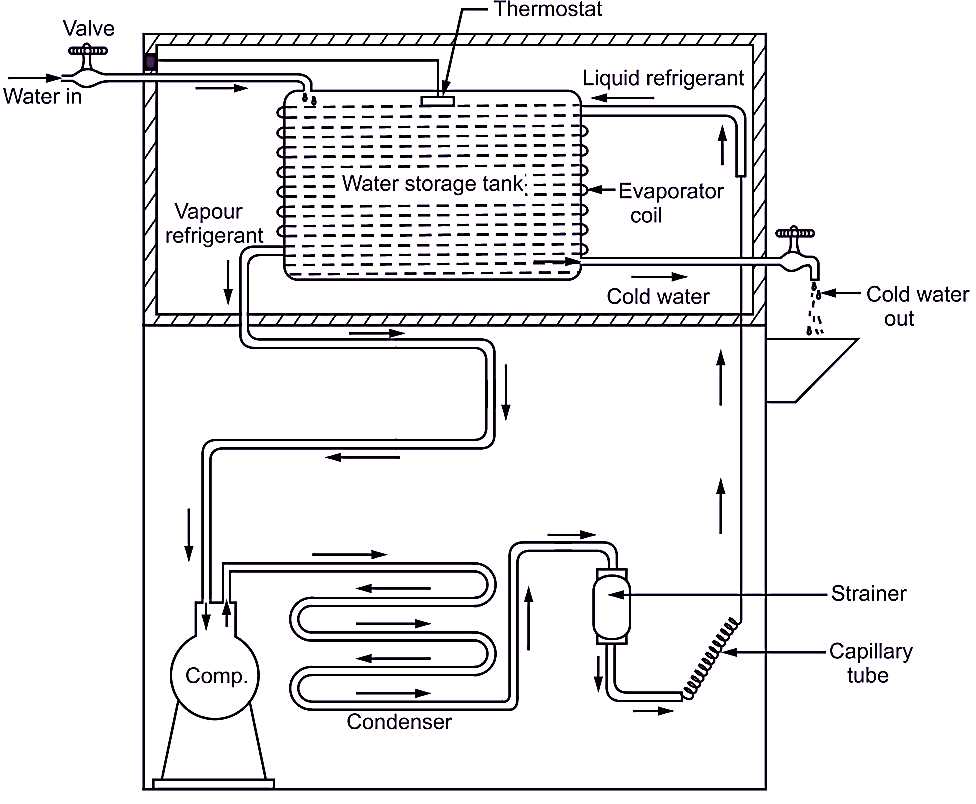
Ensure a sealed bottle neck plus intact inlet gasket before operation to keep liquid moving without air intake.
Gravity drives the fluid through the neck port into a vertical intake tube, where pressure equalization occurs via a small vent channel that stabilizes flow rate.
The stream then passes a one-way valve that blocks backflow during bottle replacement, preserving internal hygiene.
After the valve, the liquid enters a distribution line built from food-grade polymer or stainless alloy, selected to resist scaling at temperatures up to 95°C.
A cooling or heating module redirects the stream through a coil or thermal tank; flow slows here to allow heat exchange without turbulence.
Post-treatment filtration uses carbon media plus micro-mesh screens to capture particles above 5 microns while maintaining steady pressure.
The final segment leads to the tap channel, where a spring-loaded lever opens a calibrated orifice that releases a controlled stream without splashing.
Routine inspection of seals, valves, plus lines every six months prevents leaks, pressure loss, plus contamination along the entire path.
Electrical Safety Elements in Hydration Appliances: Wiring, Sensors, Protection Devices
Select copper conductors rated 105 °C with cross-section 0.75–1.0 mm² for heater circuits, 0.5 mm² for control lines; route harnesses away from hot tanks via ceramic standoffs to prevent insulation fatigue.
Apply double-insulated jackets with PVC or silicone, flame class UL94 V-0; strain relief grommets at chassis entry reduce pullout risk during bottle changes.
Use NTC thermistors near heating sleeves for overheat detection, trip threshold 95–100 °C; float switches or capacitive probes stop dry-run events when liquid level drops below 20 mm.
Integrate leakage current protection via RCD 30 mA sensitivity; pair with slow-blow fuses sized 125 % of nominal load to handle inrush without nuisance trips.
Add thermal cutoffs rated 10–15 A placed in direct contact with heater shells; single-use links at 128 °C provide last-resort shutdown during sensor failure.
Suppress voltage spikes using MOVs 275 VAC across mains input; EMI filters with common-mode chokes reduce control board resets caused by compressor startups.
Bond all metallic frames to protective earth below 0.1 Ω continuity; verify via hipot testing at 1500 VAC for 60 s to confirm insulation integrity.