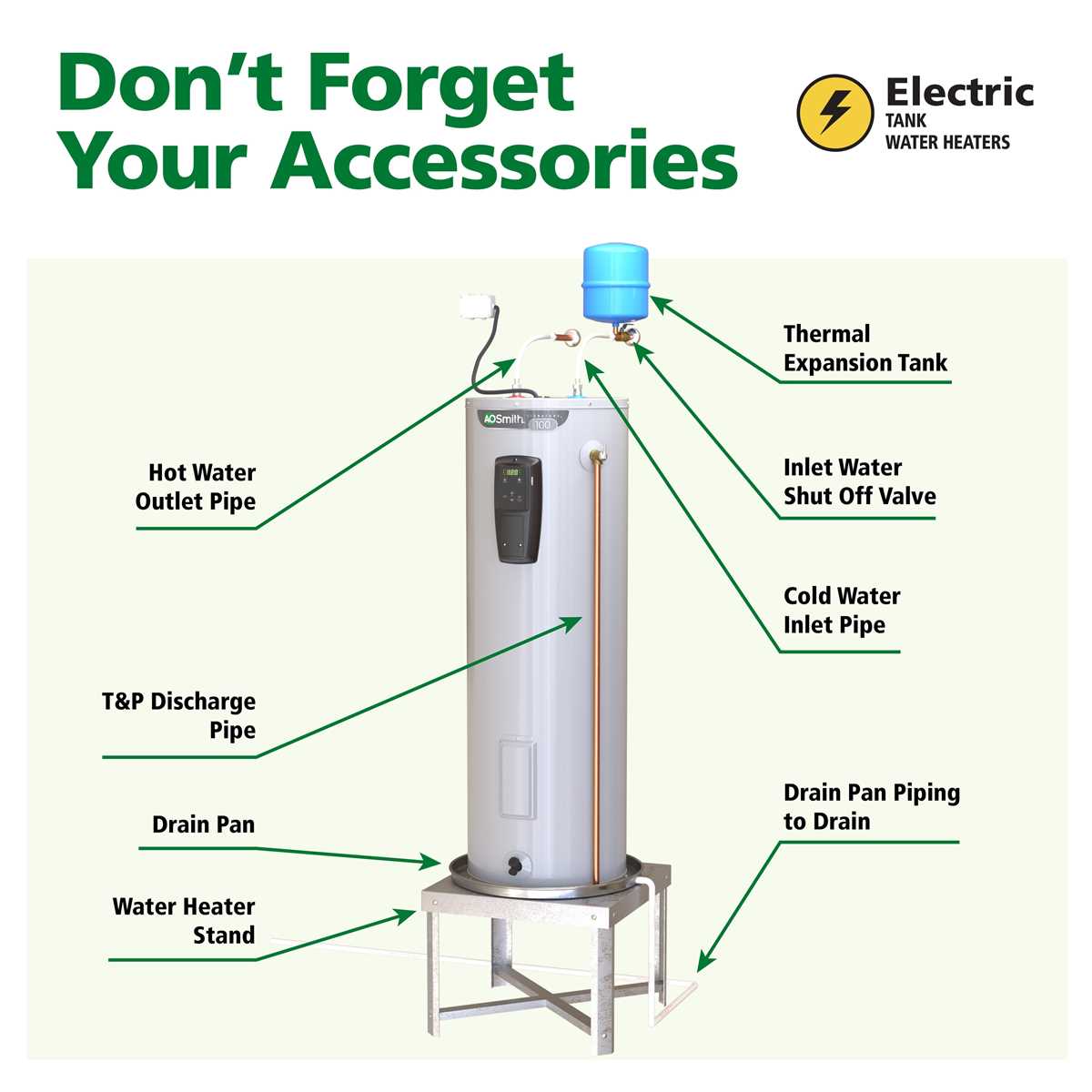
Start by familiarizing yourself with the core components that make up a typical unit. These elements are critical in maintaining proper functioning and safety. Key components like the heating element, thermostat, and pressure relief valve play distinct roles in the operation and performance of the system. Without understanding how each part interacts, diagnosing issues can become challenging.
It’s important to learn how these components are visually represented in technical schematics. Understanding the layout and connections between parts will help you identify potential malfunctions. For example, a malfunctioning heating element can often be traced back to a faulty connection or worn-out parts, both of which can be spotted easily by reviewing the electrical diagram.
Parts of a Water Heater Diagram
The heating element is the most vital component that generates the heat necessary for raising the temperature inside the tank. It’s important to check its condition regularly to ensure it’s not damaged or malfunctioning. If your unit is electric, this element is often visible in the electrical section of a schematic, where you’ll find the connections to the power supply and control switches.
The thermostat controls the water temperature by regulating the heating element. It works by sensing the internal water temperature and adjusting the power sent to the heating element. A faulty thermostat can lead to overheating or insufficient heating. It’s often located close to the heating element in diagrams, typically showing a direct link to the power source.
The pressure relief valve is designed to prevent excessive pressure build-up within the unit. In a schematic, this valve is usually positioned at the top or side, connected to the tank’s internal pressure chamber. A malfunctioning valve can lead to dangerous conditions, so regular inspection is necessary.
Drain valves, shown at the bottom of the tank, allow for the removal of sediments and water. These are crucial for maintenance, and their placement in a schematic ensures easy access for cleaning or draining. Check for leaks or blockages to prevent water damage or reduced performance.
Key Components of a Water Heater and Their Functions
The heating element is responsible for converting electrical energy into heat. It directly heats the liquid inside the tank. In a schematic, it’s typically connected to a power source and temperature controller, allowing you to monitor and control the heat output.
The thermostat regulates the temperature by turning the heating element on or off based on the current water temperature. It ensures that the liquid inside doesn’t overheat. When reading a technical drawing, the thermostat will often be shown near the element, with wiring that controls the electrical flow.
The expansion tank helps absorb the pressure created by heating the liquid, preventing damage to the tank and plumbing. It’s usually positioned at the top or side of the unit and is vital for maintaining safety, especially in closed-loop systems where pressure can build up rapidly.
The pressure relief valve is designed to open when the internal pressure exceeds a safe level, preventing explosions or other damage. It is typically located at the top or side of the tank in a schematic and connected to a drain line that releases excess pressure safely.
The drain valve is found at the bottom and allows for draining and flushing out the tank. Regularly using the drain valve helps remove sediment build-up that can affect the system’s efficiency. In diagrams, this valve is easily identified near the bottom, connected to an outlet pipe for draining.
How to Identify and Troubleshoot Common Water Heater Parts
If the unit isn’t heating, the first component to check is the heating element. Use a multimeter to test for continuity. If there is no continuity, the element is defective and needs replacement. In most schematics, the element will be connected to the power source and control unit.
If the temperature doesn’t adjust correctly, inspect the thermostat. Set the temperature to a known value and check for a response. If the unit continues to operate outside the set range, the thermostat may be faulty. It’s often shown near the heating element in a schematic and can usually be tested with a thermometer for accuracy.
A leaking valve or excessive pressure may indicate an issue with the pressure relief valve. If this valve is stuck or broken, it can cause dangerous pressure buildup. Inspect the valve for blockages or signs of wear and replace if necessary. In technical drawings, this valve will be connected to a drain line for safety purposes.
If the system produces unusual noises or doesn’t drain properly, the sediment buildup might be clogging the drain valve. To troubleshoot, attempt to flush the tank using the drain valve. In a schematic, this valve is typically located at the bottom of the tank and may require periodic cleaning.
For systems with inconsistent heating, check for power issues or faulty wiring connections in the electrical system. Schematic diagrams can show connections between the control unit, thermostat, and heating element, helping to identify short circuits or loose wiring that may be causing the problem.