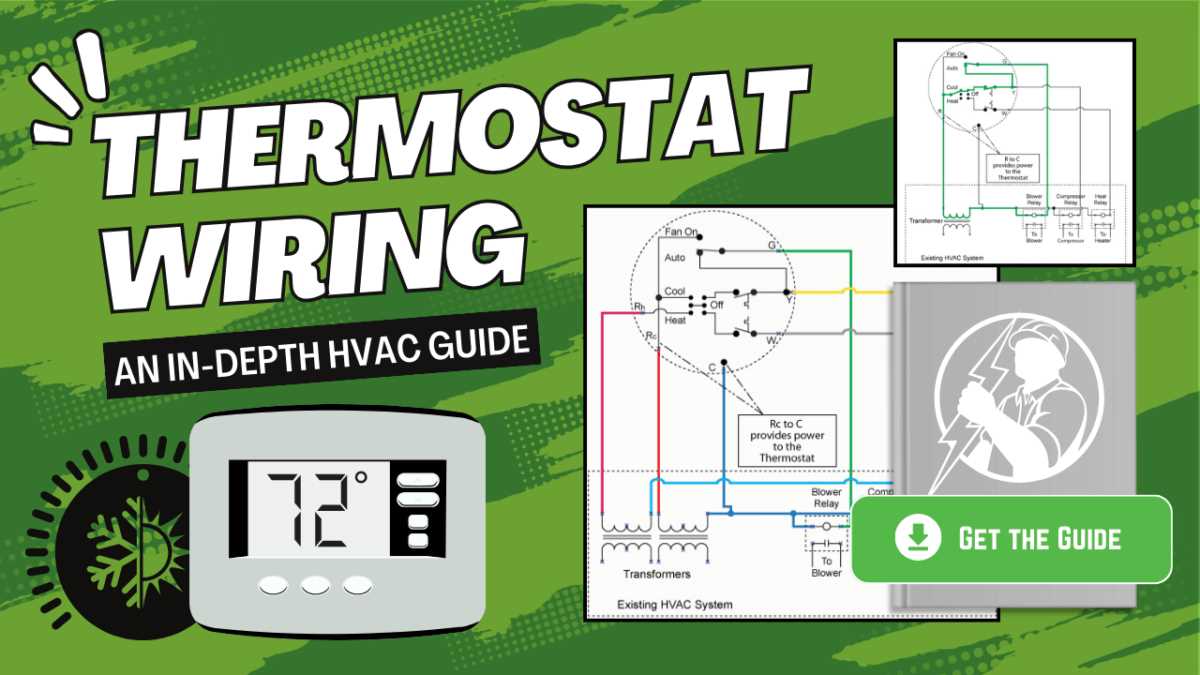
Connect the climate control unit to the cooling equipment using the correct terminal letters and conductor colors. Most residential systems operate on 24-volt control power supplied by a transformer inside the indoor air handler. Each conductor carries a specific signal that activates the compressor, fan motor, or heating stage.
The R conductor delivers the 24-volt supply from the transformer to the control device. The Y line activates the outdoor compressor contactor, while the G line turns on the indoor blower motor. A C conductor provides the common return path required by modern digital climate controllers that need constant power.
Follow consistent color conventions during installation. In many homes the red conductor carries R voltage, yellow links to compressor control, green handles fan activation, and blue or black serves as the common return. Maintaining the same color pattern simplifies troubleshooting and prevents incorrect terminal placement during maintenance.
Use solid copper conductors rated between 18 and 20 AWG for low-voltage control lines. Keep the run away from high-voltage supply cables feeding the compressor or air handler. Separation reduces electrical interference and protects signal stability between the control device and the cooling equipment.
Thermostat Wiring Diagram for AC System With Terminal Labels and Color Codes
Match each conductor to the correct terminal letter on the climate control module before powering the system. Most residential cooling units use low-voltage control lines labeled R, Y, G, C, and W. Incorrect placement can prevent compressor activation or keep the indoor fan running continuously.
The red conductor typically connects to the R terminal, carrying 24-volt supply from the transformer located inside the indoor air handler. The yellow line links to Y, which signals the outdoor compressor contactor. Green connects to G and activates the indoor blower motor. A blue or black line usually links to C, forming the common return path required by digital temperature control modules.
Route control conductors through the wall cavity or conduit while keeping them separate from 120- or 240-volt supply cables feeding the compressor and fan motors. Parallel routing near high-voltage lines can introduce interference or voltage noise that affects signal transmission between the control unit and HVAC equipment.
Use copper conductors rated between 18 AWG and 20 AWG for these low-voltage connections. Secure each conductor under the terminal screw with no exposed strands. Loose terminals can interrupt compressor startup signals or cause intermittent fan operation during cooling cycles.
How to Connect R Y G C and W Terminals on an AC Thermostat
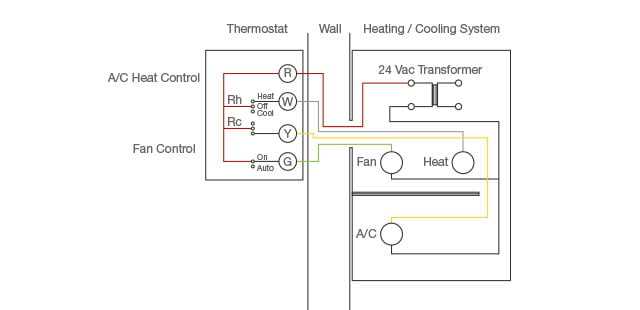
Attach each conductor to the correct terminal letter on the wall-mounted climate controller after disconnecting power to the HVAC equipment. These low-voltage connections distribute 24-volt control signals between the indoor air handler, outdoor condenser, and the control unit.
- R terminal connects to the red conductor carrying 24-volt supply from the transformer.
- Y terminal links to the yellow conductor that activates the outdoor compressor contactor.
- G terminal attaches to the green conductor controlling the indoor blower fan.
- C terminal connects to the common return line, often blue or black, used by digital climate controllers requiring constant power.
- W terminal links to the white conductor used in systems that include a heating stage.
Secure each conductor under the terminal screw, keep bare copper under 6–8 mm exposed length, and maintain consistent color mapping between the wall unit and the air handler control board.