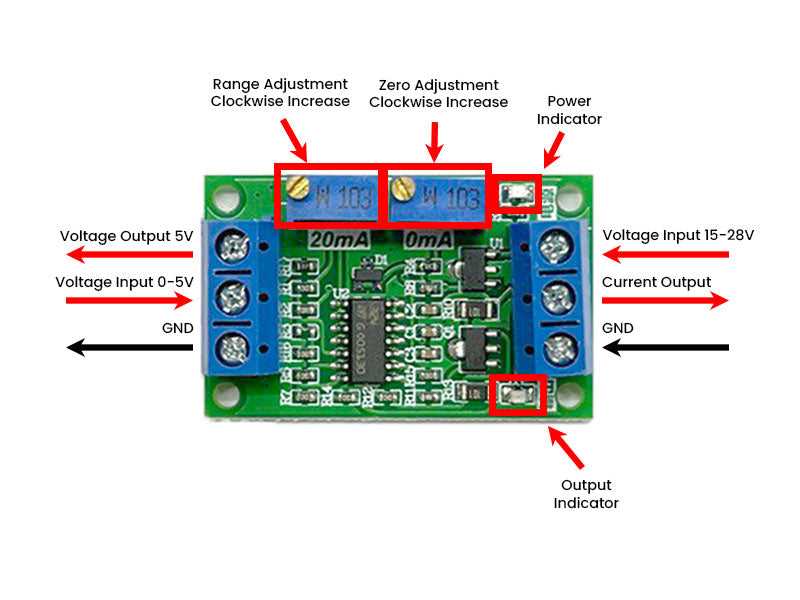
To accurately convert current signals into a usable voltage range, a reliable approach involves using resistors and operational amplifiers to scale and shift the output. The process starts with correctly identifying the input range of the current signal, ensuring it aligns with the desired output voltage range for subsequent processing.
The key to this transformation is setting up a precision resistor network that adjusts the current signal’s amplitude. Pair this with an operational amplifier in a feedback loop, and you can achieve a stable voltage output that corresponds directly to the current input. Pay attention to the power supply requirements for these components to ensure consistent performance across all operational ranges.
Once the components are chosen, the next step is creating a design that efficiently maps the current to the voltage. Use the right resistor values to scale the input to the desired output range, factoring in any expected fluctuations in the input signal. Testing the circuit with known input values and measuring the output is a critical part of verifying the design.
By using simple components such as resistors, operational amplifiers, and precision voltage references, this setup can be implemented in both industrial and laboratory environments. It’s crucial to avoid introducing noise and interference by ensuring proper grounding and shielding in your design.
Designing a Signal Scaling and Shifting Network
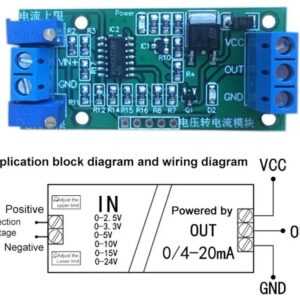
To design a system that translates current signals into a corresponding voltage, start with selecting the right resistors for the voltage scaling. A basic approach is to use a precision resistor network to drop the voltage according to the required range. The resistor’s value must be carefully calculated using Ohm’s law, factoring in both the input and output signal ranges.
Using Operational Amplifiers for Signal Conversion
Integrating an operational amplifier into the design helps refine the output signal and improves accuracy. Set up the op-amp in a non-inverting configuration with the resistor network, ensuring the input current is appropriately scaled to match the desired output voltage. The feedback loop in the amplifier ensures that the voltage is stable and linearly proportional to the current input.
For more precise output, choose a low offset op-amp with high input impedance to avoid signal distortion. Make sure the power supply is well-regulated, as fluctuations can introduce errors in the voltage conversion.
Testing and Calibration of the Design
Once the components are in place, test the system using known input values to ensure the output remains accurate. If there are discrepancies, adjust the resistor values or fine-tune the amplifier’s gain. It’s important to check the circuit under various loads and conditions to ensure consistent performance across the full range of operation.
Understanding the Components of a 4-20mA to 0-5V Signal Converter
The primary component in any signal conversion setup is the precision resistor. It helps scale the input current to a manageable level that can be interpreted by other components in the system. Resistor values must be selected based on the desired output voltage range and the expected current input range. For accurate conversion, use resistors with low tolerance to minimize errors in the output signal.
Operational Amplifiers for Signal Conditioning
Next, an operational amplifier (op-amp) plays a key role in conditioning the signal. The op-amp amplifies the small voltage variations produced by the resistor network and stabilizes the output. When configuring the op-amp, it’s important to ensure it operates in a non-inverting mode, as this will provide the desired voltage gain without inverting the signal.
For best results, select a low-offset, precision op-amp with a high input impedance. This reduces the chances of signal distortion and ensures the accuracy of the conversion process. Additionally, make sure that the op-amp is supplied with an adequate power source to maintain consistent output performance.
Voltage Reference for Stability
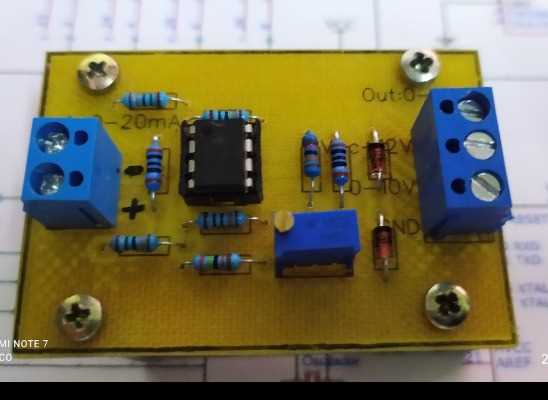
A stable voltage reference is crucial for ensuring the output remains within the desired range. A voltage reference diode or a voltage regulator can be used in conjunction with the operational amplifier to maintain a constant reference voltage. This reference ensures that any fluctuations in the power supply do not affect the final output signal.
The voltage reference should have minimal temperature drift to prevent signal errors when the temperature fluctuates. It’s also important to check that the reference voltage is within the operating range of the op-amp to ensure proper functioning throughout the circuit.
Finally, the entire system should be enclosed in a well-shielded casing to prevent electromagnetic interference (EMI) from disrupting the signal. Proper grounding of all components is also critical to avoid ground loops and ensure a stable reference for the system.
Testing the system after assembly is critical to ensure that the components work together correctly. Use a known current source and measure the output voltage to verify the accuracy of the conversion. Fine-tuning the resistor values and amplifier settings will help achieve precise and reliable performance in the final setup.