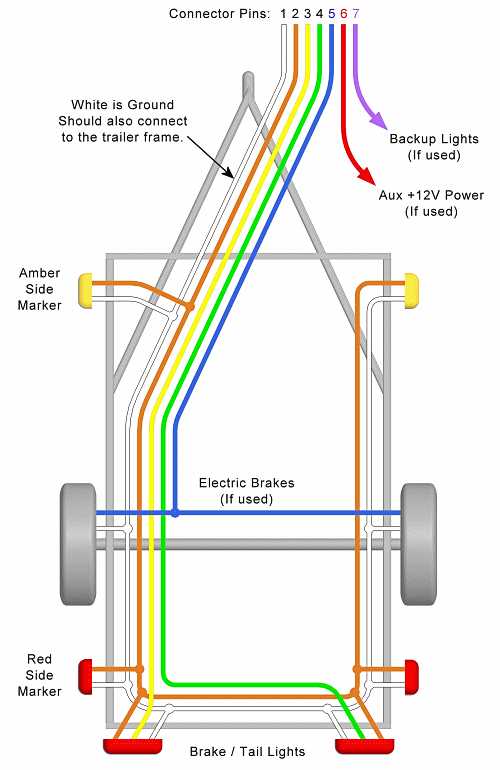
Connect the seven-way vehicle socket using the standard color assignments used in North American towing systems. The white conductor attaches to chassis ground and must connect directly to the vehicle frame with a clean metal contact. A poor ground path causes dim lamps, brake controller faults, and unstable auxiliary charging.
The brown lead normally feeds running lights and marker lamps along the camper body. The yellow conductor carries the left turn and stop signal, while the green conductor handles the right turn and stop lamp. These three lighting lines originate from the vehicle rear lamp harness and travel through the round seven-terminal vehicle socket.
Electric brake systems rely on the blue conductor. This line runs from the brake controller under the dashboard to the rear towing connector. When the brake pedal is pressed or manual control is applied, the controller sends a variable voltage along this line to activate the electromagnetic brake assemblies inside the camper axle hubs.
The black lead provides a 12-volt auxiliary charging line from the vehicle battery through a fuse or 30–40 amp circuit breaker. This path maintains the house battery inside the camper during travel. A separate reverse lamp conductor, often purple, carries the backup signal from the transmission switch to rear reversing lights or camera systems mounted on the towed unit.
Trailer RV Plug Wiring Diagram With 7 Way Connector Pinout and Wire Colors
Use the standard seven-terminal vehicle socket layout so every lighting and braking function matches the tow vehicle harness. The ground path attaches to the center or lower terminal depending on connector orientation and uses the white conductor. Bolt this line directly to the steel frame using a ring terminal and corrosion-resistant fastener.
Lighting circuits follow common color assignments used in North American towing systems. The brown lead feeds clearance lamps and running lights along the camper body. The yellow conductor carries the left turn and stop signal, while the green conductor routes the right turn and brake signal. These lines connect to the vehicle rear lamp harness and distribute current to all exterior lights on the towed unit.
Electric brake assemblies rely on the blue conductor. This line connects to the brake controller mounted under the dashboard. During braking, the controller sends a variable voltage through this conductor to the magnet coils inside the axle hubs. Current level often ranges between 0 and about 12 volts, depending on braking force set on the controller.
A separate auxiliary feed, normally the black conductor, carries battery voltage from the tow vehicle through a 30–40 amp fuse or circuit breaker. This line charges the house battery in the camper during travel and can also feed interior lighting or refrigerator control boards while driving.
The remaining terminal usually supports reverse lamps or backup camera activation using a purple conductor. This line receives voltage from the vehicle transmission reverse switch. When the vehicle shifts into reverse, the signal reaches the rear connector and activates reversing lights or camera systems mounted on the towed unit.
7 Way Trailer RV Plug Wiring Diagram With Pin Functions and Color Codes
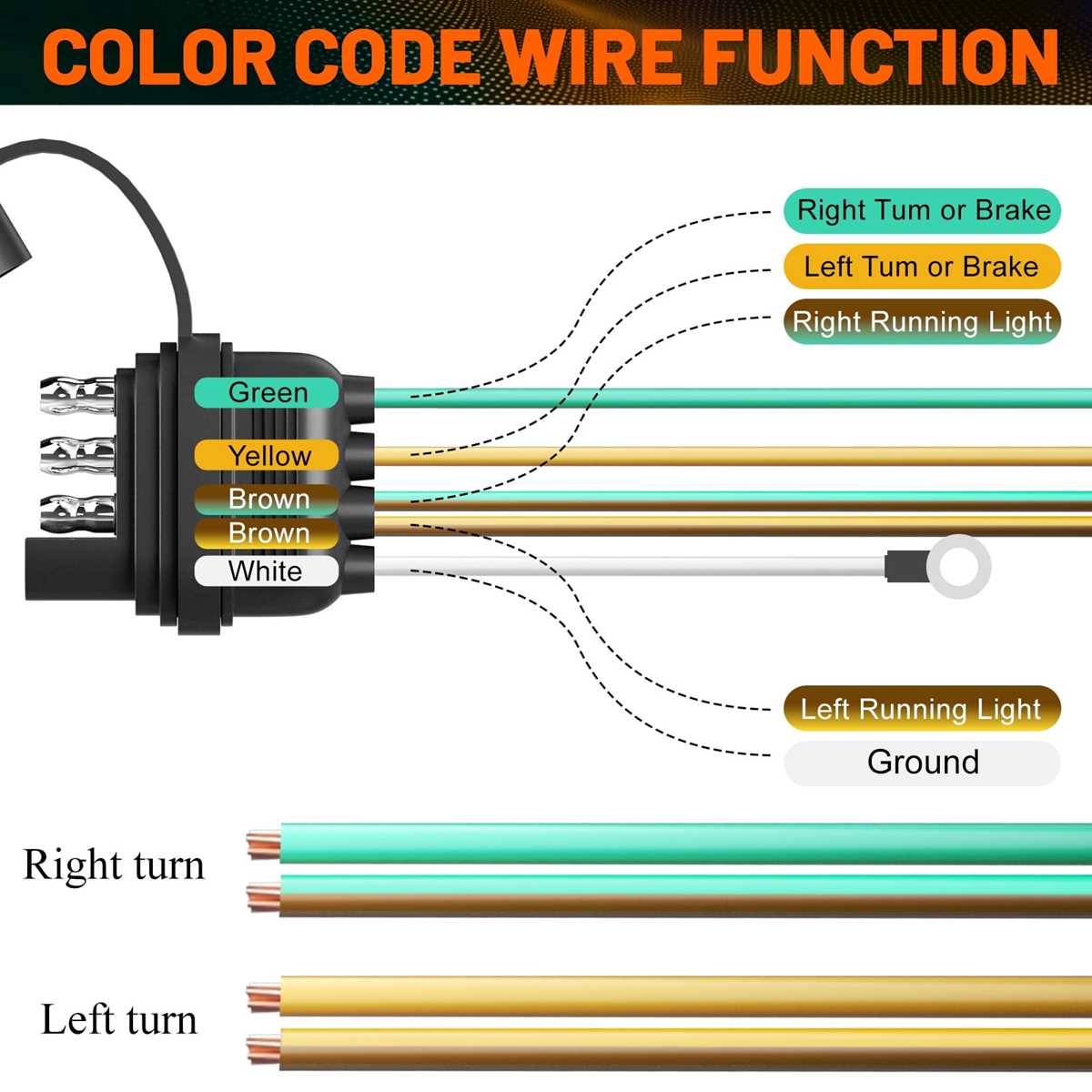
Use the seven-terminal RV connector standard so each electrical function aligns with the tow vehicle harness. The white conductor connects to the ground terminal and must bond directly to the metal frame. A weak ground path causes flickering lamps, unstable brake controller output, and charging faults.
Lighting circuits follow consistent color assignments across most North American towing systems. The brown lead feeds tail lamps and side marker lights along the camper body. The yellow conductor carries the left turn and stop signal, while the green conductor carries the right turn and brake signal. These three lines originate from the tow vehicle rear lamp harness and distribute current to all exterior lighting assemblies.
The blue conductor controls electric brake magnets located inside the axle hubs. This line connects to the in-cab brake controller. When the brake pedal is pressed, the controller sends a variable voltage along this conductor, typically ranging from 0 to about 12 volts depending on braking force settings.
The remaining terminals handle auxiliary functions. A black conductor carries battery charging voltage through a 30–40 amp fuse or breaker, maintaining the house battery during travel. A purple lead commonly carries the reverse signal from the transmission switch to backup lamps or camera systems mounted on the camper.