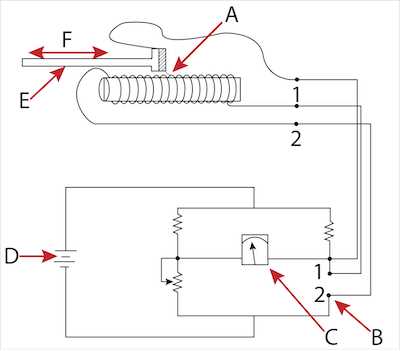
Use a Wheatstone bridge sensor module paired with an instrumentation amplifier when converting fluid force into a measurable voltage. Most strain-based sensing elements produce only a few millivolts per volt of excitation. A typical device rated at 2 mV/V with a 5-volt excitation line outputs about 10 mV at full load, which is too small for direct microcontroller input without amplification.
The sensing element normally contains four resistive gauges arranged in a bridge network. Two arms increase resistance while the opposite pair decreases as the diaphragm deflects. This imbalance generates a differential signal between the bridge outputs. Feed that signal into a precision instrumentation amplifier such as INA125 or AD620. Setting a gain of 100–500 raises a 10 mV bridge output to a range near 1–5 volts.
Provide a stable excitation source for the bridge network. Many measurement boards use 5.000 V reference regulators such as REF5050 or LM4040 to prevent drift. Connect the positive reference to the bridge supply node and route the differential outputs to the amplifier inputs through short shielded traces. Keep ground paths short and place a 0.1 µF ceramic capacitor close to the amplifier supply pins to reduce noise.
The amplified signal then feeds an analog-to-digital converter on a microcontroller or data acquisition module. A 12-bit converter with a 5-volt reference resolves about 1.22 mV per step, which allows detection of small load variations once the bridge output has been amplified. Proper gain selection, stable excitation voltage, and low-noise layout determine how accurately the sensing element reflects changes in fluid force inside the monitored system.
Pressure Transducer Circuit Diagram With Bridge Sensor and Amplifier Stage
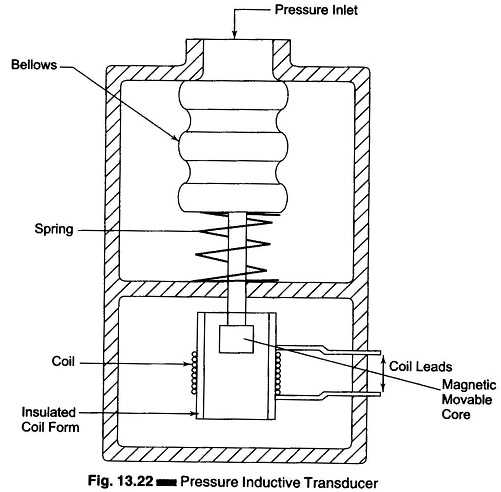
Use a strain-gauge bridge element with a stable excitation source and a precision instrumentation amplifier. The sensing element usually contains four resistive gauges bonded to a thin diaphragm. When mechanical load from fluid acts on the diaphragm, resistance in two gauges rises while the opposite pair drops, creating a differential voltage across the bridge outputs.
Excite the bridge with a regulated source between 3.3 V and 10 V. Many measurement boards apply 5.000 V reference regulators such as LM4040 or REF5050 to maintain stable excitation. A typical sensing element rated at 2 mV/V sensitivity produces only about 10 mV at full scale when driven by 5 V.
Bridge Sensor Connection Layout
- Excitation positive connected to the bridge supply node
- Excitation return tied to system ground
- Differential output positive routed to amplifier non-inverting input
- Differential output negative routed to amplifier inverting input
- Shield connected to analog ground near the amplifier
Amplify the small differential signal using instrumentation amplifiers such as INA125, AD620, or INA333. Gain is defined by a single resistor between gain pins. For example, placing a 499 Ω resistor on AD620 sets gain near 100, converting a 10 mV bridge signal into roughly 1 V at the amplifier output.
Filter high-frequency noise before the amplifier input. Install small RC networks on both bridge outputs so that the differential signal remains balanced.
- Series resistor 100 Ω on each input
- Capacitor 0.1 µF between differential lines
- Optional 1 µF capacitor between output and ground for smoothing
Route traces carrying the differential signal close together and keep them short. Ground planes around the amplifier reduce electromagnetic interference from switching regulators or motor drivers. Place a 0.1 µF ceramic bypass capacitor directly across the amplifier supply pins.
The amplified analog output normally feeds an ADC channel on a microcontroller or measurement module. A 12-bit converter with a 5 V reference resolves about 1.22 mV per step, which allows detection of small load variations once the bridge signal has been raised to a 0–4 V range.
Wheatstone Bridge Pressure Transducer Circuit Diagram With Resistor Values
Use a four-arm Wheatstone bridge built from matched strain gauges or precision resistors rated near 350 Ω or 1 kΩ. Apply a stable excitation source between the bridge supply nodes. With a 5-volt excitation line, a typical gauge element rated at 2 mV/V sensitivity generates roughly 10 mV differential output at full mechanical load. Keep resistor tolerances within 0.1% so the bridge remains balanced when no load is applied.
The bridge contains two opposite arms that increase resistance under diaphragm deflection and two that decrease. A common arrangement uses nominal values such as R1 = 350 Ω, R2 = 350 Ω, R3 = 350 Ω, and R4 = 350 Ω. Under load, one pair may shift by ±0.5–1.0 Ω. This imbalance produces a small differential voltage between the output nodes. The relationship between excitation voltage and bridge imbalance determines the measurement sensitivity.
Route the two output nodes directly into a differential amplifier input. Short traces reduce noise pickup because the signal magnitude usually remains below 20 mV. Shielded cable may be required when the sensing element is mounted far from the measurement board. Add small resistors around 100 Ω in series with each output lead to suppress transient spikes.
Bridge stability depends on temperature matching between the four resistive elements. Many sensing modules integrate temperature-compensated gauges bonded to a steel or silicon diaphragm. Excitation voltages between 3 V and 10 V maintain safe operating limits while producing a measurable differential output suitable for amplification and analog-to-digital conversion.