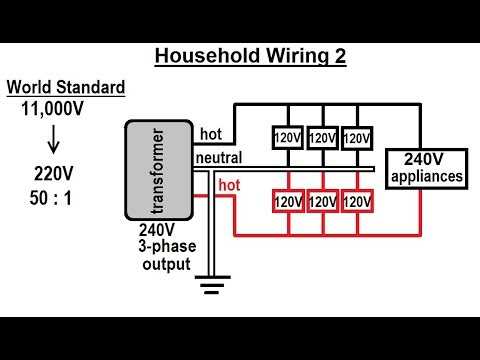
Connect the live, neutral, and ground conductors carefully to ensure safe operation of high-voltage appliances. Use color-coded cables–typically red and black for live, white for neutral, and green or bare copper for grounding. Confirm that breakers are switched off before starting any installation.
Measure voltage between each line and neutral with a reliable multimeter to verify that supply levels are stable. Keep conductor lengths as short as practical to reduce resistance and prevent voltage drops. Ensure terminals are tightened to manufacturer specifications to avoid overheating.
Use approved junction boxes and connectors rated for 240 volts. Maintain proper spacing between conductors to prevent arcing, and route cables away from sharp edges or areas prone to moisture. Apply insulating tape or heat-shrink tubing over exposed metal as needed.
Test the complete setup under controlled conditions before connecting appliances. Verify that the grounding path has continuity and that no shorts exist between conductors. Label connections clearly for future maintenance and inspection purposes.
240 Volt Three Conductor Connection Guide
Identify each conductor clearly before making connections. Typically, two colored conductors carry the live phases while the neutral is marked with a white sheath, and the ground should be green or bare. Confirm that the main breaker is turned off and use a voltage tester to ensure no power is present.
Secure all terminals firmly to prevent overheating under load. Use screws or clamps rated for high-voltage applications and check that there is no exposed metal. Keep conductor lengths consistent to avoid imbalance between phases.
Route the conductors through approved enclosures or conduit. Maintain adequate spacing to prevent contact with metal edges, and avoid running parallel to water pipes or heat sources. Label each conductor with tags to simplify future troubleshooting or maintenance.
Test the complete setup before energizing. Measure voltage between phases and from each phase to neutral to ensure correct connections. Confirm that the ground path has continuity and no shorts exist between conductors to guarantee safe operation of connected equipment.
Identifying Live Neutral and Ground Conductors
Use color coding to distinguish each conductor. Typically, black and red indicate the two live phases, white marks the neutral, and green or bare copper represents the grounding path. Always verify with a multimeter before making any connections to prevent accidental contact with energized conductors.
Check continuity and voltage levels for each line. Measure between live and neutral, live and ground, and neutral to ground to confirm the correct identification. A reading outside the expected range signals a mislabel or fault that must be corrected before proceeding.
Organize and secure the conductors clearly within the enclosure. Use cable clamps and labels for each line to reduce confusion during future maintenance. Ensure grounding paths are continuous and have low resistance to maintain safety under load conditions.