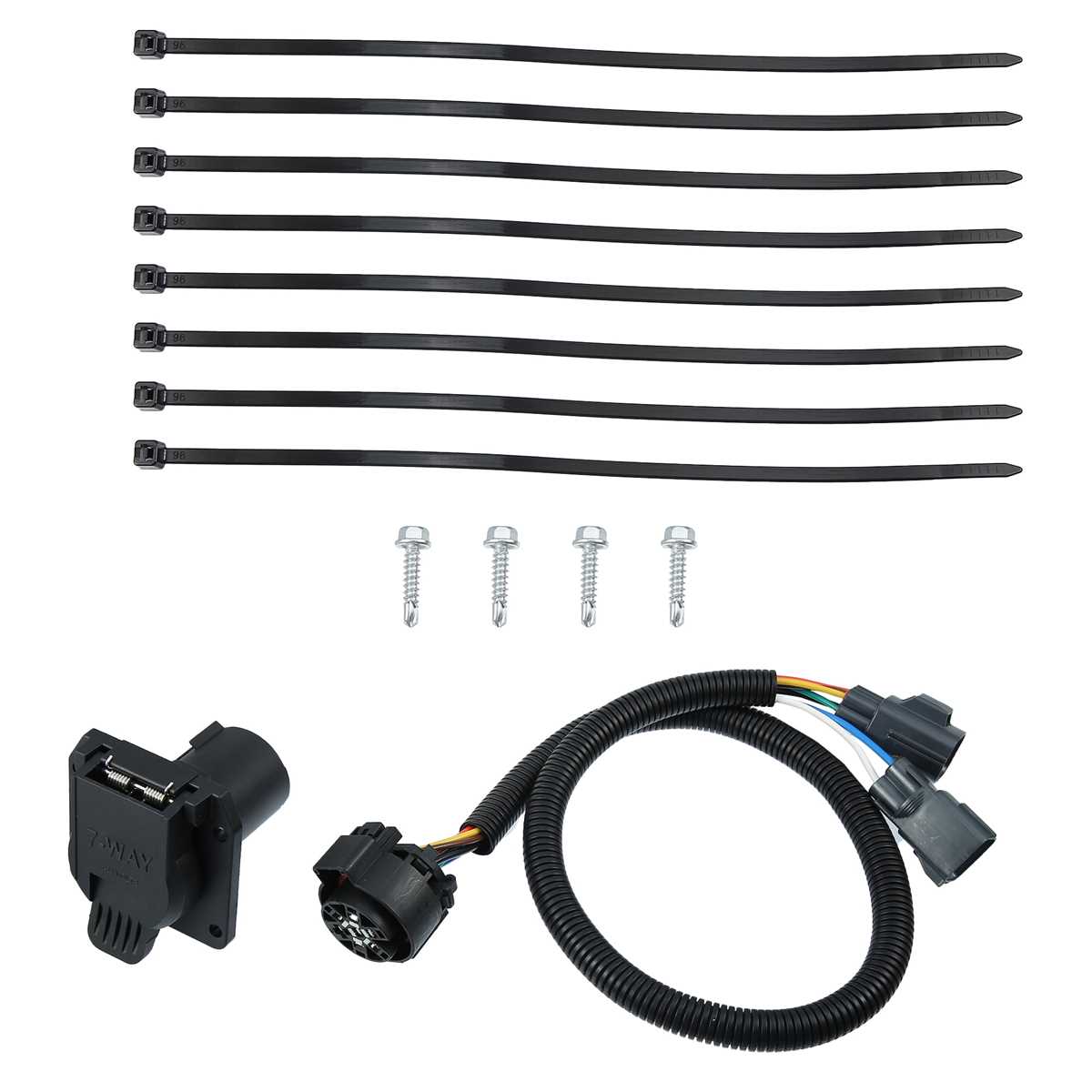
Ensure each terminal is correctly matched to its function by referencing the standardized sequence for power, ground, and signal transmission. Misalignment can lead to nonfunctional brake lights or turn indicators.
Follow the recommended color coding for each cable, as this prevents cross-connections and reduces the risk of short circuits. Common assignments include yellow for left indicators, green for right indicators, brown for tail lights, and white for grounding.
Check continuity before full engagement by using a multimeter to confirm that each line carries the correct signal from the towing vehicle to the towed unit. This ensures braking, lighting, and auxiliary functions respond as intended during operation.
Secure connectors firmly in their housing to prevent vibration-induced disconnections. Positioning the main harness in alignment with the mounting bracket enhances reliability, especially on rough terrain or extended trips.
7 Connector Layout and Pin Function Guide for Towing
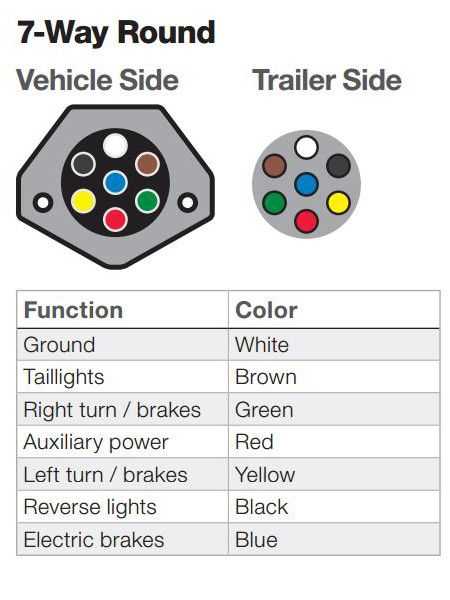
Identify each terminal by its function to ensure braking, signal, and auxiliary power operate correctly. The top-center connection usually handles reverse lights, while the adjacent terminals manage turn signals and running lights.
Use color-coded cables to match the standard assignments: brown for running lights, yellow for left turn, green for right turn, white for ground, blue for electric brakes, red for auxiliary power, and purple for reverse lamps. Consistency prevents misfires during operation.
Position the connector housing near the rear frame for minimal cable tension. Avoid sharp bends that can damage insulation or compromise continuity. Secure mounting reduces the risk of disconnection during towing.
Test continuity with a multimeter before connecting to the towed unit. This confirms each line transmits the intended signal without interference, ensuring brake lights and indicators respond accurately.
Grounding is critical. Connect the main negative terminal to a clean metal surface on the chassis to maintain stable voltage levels. Poor grounding can lead to flickering lights or incomplete brake signal activation.
Verify the auxiliary power terminal provides 12 volts consistently. This line powers internal trailer devices such as interior lights or battery chargers. Overloading the line can cause fuses to blow, so follow the recommended amperage limits.
Label each connector for repeated installations. Clear labeling reduces setup errors and speeds maintenance when disconnecting and reconnecting the towing system.
Regular inspection of contacts for corrosion or wear ensures long-term reliability. Clean any oxidized surfaces and apply dielectric grease to maintain consistent electrical conductivity under varying weather conditions.
Locating Each Terminal and Its Corresponding Signal for Proper Connection
Start by identifying the main ground line which typically occupies the lower central position in the connector. Ensuring a secure connection here stabilizes voltage for all other signals and prevents flickering or intermittent operation.
Assign each colored lead to its respective function according to standard assignments: brown for running lights, yellow for left indicators, green for right indicators, blue for electric brakes, red for auxiliary power, and purple for reverse lamps. Consistency avoids mismatched signals during towing.
Verify the brake and turn signal lines by using a test lamp or multimeter. Apply current to the source and confirm illumination at the target device. This confirms correct routing before final assembly.
Keep all terminals clean and secure to maintain reliable connections. Corrosion or loose contacts can interrupt signal flow, so periodic inspection and light lubrication with dielectric grease are recommended for long-term performance.