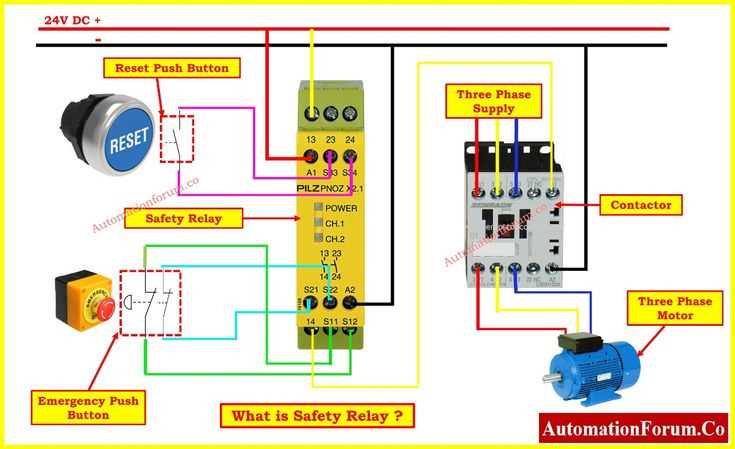
Ensure stable operation by connecting the coil terminals directly to a regulated 24-volt source capable of delivering at least 1 amp. Polarity must match the markings on the switch base to prevent overheating or coil damage.
Use short, thick conductors for load connections to minimize voltage drop. Check contact ratings carefully; standard contacts handle up to 10 amps at 24 volts DC, but higher currents require heavy-duty models or parallel arrangements.
Integrate a flyback diode across the activation terminals to suppress voltage spikes that could damage downstream electronics. Orientation is critical; the cathode must face the positive supply.
Mount the assembly on a non-conductive surface and secure it to prevent vibration-induced loosening. Inspect connections after initial energizing to confirm proper engagement and absence of sparking.
Understanding and Connecting a 24v Relay Safely
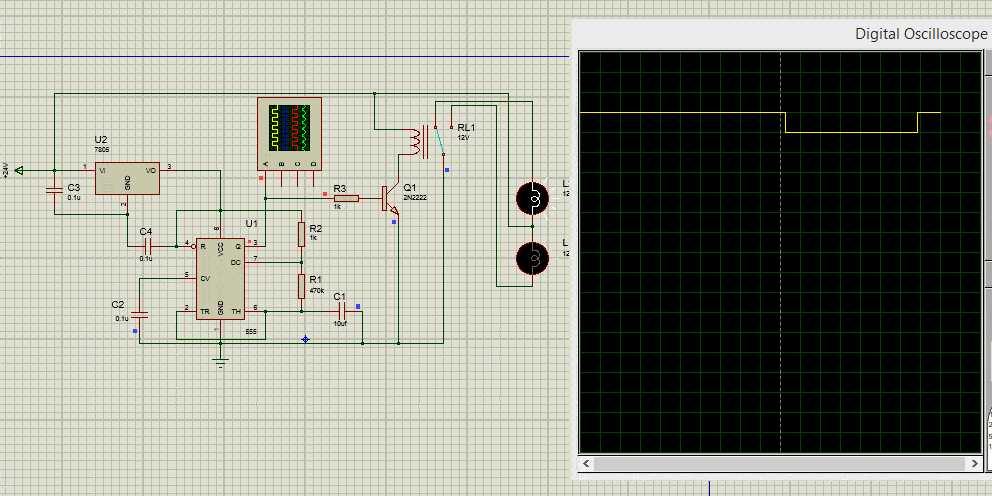
Connect the coil terminals to a stable 24-volt supply rated for at least 1 amp to prevent overheating. Observe polarity markings to avoid damaging the coil or triggering unintended activation.
Verify the contact ratings before linking any load. Standard contacts typically handle up to 10 amps at 24 volts DC, while higher current devices require industrial-grade models or parallel connections.
Mounting and Insulation Guidelines
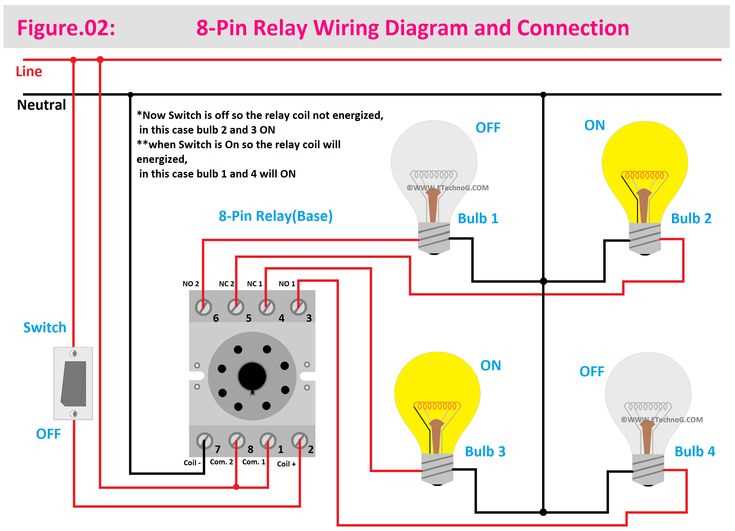
- Secure the unit to a non-conductive surface to prevent short circuits.
- Maintain a minimum clearance of 5 mm between terminals and metallic surfaces.
- Inspect mounting points for vibration resistance to avoid loosening over time.
Integrate a flyback diode across the coil terminals to suppress voltage spikes. Cathode orientation must face the positive supply to protect sensitive components downstream.
Use short, thick conductors for load connections to reduce voltage drop. Double-check each connection for firm engagement and absence of corrosion before powering the setup.
Testing and Maintenance
- Apply the 24-volt supply and measure voltage across the coil to confirm proper energizing.
- Check continuity through the contacts while the coil is activated.
- Periodically inspect connections for wear, overheating, or discoloration to maintain reliable operation.
Identifying Relay Terminals and Contact Points
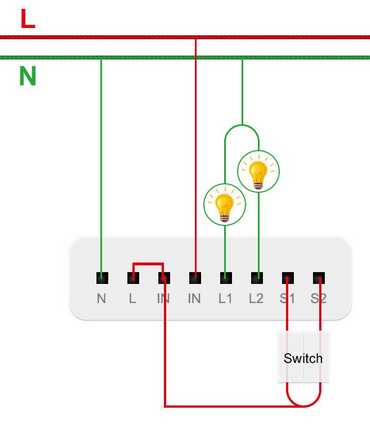
Locate the coil pins first by measuring resistance across each pair. Typical coils range between 400 and 800 ohms, and the correct pair will show consistent resistance, distinguishing them from load terminals.
Identify the common, normally open, and normally closed points by tracing the metallic pathways inside the enclosure. Use a multimeter in continuity mode to verify each contact under de-energized and energized conditions for accurate mapping.
Marking and Safety Tips
Label all terminals with permanent markers or heat-shrink labels to prevent misconnection during installation. Ensure power is disconnected before probing to avoid shorts or accidental activation, especially when multiple units are in a control panel.