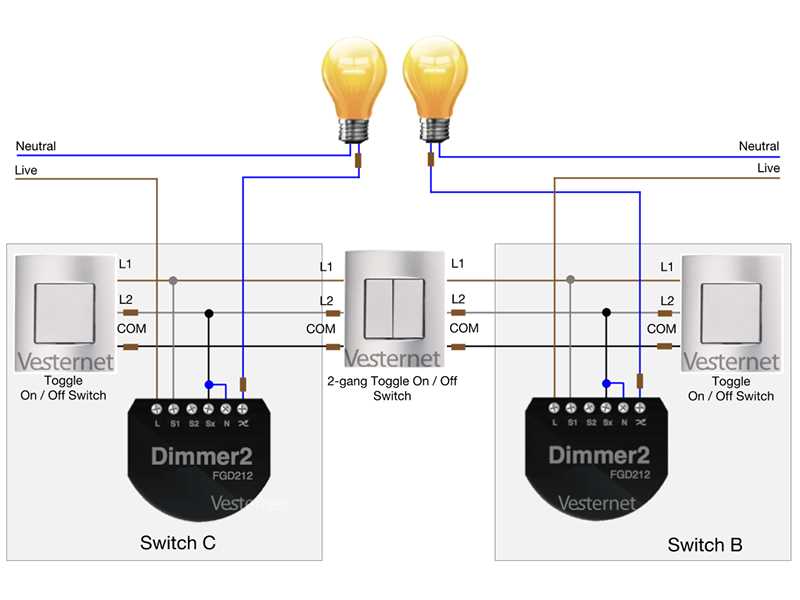
To set up a bidirectional control system, begin by understanding the key components involved, such as the terminals and connections for the power and load circuits. These elements allow you to control a single light or device from two different locations. Pay particular attention to the configuration of the common terminal, which serves as the central point for the connections.
Ensure that the power source is connected correctly, with one line leading to the first control point and the second line passing through the connecting wire to the next control point. Proper insulation and routing of these wires are crucial for safety and effective operation. Check for continuity in the setup to avoid any disruptions in functionality.
If the system isn’t functioning correctly, inspect the connections at each point to ensure that the travelers and common wires are in the right positions. Improper connections can lead to issues such as flickering or complete failure to control the light from both positions. Always verify the configuration before finalizing the setup to ensure seamless operation.
Wiring Setup for Bidirectional Control
For proper installation, start by connecting the power source to the first control point. From there, run two traveler wires to the second control point. The common terminal will be linked to the load, while the traveler terminals will carry the signal from one point to the next. This setup allows you to control the same device from two different locations.
Power and Common Connections
Ensure that the live wire is connected to the common terminal on the first control point. From there, a separate wire should be run to the second location’s common terminal, allowing for seamless switching. The second terminal on each control should be connected to the traveler wires, which are responsible for transferring the signal.
Traveler Wires and Proper Routing
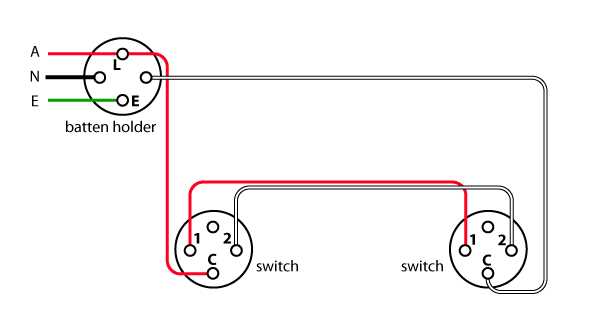
Traveler wires are responsible for carrying the signal between the two control points. It is critical to ensure that both traveler wires are routed securely and do not come into contact with any other conductors. This helps maintain the integrity of the control system and prevents electrical shorts or malfunctions.
- Verify proper insulation of the traveler wires.
- Ensure the wires are long enough to reach both control points without strain.
At the second control point, connect the two traveler wires to the traveler terminals. One wire will carry the signal from the first control, while the second wire will carry the signal from the load. Make sure these are firmly attached to avoid any interruptions in the control signal.
If you’re facing issues like flickering or unresponsive operation, check the integrity of the connections at both control points. Loose connections or incorrect placement of traveler wires can often lead to performance problems, so take the time to inspect each component thoroughly before finalizing the installation.
Understanding the Wiring for a 2-Way Control System
Begin by identifying the two main terminals of the first control. One terminal connects to the power source, while the other is used to send the signal to the second control. The load should be wired to the common terminal of the second point, ensuring that the connection will function correctly when switched on from either location.
The traveler wires are key to this configuration. They carry the signal from one control to the next. Ensure that these wires are connected securely to the traveler terminals on both controls. This setup enables the system to work by allowing either control to send the signal to turn the device on or off.
Next, route the power supply to the common terminal of the first control point. This wire should be connected directly to the main power line, ensuring it carries the necessary voltage for the entire setup. The common terminal serves as the central connection point between the two controls and the device.
- Verify the insulation of the power wire to avoid any short circuits.
- Ensure proper connections to the common terminal at both control points.
At the second control, the traveler terminals should be connected to the same traveler wires. These wires will transmit the signal from the first control to the load, effectively completing the electrical path. This ensures that when either control is activated, the load can be powered or turned off.
During installation, double-check that the connections between the traveler wires and terminals are tight. Loose connections could cause intermittent issues, such as failure to switch the device on or off properly. Pay close attention to the wiring direction, ensuring that no wires are mistakenly reversed or misconnected.
Finally, after completing the wiring, test the system by operating both controls. Ensure that the device is responsive from both locations, and that no electrical issues, such as flickering or unresponsive controls, occur. Troubleshoot by checking the wiring and making adjustments where necessary.