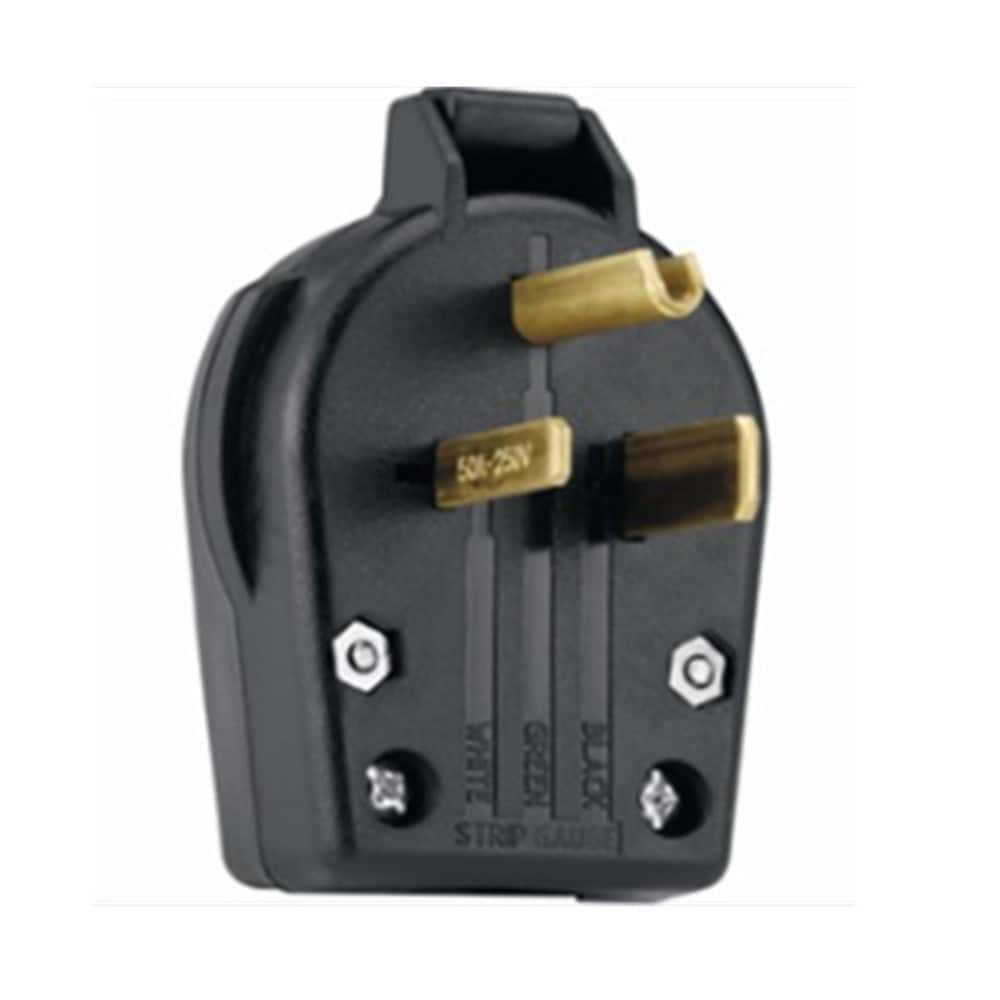
Use a 50-A rated three-contact power connector only with two live conductors and one neutral return. The two outer blades deliver opposite phases, each measuring about 120 V relative to neutral and roughly 240 V between the two live lines. Attach the black conductor to one outer terminal, the red conductor to the second outer terminal, and the white conductor to the center neutral terminal. This arrangement supports heavy loads such as electric ranges and workshop equipment designed for a 240-volt supply with a neutral return.
Terminal orientation matters. In most three-blade range-style connectors (for example, models equivalent to older NEMA 10-50 hardware), the center contact accepts the neutral conductor. The remaining two contacts carry the energized lines. Use copper conductors sized 6 AWG for the two live lines and neutral when the circuit rating is 50 A. Secure each conductor under the terminal clamp firmly; loose termination produces heat buildup under sustained load.
Before attaching the connector body, verify conductor placement with a multimeter. Measure resistance from each terminal to the corresponding conductor end at the panel: black to one energized pole, red to the second energized pole, white to the neutral bar. Voltage checks after energizing should read near 240 V across the two outer contacts and about 120 V from each outer contact to the center. Accurate placement prevents reversed polarity and protects appliances designed for split-phase supply.
50A Three-Pin Power Connector: Step-by-Step Connection Guide
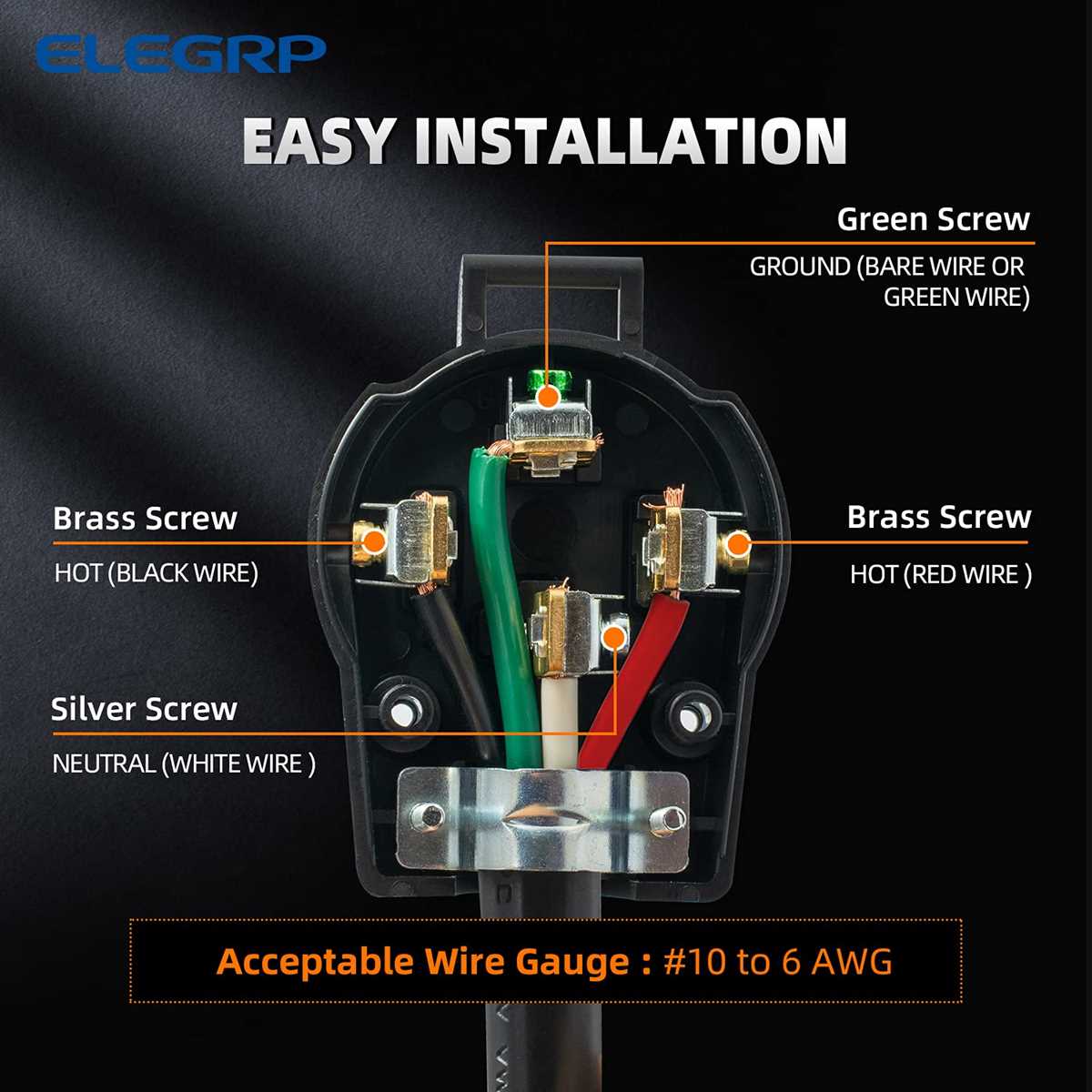
Connect the hot conductor to the brass-colored terminal, the neutral line to the silver terminal, and the ground lead to the green screw inside the 50A three-pin power connector. Strip about 18–22 mm of insulation from each conductor and twist the copper strands tightly before insertion. The hot lead normally uses black or red insulation, the neutral uses white, and the grounding lead is bare copper or green. Tighten terminal screws firmly (recommended torque typically 18–22 lb-in) so the conductor cannot move when pulled. Route the cable through the strain-relief clamp built into the connector body and secure it so tension on the cord never reaches the terminals.
Terminal Layout and Assembly
The three-contact layout places the grounding point slightly offset from the two current-carrying terminals. Position the cable so the grounding lead reaches the green screw without stretching across the interior. After fastening all conductors, fold them along the inner channels of the housing rather than stacking them directly over the terminal posts; this reduces pressure when the shell is closed. Reassemble the connector body, tighten the cord clamp screws evenly, and verify continuity with a multimeter: hot-to-neutral should read open, hot-to-ground open, while each conductor shows direct continuity to its matching blade. A final visual check ensures insulation reaches the terminal edge with no exposed copper outside the clamping point.
How to Identify Hot, Neutral, and Ground Terminals on a 50 Amp 3-Prong Plug
Check the shape and position of the three metal contacts first: the two angled blades carry the energized conductors, while the straight or round contact serves as the grounding path. This layout appears on heavy-duty connectors used for high-load appliances and recreational vehicle shore power. The angled contacts normally connect to separate energized lines delivering split-phase power, while the remaining contact connects to the safety conductor that routes fault current away from equipment.
Examine the terminal screws on the rear side of the connector body. Manufacturers typically mark each terminal using letters or colors. Look closely near the clamping points where the cable cores attach. Identification marks usually appear as stamped letters beside the screw heads or molded into the plastic housing.
- X – first energized conductor
- Y – second energized conductor
- G or ⏚ – grounding contact
Inspect conductor insulation colors inside the cable jacket. Standard North American color coding for heavy electrical circuits commonly follows this arrangement:
- Black insulation – energized line #1
- Red insulation – energized line #2
- Green or bare copper – grounding path
A neutral conductor is normally absent in this specific connector configuration. Equipment using this connector receives two 120-volt lines that together provide 240 volts between them. The grounding conductor remains strictly for fault protection and must never carry operational current.
Visual Differences Between Terminals
The grounding contact almost always appears thicker or longer than the energized blades. This design forces the grounding connection to engage first and disconnect last when the connector is inserted or removed. Such geometry reduces shock hazard during connection and disconnection.
- Ground contact: round or U-shaped, thicker metal
- Line contacts: flat blades positioned at angles
- Ground screw: usually green
- Line screws: brass or copper tone
Verification with a Multimeter
Use a multimeter on continuity mode to confirm the grounding terminal. Place one probe on the suspected grounding blade and the second on the metal frame of the device or connector housing. A near-zero resistance reading confirms the grounding point. Energized terminals will not show continuity to the housing.
For installed connectors, voltage measurement between the two angled blades should read roughly 240 volts, while each blade measured against the grounding contact should show around 120 volts. These readings verify that the energized conductors and grounding path are attached to the correct terminals.