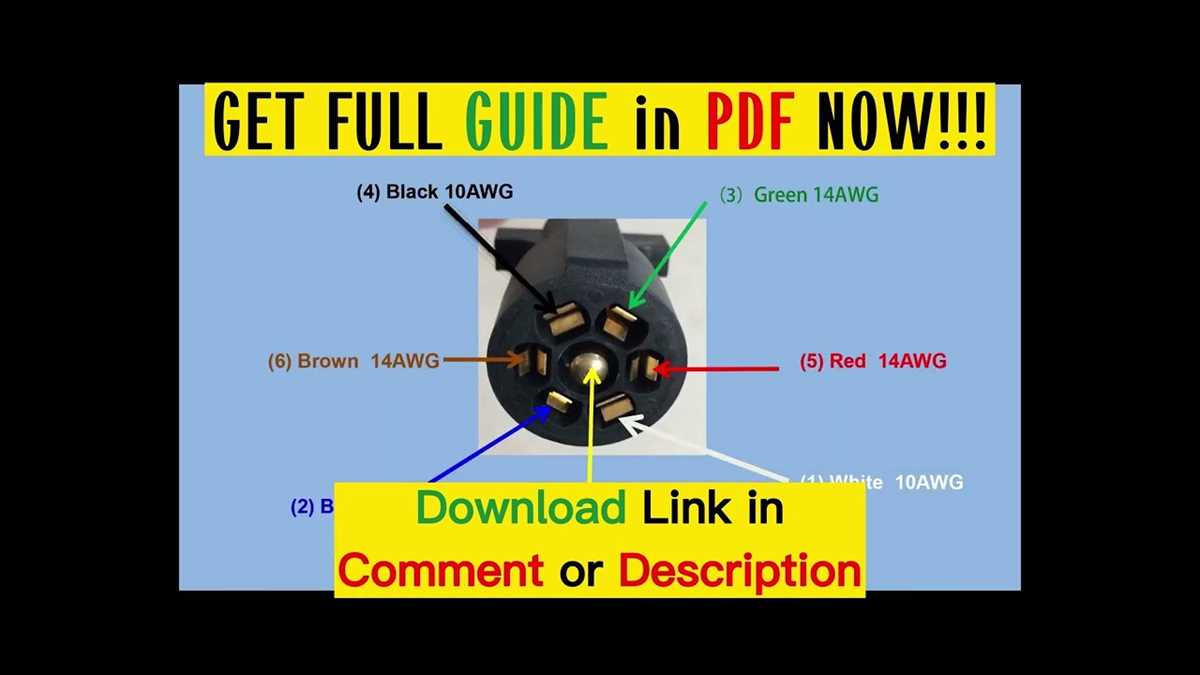
Use a 7-contact RV-style tow connector with the standard color code: white – ground return, brown – tail lamps, yellow – left turn/stop, green – right turn/stop, blue – electric brake feed, black – 12-volt auxiliary supply, purple or orange – reverse lamps. Correct matching of these conductors prevents blown fuses, inactive brake magnets, and lighting faults while hauling a caravan, boat hauler, or cargo carrier.
The socket normally places the ground terminal at the center, while the surrounding contacts distribute lighting, braking, and power circuits. The brake control lead (blue) routes current from the cab-mounted brake controller to electromagnets inside the wheel assemblies. The black auxiliary lead typically carries constant 12-volt power from the vehicle battery through a fused line rated around 30–40 amps, supplying onboard batteries or interior lighting inside the hauled unit.
Correct conductor gauge prevents voltage drop. Tail and signal circuits usually use 16–14 AWG copper, while the brake and auxiliary supply lines work better with 12 AWG because they handle higher current loads. The ground return should match the largest conductor size in the harness to avoid resistance buildup that causes dim lamps or weak brake response.
Before connecting the harness to the vehicle socket, verify each circuit with a multimeter or test light. Activate turn signals, brake pedal, and reverse gear one at a time while probing the contacts. This quick check confirms that the contact layout and color assignments match the tow vehicle harness, preventing cross-connection that could damage lighting modules or brake controllers.
Hopkins 7 Pin Trailer Plug Wiring Diagram: Practical Guide for Correct Connections
Match each conductor color to the correct terminal on the 7-contact towing socket before tightening any screw. Brown usually feeds rear marker lamps, yellow carries the left turn and brake signal, green serves the right turn and brake circuit, white connects to chassis ground, blue links to the electric brake line, black supplies auxiliary 12-volt power, and purple (or sometimes orange) operates reverse lights. Strip about 6–8 mm of insulation, twist copper strands tightly, then secure them under the terminal clamp to prevent strand spread and voltage loss.
Terminal Layout and Signal Roles
The circular connector used on most RV-style towing systems places the ground contact near the lower edge so the frame return path remains stable even when vibration occurs. Clockwise placement typically follows this pattern: ground at the bottom, tail/marker feed on the lower left, left stop/turn above it, brake controller output at the top, auxiliary 12 V slightly to the right of top center, right stop/turn on the upper right, and reverse light on the lower right. Verify each position with a multimeter set to DC voltage; activate the tow vehicle signals one by one and confirm the correct terminal receives power.
Connection Reliability Tips
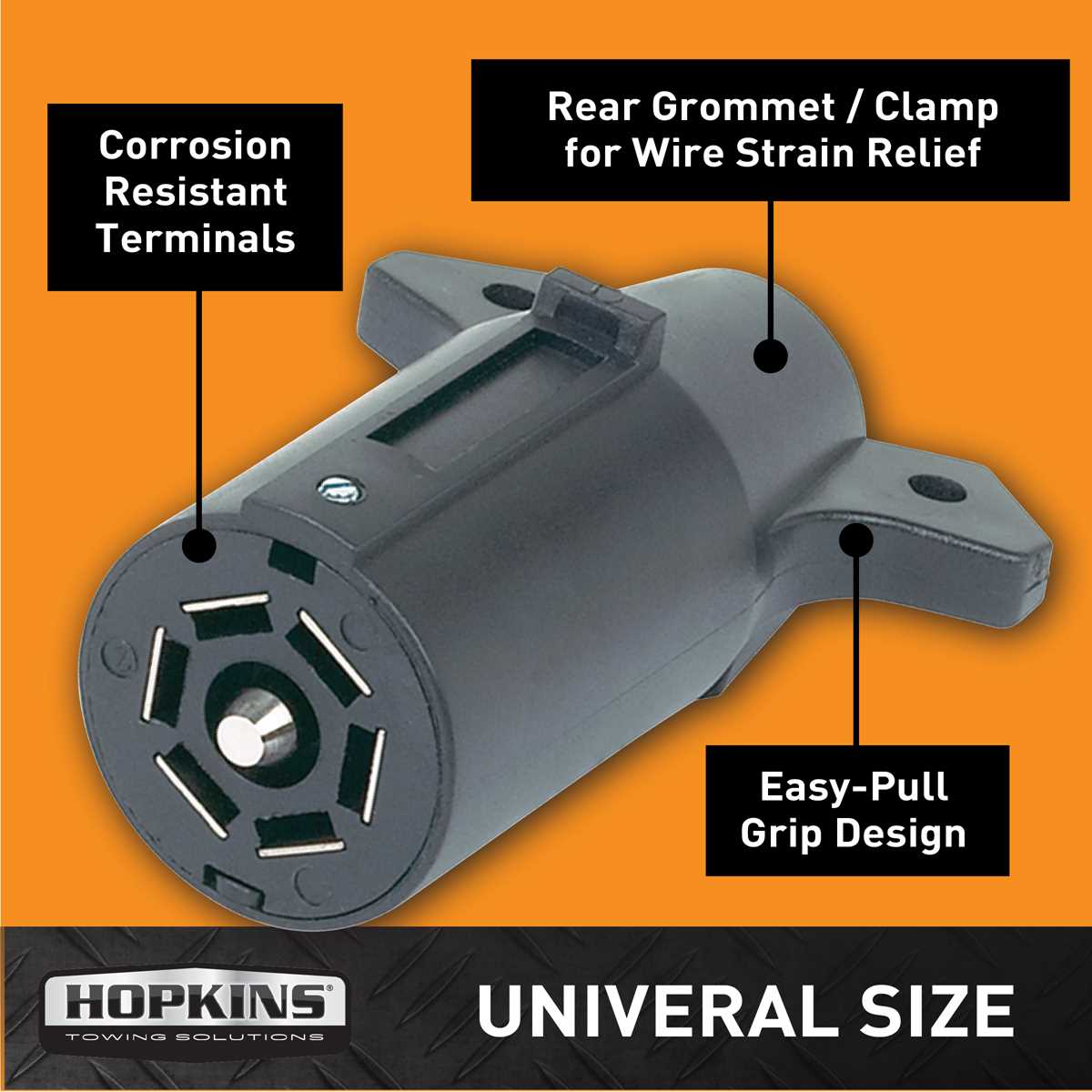
Apply dielectric grease inside the connector housing before assembly to reduce corrosion and moisture intrusion. Route the cable bundle through a strain-relief clamp so vibration from road movement does not pull on the terminals. After tightening screws, tug lightly on each conductor; movement indicates the clamp did not bite into the copper properly. Finish by checking continuity between the ground lead and the vehicle frame and measuring voltage at the auxiliary power contact with the engine running, which should read close to 13.5–14.4 volts.
7-Way RV Blade Connector: Terminal Functions and Color Codes Explained
Connect the white conductor to the chassis ground point first. This line serves as the return path for every circuit in the 7-contact towing interface. Attach it directly to bare metal on the vehicle frame using a corrosion-resistant bolt. A weak ground path causes dim lamps, erratic brake response, and voltage drops across the entire harness.
The brown conductor operates the running and marker lamps along the tow unit. When the vehicle’s parking lights switch on, this line distributes low-current illumination to side markers, rear clearance lights, and license plate lamps. Route this conductor through weather-sealed connectors and avoid sharp frame edges to prevent insulation damage.
Yellow carries the left-side turn signal combined with the left brake lamp feed. When the driver presses the brake pedal, this circuit sends steady voltage; during signaling it pulses according to the vehicle flasher module. A secure crimp connection prevents intermittent flashing that often appears when oxidation builds up inside connectors.
Green performs the same task for the right-side turn and stop lamp channel. Keep this conductor separated from high-current lines such as the electric brake supply to reduce electromagnetic interference that may disrupt LED light assemblies.
Blue powers the electric braking system installed on many towable loads. This line receives a variable output from the in-cab brake controller, adjusting current according to pedal pressure or manual override. Use a heavier gauge conductor–typically 10–12 AWG–because brake magnets draw several amps during full stopping force.
Black supplies constant 12-volt auxiliary power from the vehicle battery. It maintains charge for onboard batteries in the towed equipment or runs interior lighting while driving. Protect this circuit with a 30–40 amp fuse or automatic reset breaker located close to the battery terminal.
Purple activates reverse lamps or backup actuators. When the transmission shifts into reverse, the vehicle sends voltage through this channel to disengage surge brakes or illuminate rear work lights on the attached unit. If reverse lockout devices fail to release, inspect this conductor for breaks near the coupler junction box.
Arrange these seven conductors inside the round vehicle connector so that ground sits at the reference position and lighting circuits surround it logically. Consistent color identification across the harness simplifies troubleshooting: white (ground), brown (running lights), yellow (left signal/stop), green (right signal/stop), blue (electric brakes), black (auxiliary battery feed), purple (reverse control). Keeping the layout uniform across vehicles avoids cross-connection faults during roadside coupling.