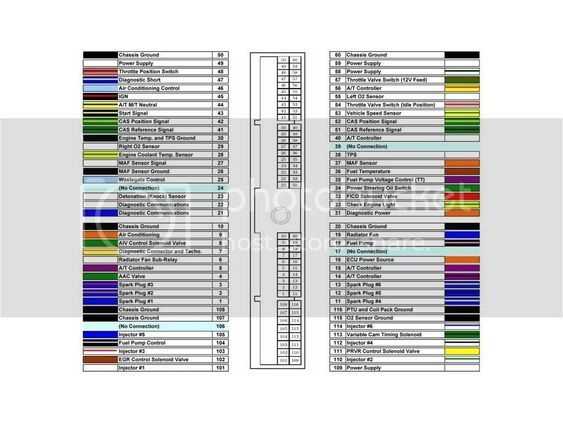
Match power and ground leads first by locating the factory harness terminals near the dashboard. Red wires indicate constant power, while black or brown signals usually serve as grounding points. Always verify voltage with a multimeter before proceeding.
Identify each speaker connection individually. Front left and right channels often use green and white pairs, with stripes denoting polarity. Rear speakers commonly follow purple and gray schemes. Ensure positive and negative terminals align correctly to prevent phase issues.
Integrate aftermarket head units cautiously. Retain original connectors when possible to maintain proper signal routing. Use matching crimp connectors or solder points for secure connections, and insulate exposed terminals with heat-shrink tubing to avoid shorts.
Confirm all illumination and accessory leads. Orange or yellow traces typically carry dimmer or switched accessory signals. Connecting these incorrectly can prevent dashboard lights from functioning or cause the unit to power incorrectly.
Test the system incrementally. Connect each speaker channel one at a time, verifying sound output before finalizing assembly. Monitor voltage stability on power lines to ensure safe and reliable operation across the harness.
Nissan Radio Color Codes and Stereo Connection Guide
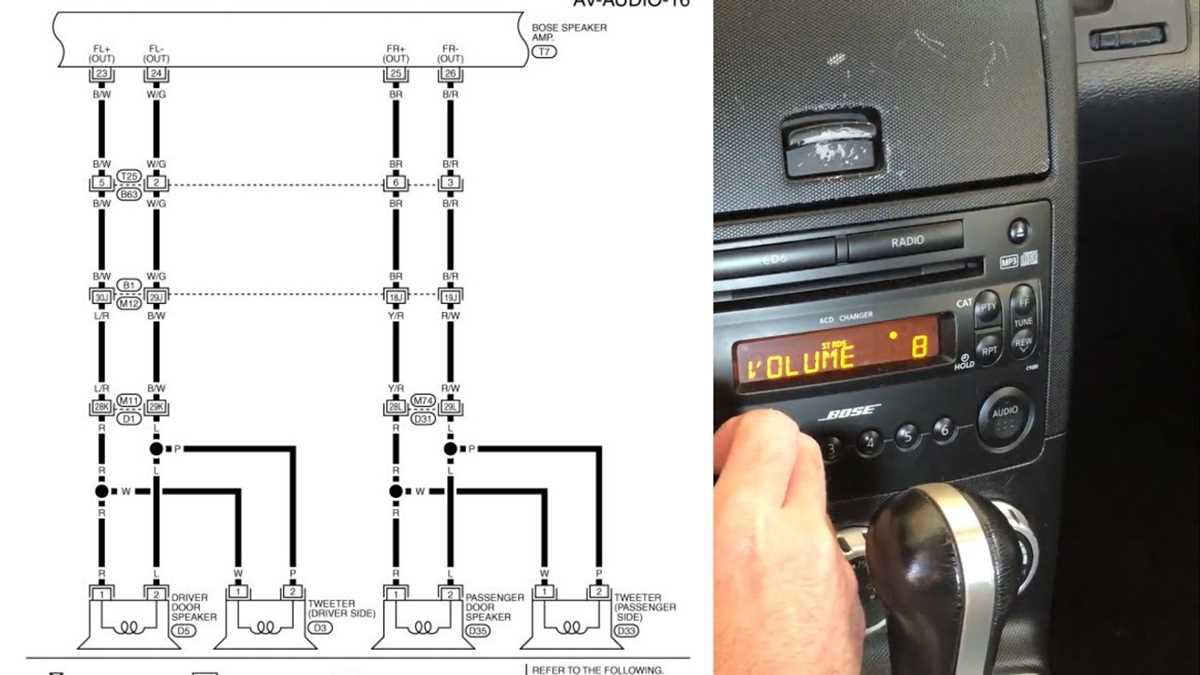
Verify each lead before connecting. Use a multimeter to identify power, ground, and speaker paths in the factory harness. Typically, red traces supply constant energy, black or brown lines serve as grounding points, and paired green, white, purple, or gray leads carry speaker signals. Align positive and negative terminals carefully to avoid phase reversal and ensure proper sound output.
Integrate aftermarket audio units safely. Retain original connectors when possible and match each signal with its corresponding terminal. Use crimp connectors or solder joints to secure connections and protect exposed points with heat-shrink tubing. Test each channel individually before full assembly to confirm correct functionality and avoid damage to the electrical system.
Identifying Power and Ground Leads in Nissan Factory Harness
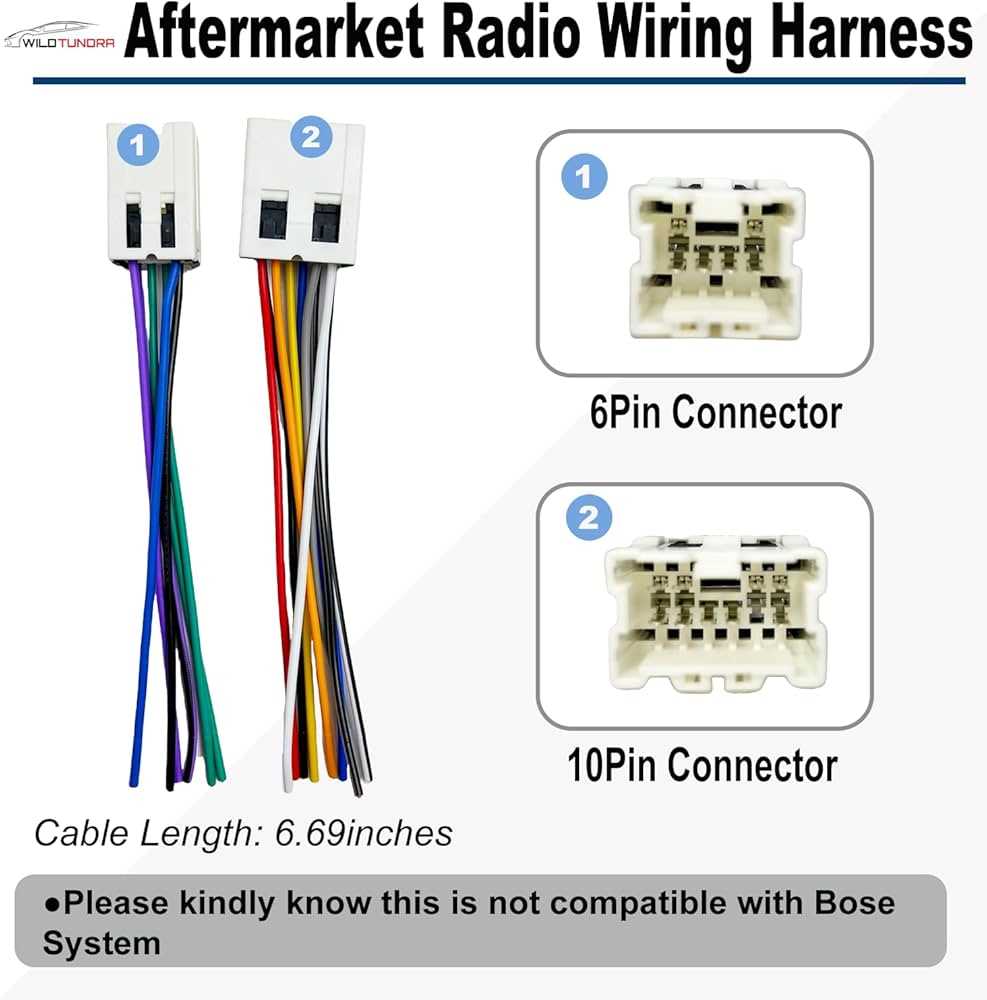
Confirm power supply traces before integration. Most factory harnesses route continuous energy through red or orange leads. Verify each line with a multimeter set to DC voltage to prevent accidental short circuits and ensure the correct polarity is observed for aftermarket modules.
Locate grounding paths accurately. Black or brown leads typically provide chassis return. Attach the negative terminals to these points and double-check for continuity with the vehicle frame. Proper grounding prevents intermittent faults and maintains signal integrity across all connected components.
Mark each identified lead with tape or tags to avoid confusion during installation. Maintain separation between power and speaker lines to reduce electrical interference, and inspect connectors for corrosion or loosened pins that could impair connection quality.
Use insulated crimp connectors or solder joints to secure connections. After attaching leads, apply heat-shrink tubing to exposed metal to minimize the risk of shorts and enhance durability under vibration. Testing each connection individually ensures reliable operation before full system reassembly.
Periodically inspect harness sections near hinges and moving panels. Flexing over time can expose or fray leads, so reinforcing high-stress areas with protective sheathing or cable wraps improves longevity and reduces the chance of electrical faults in the system.