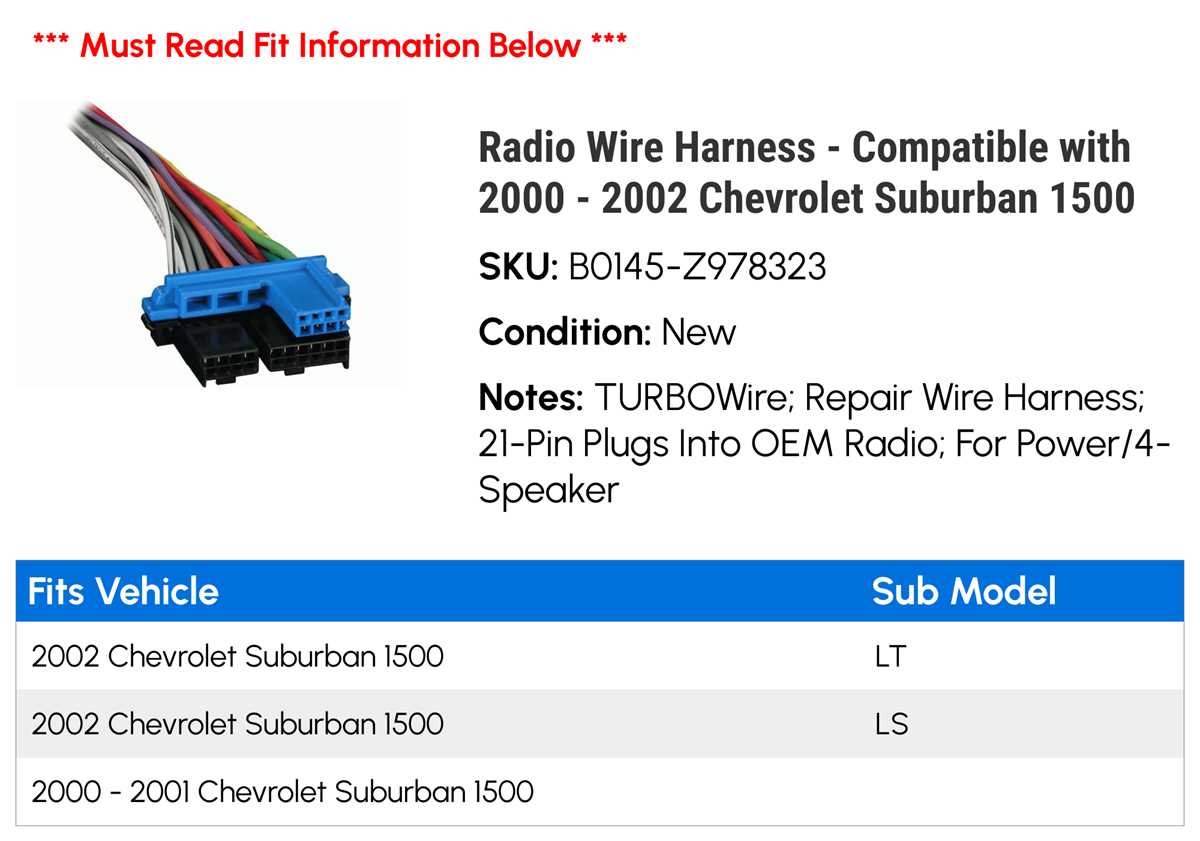
Use the factory color code from the original GM harness to attach each door acoustic driver correctly. In the full-size pickup and SUV platform produced around the turn of the millennium, the front left channel typically uses a tan (+) conductor paired with a gray (–) return line. Connecting the positive terminal of the door driver to tan and the negative terminal to gray keeps polarity consistent with the stock audio receiver and prevents thin or phase-shifted sound.
The front right channel normally relies on light green (+) and dark green (–) leads exiting the dash harness. These lines run directly from the factory head unit cavity to the passenger-side door. If installing an aftermarket stereo deck, match its right-front output pair to these conductors using crimp connectors or solder joints protected with heat-shrink tubing.
Rear channels follow a separate color set routed along the cabin floor loom. The left rear door driver is commonly linked through brown (+) and yellow (–) lines, while the right rear position uses dark blue (+) with light blue (–). Verifying these pairs with a multimeter in continuity mode prevents crossing channels during installation of a replacement audio unit.
Pin orientation inside the dashboard harness plug also helps confirm each pair. The eight audio conductors are grouped together in the connector block behind the factory stereo receiver. When tracing them, avoid tapping into power or illumination circuits located in adjacent rows. Keeping the channel pairs intact preserves balanced output from the head unit and ensures each cabin driver reproduces the correct left-right signal.
Door Audio Lead Colors for GM Pickup Head Unit Harness
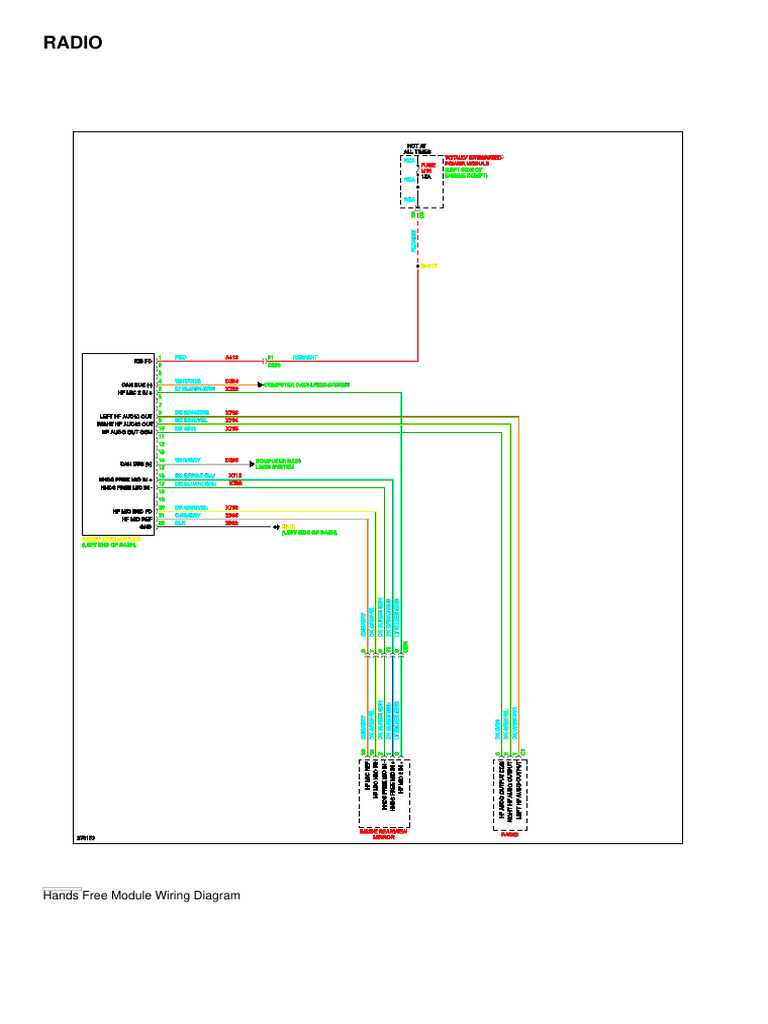
Use the factory color code from the dash harness: tan = front left positive, gray = front left negative, light green = front right positive, dark green = front right negative, brown = rear left positive, yellow = rear left negative, dark blue = rear right positive, light blue = rear right negative. These eight conductors leave the dashboard plug and route toward door and rear cabin acoustic units. Match polarity carefully; reversed polarity weakens bass response and shifts stereo balance toward the center.
Harness Connection Details
The dashboard plug used in this GM truck platform carries paired leads twisted lightly together. Each pair feeds one door or rear deck audio driver. When installing an aftermarket head unit, connect the unit’s channel outputs directly to the matching color pair from the vehicle harness. Avoid grounding any negative lead to chassis metal; every channel uses a floating pair. Crimp connectors with heat-shrink tubing reduce oxidation and prevent intermittent sound during vibration.
Routing and Signal Integrity
Keep audio conductors separated from power cables running to amplifiers or cigarette-lighter circuits. Parallel routing with high-current lines can introduce alternator whine into cabin playback. If extension is required, use 16–18 AWG copper leads and maintain the same polarity marking used in the factory harness. Inside doors, secure the cable bundle away from window regulators and lock rods using fabric automotive tape rather than rigid plastic ties, which can cut insulation after long vibration cycles.
Color Codes for Front and Rear Speaker Wires in a 2001 Chevy Factory Radio Harness
Use the GM factory loom color pairs below to connect each cabin audio driver correctly: match the positive lead and the negative return exactly as listed, otherwise channel phase and balance will shift.
Front door channels follow two distinct color pairs. Verify polarity before crimping connectors or attaching adapters.
- Front left channel (+): Tan
- Front left channel (−): Gray
- Front right channel (+): Light Green
- Front right channel (−): Dark Green
Rear deck or rear door channels use a separate set of colors that differ clearly from the front circuits. Mixing them usually causes incorrect fade control from the dashboard audio unit.
- Rear left channel (+): Brown
- Rear left channel (−): Yellow
- Rear right channel (+): Dark Blue
- Rear right channel (−): Light Blue
Polarity matters: the solid color typically carries the positive signal, while the paired color serves as the negative return path. Confirm with a multimeter set to continuity if the harness has been modified by a previous owner. A quick test tone from the head unit while probing pairs also helps confirm correct channel routing.
During installation, separate the four channel pairs physically before connecting anything. Group them like this:
- Tan / Gray → front left door driver
- Light Green / Dark Green → front right door driver
- Brown / Yellow → rear left location
- Dark Blue / Light Blue → rear right location
Keeping these pairs intact prevents cross-channel interference and keeps fade and balance controls functioning as intended.