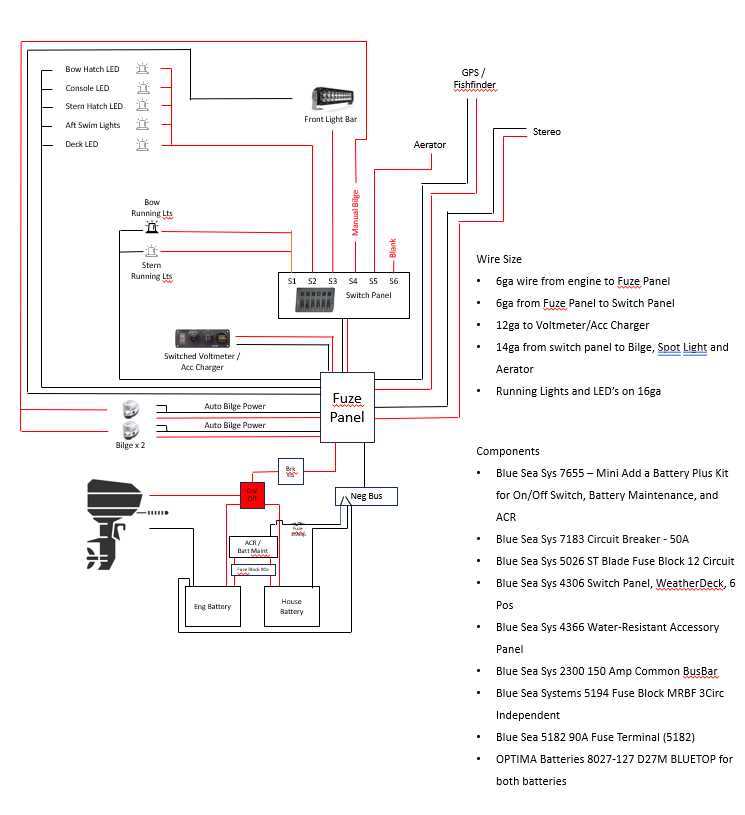
Position the main power source close to the center of the hull to reduce voltage drops and allow shorter runs to key components. Use marine-grade cables rated for at least 25% higher than your system’s peak draw to prevent overheating.
Install a distribution panel near the helm for easy access to switches and fuses. Label each circuit clearly and use heat-shrink connectors to maintain corrosion resistance in a humid environment.
For safety and reliability, connect all grounds to a common bus and ensure battery terminals are secured with locking hardware. Check continuity and measure voltage drop after each connection to confirm stable operation under load.
Electrical Setup and Connection Guide for Leisure Watercraft
Place the main battery near the center of the deck to minimize voltage drop to motors and accessories. Use marine-grade cables with sufficient gauge to handle peak current without overheating or voltage loss.
Install a fuse or circuit breaker panel close to the helm for quick access and protection of all electrical circuits. Label each connection and secure terminals with corrosion-resistant connectors to maintain reliable conductivity in wet conditions.
Run positive and negative leads separately along protected channels to avoid interference and reduce the risk of short circuits. Keep connections tight and regularly inspect terminals for signs of oxidation or loosening, especially after long periods of use.
For stable operation, establish a common grounding bus linking all metallic components and accessories. Test voltage at key points under load to ensure consistent power delivery and prevent erratic performance of navigation and entertainment systems.
Battery Placement and Main Power Distribution
Position the primary battery close to the centerline of the vessel to maintain balance and reduce strain on positive and negative leads. Ensure it is securely fastened in a ventilated compartment to prevent movement and gas accumulation.
Use high-quality marine terminals and corrosion-resistant connectors for all battery connections. Tighten all fittings to manufacturer torque specifications to avoid voltage drops and intermittent contact during operation.
Distribute power through a central fuse or breaker panel mounted near the helm for easy access. Each circuit should be clearly labeled, and fuses should match the current rating of connected devices to prevent overheating or fire hazards.
Run positive and negative cables in separate channels along reinforced paths to prevent chafing and reduce electromagnetic interference. Use protective sleeves or conduits when routing through areas with high vibration or sharp edges.
For stable operation, create a common grounding bus linking the battery negative, motor chassis, and all metallic accessories. Periodically inspect the connections for oxidation, looseness, or heat damage to maintain reliable current flow.
Test voltage drop at multiple points under load conditions to verify adequate power delivery. If readings fall below recommended levels, increase cable gauge or shorten runs to ensure consistent performance of navigation, lighting, and entertainment systems.