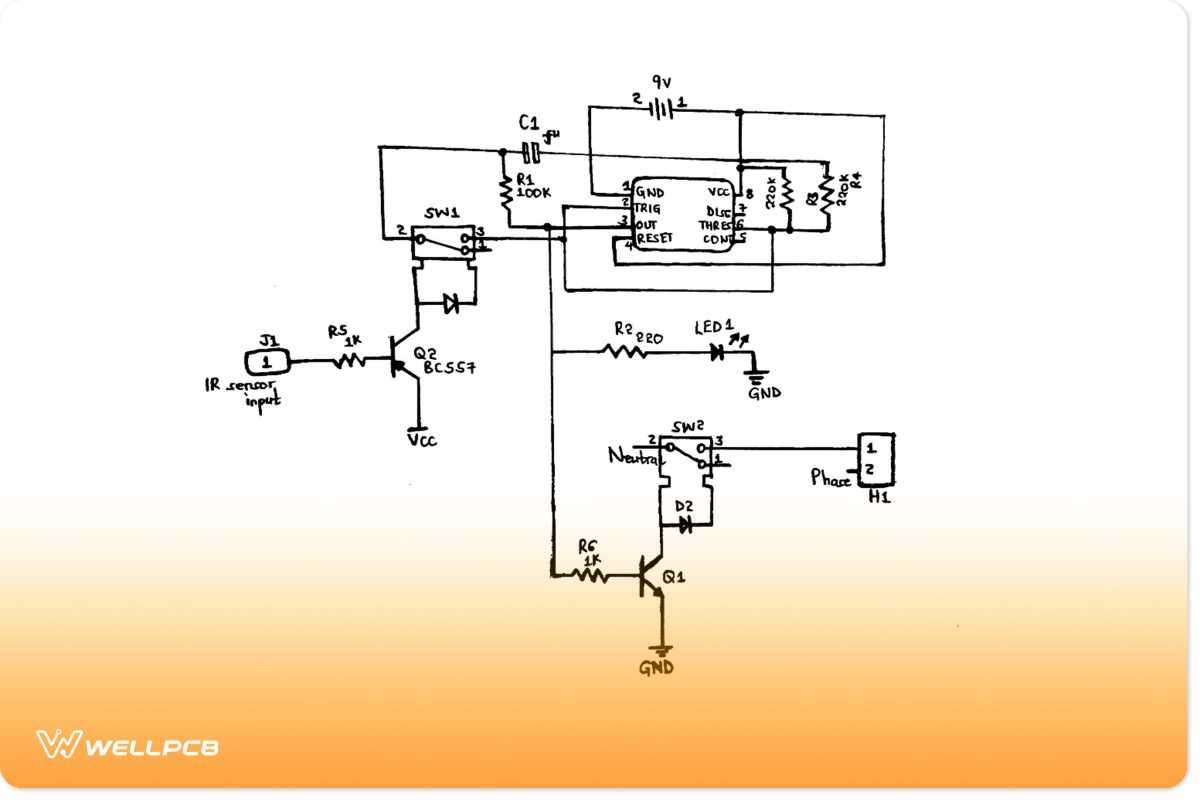
Use a sensor module rated for 5 volts to achieve stable operation and minimize false triggers. Connect the output pin to a transistor switch to control lights or alarms directly without extra relays.
Select resistors and capacitors carefully to adjust the delay time. A 10k ohm resistor with a 100µF capacitor typically provides a 2–3 second response interval, which is suitable for detecting human activity in small rooms.
Position the module at a height of 2–2.5 meters for optimal coverage. Angling it downward at 30 degrees ensures wider horizontal detection while reducing unnecessary activation from small pets or moving objects.
Use a printed board or a well-organized breadboard layout to prevent short circuits and improve stability. Keep power lines separate from signal paths to reduce noise and avoid accidental triggers caused by electrical interference.
Motion Sensing Setup Construction Guide
Use a 5V sensor module to maintain consistent triggering and connect it to a small relay or transistor for controlling lights or alarms directly. Avoid long signal wires to reduce interference.
Choose resistors between 10k and 22k ohms to set the sensitivity range. Pair them with capacitors of 47µF to 220µF for timing adjustment, allowing response intervals from 1 to 5 seconds depending on room size.
Mount the sensor at 2–2.5 meters above floor level for optimal coverage. A downward tilt of 25–35 degrees improves horizontal sweep and reduces activation from small pets or minor environmental changes.
Keep the power supply stable using a regulated 5V source. Voltage fluctuations can cause false triggers or erratic performance, especially when controlling high-current loads.
Connect signal and ground lines carefully to prevent short circuits. Grouping components logically on a breadboard or printed board improves stability and makes troubleshooting easier.
Use jumper wires shorter than 15cm for all connections to minimize noise. Separate high-current and signal paths to avoid interference affecting the sensor’s output.
Test the assembly in the intended environment before final installation. Adjust the sensitivity and delay timing with variable resistors or capacitor swaps until detection matches expected activity patterns.
Secure all components in an enclosure with openings only for the sensing lens. This prevents accidental bumps or environmental factors, like drafts or insects, from triggering the system unnecessarily.
Selecting Components for a Motion Sensing Assembly
Choose a 5V sensor module with a digital output for direct integration with switches or relays. Use transistors like BC547 or MOSFETs such as IRF520 to control higher loads without adding extra boards. Include decoupling capacitors of 100nF close to the power pins to reduce voltage spikes.
Key components to prepare:
- Resistors 10k–22k ohms for sensitivity adjustment
- Capacitors 47µF–220µF for delay timing
- LEDs for output indication
- Relay modules rated for 5–12V loads
- Breadboard or small PCB for organized assembly
- Jumper wires under 15cm to prevent interference
Test combinations of resistors and capacitors to achieve desired response intervals from 1 to 5 seconds. Ensure all components are rated for the supply voltage and anticipated current to avoid overheating or instability during operation.