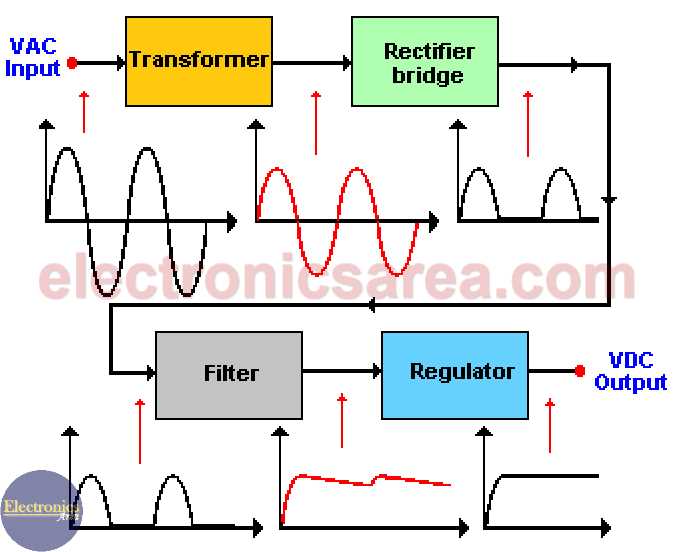
For efficient design, understanding the core elements of voltage regulation is crucial. Begin by focusing on selecting the right components for controlling the flow of current. Key parts like resistors, capacitors, and diodes play a critical role in shaping the stability of the electrical system. The proper arrangement of these components can directly influence the overall performance of your design.
Ensure you familiarize yourself with the flow of energy in the system. Connecting the main power source to the key elements in an optimal manner requires a clear understanding of how energy is distributed. The layout of your components is not only about making connections but also about creating an efficient path that minimizes power loss and heat generation.
Additionally, understanding voltage ratings and component compatibility will prevent potential issues down the line. Always calculate voltage drops and ensure components can handle the expected load. With this in mind, selecting the proper power handling parts will ensure long-lasting performance and avoid excessive strain on your design.
Power Supply Design and Setup Guide
Start by determining the necessary voltage and current requirements for your project. These values dictate which components you need to select for the system. Components like transformers, regulators, and filters should be chosen based on the load you expect and the required output specifications.
Next, ensure that the energy source is compatible with your selected components. The source should be capable of providing the correct input voltage and current, while also accommodating any fluctuations that may occur during operation. Choosing a reliable input stage is vital for system stability.
Once the input stage is selected, proceed to design the path for current flow. Arrange the components in a layout that minimizes resistance and losses. Proper placement of resistors, capacitors, and inductors will improve the overall efficiency of energy conversion and filtering.
At this point, incorporating safety elements into the design is critical. This includes adding fuses, over-voltage protection, and thermal shut-off mechanisms to prevent damage due to unexpected conditions. These safeguards help protect the entire system from potential failure.
Voltage Regulation and Filtering Techniques
Voltage regulation is a key factor in maintaining a steady output. Use linear regulators or switching regulators depending on your efficiency needs. Linear regulators are easier to implement but are less efficient, while switching regulators offer higher efficiency but may require more complex components.
Finally, fine-tune the filtering stage to ensure a clean and stable output. Capacitors are commonly used to smooth out ripples in the voltage, while inductors can help reduce high-frequency noise. Proper filtering is necessary for maintaining the quality and reliability of the entire system.
Understanding the Key Components of a Power Supply
The first component to consider is the transformer. It is responsible for converting the input voltage to the appropriate level required for your system. Depending on your project’s needs, you can choose between a step-up or step-down transformer, based on whether you need to increase or decrease the voltage.
Rectifiers play a critical role in converting alternating current (AC) to direct current (DC). Typically, diodes are used in this process, ensuring that the flow of current is unidirectional, which is required by most electronic components. Full-wave or half-wave rectifiers can be used depending on the application.
Once rectification is achieved, the output usually contains ripples or unwanted fluctuations. This is where capacitors come into play. Their main function is to smooth out the ripple, providing a steady DC output. The size and rating of the capacitor will directly affect the quality of the output voltage.
Voltage regulators ensure that the output remains constant despite variations in input voltage or load conditions. Linear regulators are simple to implement but generate heat, whereas switching regulators offer more efficiency but at the cost of complexity. Both types help maintain a stable voltage output.
Inductors or chokes are often used to reduce high-frequency noise that might affect the performance of sensitive components. By filtering out this noise, inductors improve the overall reliability and performance of the system. They are usually used in conjunction with capacitors to provide better filtering.
Fuses or circuit breakers are safety devices that protect against overcurrent conditions. They disconnect the power if the current exceeds a safe threshold, preventing damage to components and avoiding fires. Proper selection of fuses based on your system’s current rating is important for system safety.
Thermistors are temperature-sensitive resistors used to protect against sudden power surges. They have a low resistance when cold, allowing current to pass freely, and increase their resistance when they heat up, limiting current flow. This helps prevent damage during power-on surges.
Finally, proper grounding is essential for maintaining the stability and safety of the entire system. Grounding ensures that excess charge is safely directed away from sensitive components, preventing the buildup of static charges and reducing the risk of electrical shock.