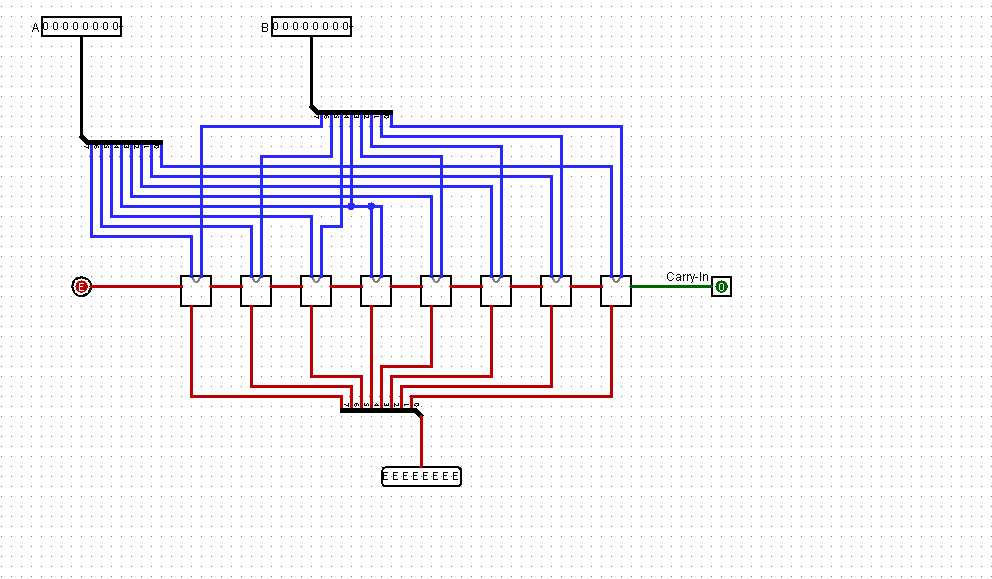
To design a reliable 8-input summing mechanism, focus on combining full adders in a series configuration. This approach allows you to achieve multi-bit addition using basic logic gates, resulting in a straightforward yet powerful system. Each stage processes a single bit and the carry from the previous one, ensuring that all bits are added correctly.
The key components involved include AND, OR, and XOR gates. These gates will form the structure of each full adder, which in turn can be cascaded to create the desired output width. Using standard ICs can simplify the assembly process, making it easier to build and troubleshoot the entire system.
After assembling the structure, testing becomes crucial. Verify the outputs using known input values to ensure that the system produces the correct results. Pay attention to any timing issues or logic gate failures, as they may cause incorrect sum or carry outputs. Consistently monitoring these details ensures that the design is reliable and meets the intended purpose.
Designing the 8-Input Summing System
For constructing an 8-input summing unit, use a series of full adders, where each individual full adder handles one bit of the numbers being added. Each full adder consists of XOR, AND, and OR gates that process the sum and carry from the previous bit, enabling you to create the final output with precision. Cascading these units in a linear arrangement will allow you to expand the width to 8 bits. It’s critical that the connections between each full adder are made correctly to maintain synchronization across all bits, ensuring accurate computation of the sum and the carry propagation.
Building the Full Adder Units
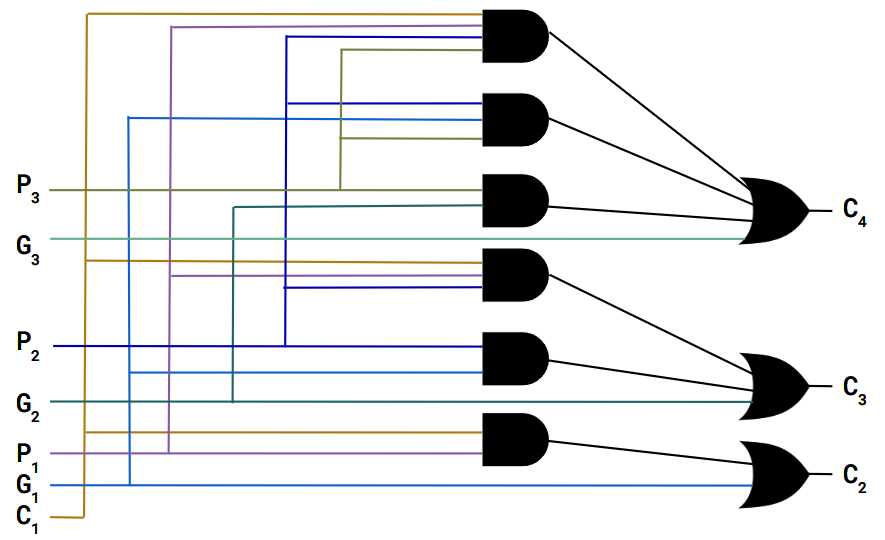
The full adder itself is the core component of this structure. You can start by wiring a single full adder and testing it with 2-bit inputs to understand the basic functionality. Once verified, extend this design by linking additional full adders to accommodate the entire 8-input setup. Pay attention to the propagation delay between each full adder. Even small discrepancies in timing can lead to errors in the final result, especially as the number of adders increases. For this reason, consider using simulation software to model and optimize the system before physical implementation to identify potential issues early.
Understanding the Structure and Components of an 8-Input Summing Unit
The fundamental structure of an 8-input summing unit relies on cascading smaller modules known as full adders. These modules process the input data in stages, managing each bit along with any carry from previous stages. Each full adder comprises key logic gates: XOR, AND, and OR gates. The XOR gate calculates the sum of the two input bits, while the AND and OR gates handle the carry propagation. Cascading these units forms a series that handles larger inputs by linking the carry output from one stage to the input of the next.
Key Components
Each full adder within the system consists of:
- XOR Gate: Performs bitwise addition, generating the sum bit.
- AND Gate: Computes the carry bit for two input bits.
- OR Gate: Handles the propagation of the carry from one stage to the next.
These gates are connected in such a way that each adder can handle the sum and carry from previous stages. By using multiple full adders, the system can compute the sum of two numbers with greater bit-width, like an 8-input system. It’s important to ensure the timing of carry propagation and the synchronization of each stage to avoid errors.
Expanding the Design
Once the basic unit is functioning, it’s important to cascade multiple adders to achieve the desired number of inputs. In an 8-input design, 8 full adders are needed. Each full adder handles one bit of the inputs, and the carry from one stage feeds into the next. This modular approach allows for flexibility, enabling you to scale the system up or down depending on the input size. However, this scaling requires careful attention to the carry propagation time and the overall design efficiency.