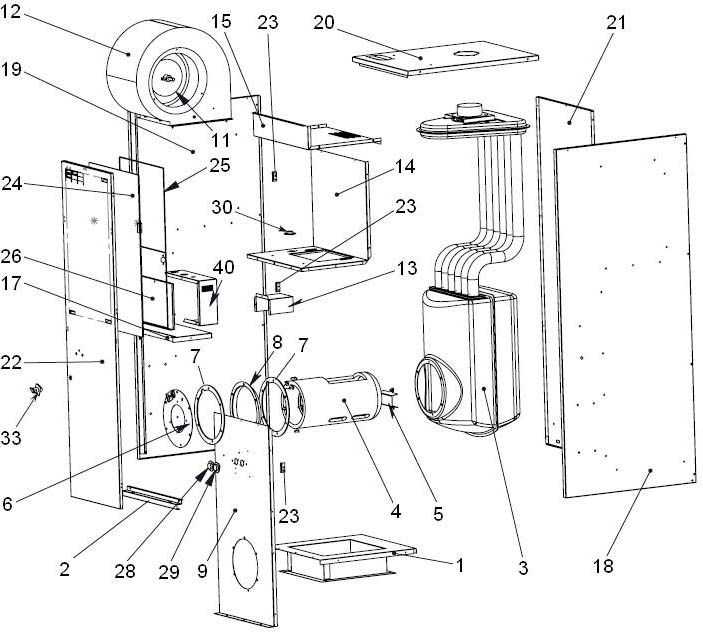
Use the component map to confirm burner position, airflow routing, and control placement before removing any panel. This approach reduces wiring errors and prevents damage to the ignition path, gas valve leads, and safety switches.
Each reference marker corresponds to a specific assembly such as the draft inducer, circulation fan, or heat transfer chamber. Cross-check these markers with the model label on the cabinet to avoid ordering mismatched hardware or installing incompatible assemblies.
Pay close attention to airflow direction and sensor mounting points shown in the layout. Pressure switches and limit controls rely on precise placement, and misalignment can trigger shutdowns or short cycling.
Verify fastener sizes and connector types before disassembly. Many heating units use visually similar screws and terminals with different thread pitch or amperage ratings, and the layout clarifies these distinctions during service planning.
Heating Unit Component Layout Explained for Service and Replacement
Match each reference marker to the physical assembly before disconnecting wiring or tubing. This step prevents confusion between the gas valve, ignition module, and airflow sensors that share similar mounting brackets.
The layout shows the relationship between the burner tray, heat exchange chamber, draft inducer, and circulation blower. Use this visual order to plan removal sequences and avoid stressing sealed joints or bending support rails.
Cross-check reference numbers with the model label on the cabinet. Control boards, pressure switches, and limit controls often vary by production series, and visual confirmation reduces the risk of installing incompatible hardware.
Confirm connector style and fastener length before sourcing replacements. Spade terminals, molex plugs, and grounding lugs may appear interchangeable but carry different ratings that the layout clarifies during service preparation.
Review sensor placement paths for airflow and exhaust routing. Correct positioning maintains stable ignition cycles and prevents nuisance shutdowns linked to misrouted tubing or reversed polarity at the control module.
Locating Burners Blower Assembly and Heat Exchanger Using the Layout
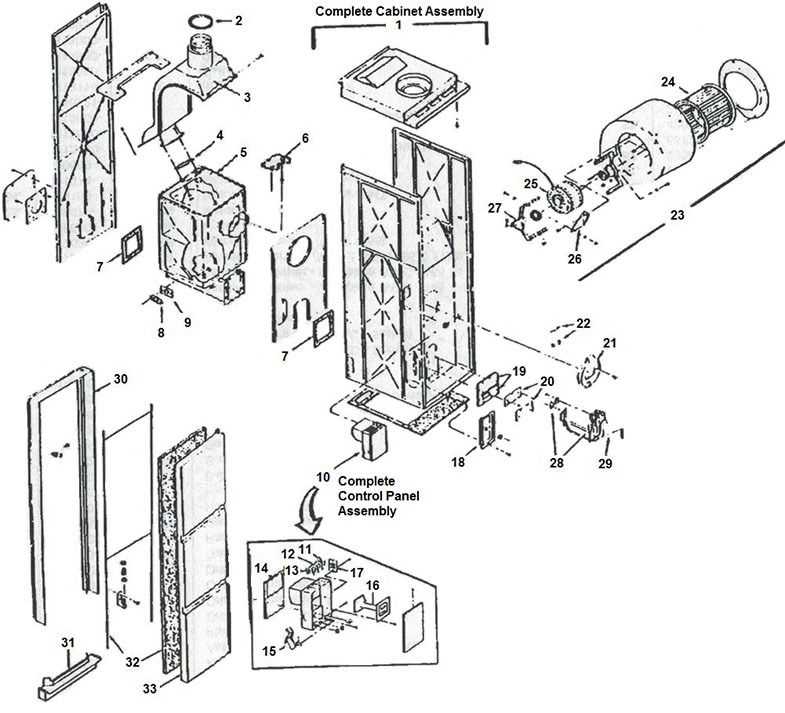
Follow the reference layout to identify the combustion row at the lower front section, aligned directly beneath the heat transfer chamber. This positioning confirms flame travel direction and clarifies which fasteners secure the manifold to the cabinet frame.
The air-moving unit sits downstream from the heat transfer chamber, typically mounted on vibration isolators. Wiring paths and mounting bolts are shown in relation to the control compartment, helping avoid strain on the motor leads during removal.
- Combustion row positioned near the gas supply inlet
- Heat transfer chamber centered vertically for balanced airflow
- Air mover located after the chamber to push warmed air outward
Use spatial markers to trace airflow from intake to outlet. This sequence highlights inspection points for soot buildup, cracked metal surfaces, or loose mounting rails that may cause noise or uneven heating.
Verify alignment marks before reassembly. Proper seating of the air mover housing against the chamber outlet maintains stable pressure and prevents vibration during operation.
Matching Diagram Reference Numbers to Correct Replacement Items
Use the numeric callouts on the schematic to identify the exact item by shape and mounting position before ordering. Each reference number corresponds to a single catalog entry, reducing the risk of selecting a unit with mismatched dimensions or electrical ratings.
Cross-check the reference number with the model and serial label inside the cabinet. Variations in production runs may change bracket style, connector type, or voltage range, even when the visual outline appears similar.
Pay attention to grouped callouts that point to assemblies rather than single components. Ordering an assembly often includes gaskets, clips, or fasteners that are not listed separately, saving time during installation.
Confirm material and rating details such as heat tolerance, airflow capacity, or amperage listed in the catalog entry linked to the reference number. Skipping this step can lead to premature wear or control faults.
Document the reference numbers removed during disassembly. Keeping a written list helps verify each replacement against the schematic before reassembly and prevents missed or duplicated orders.