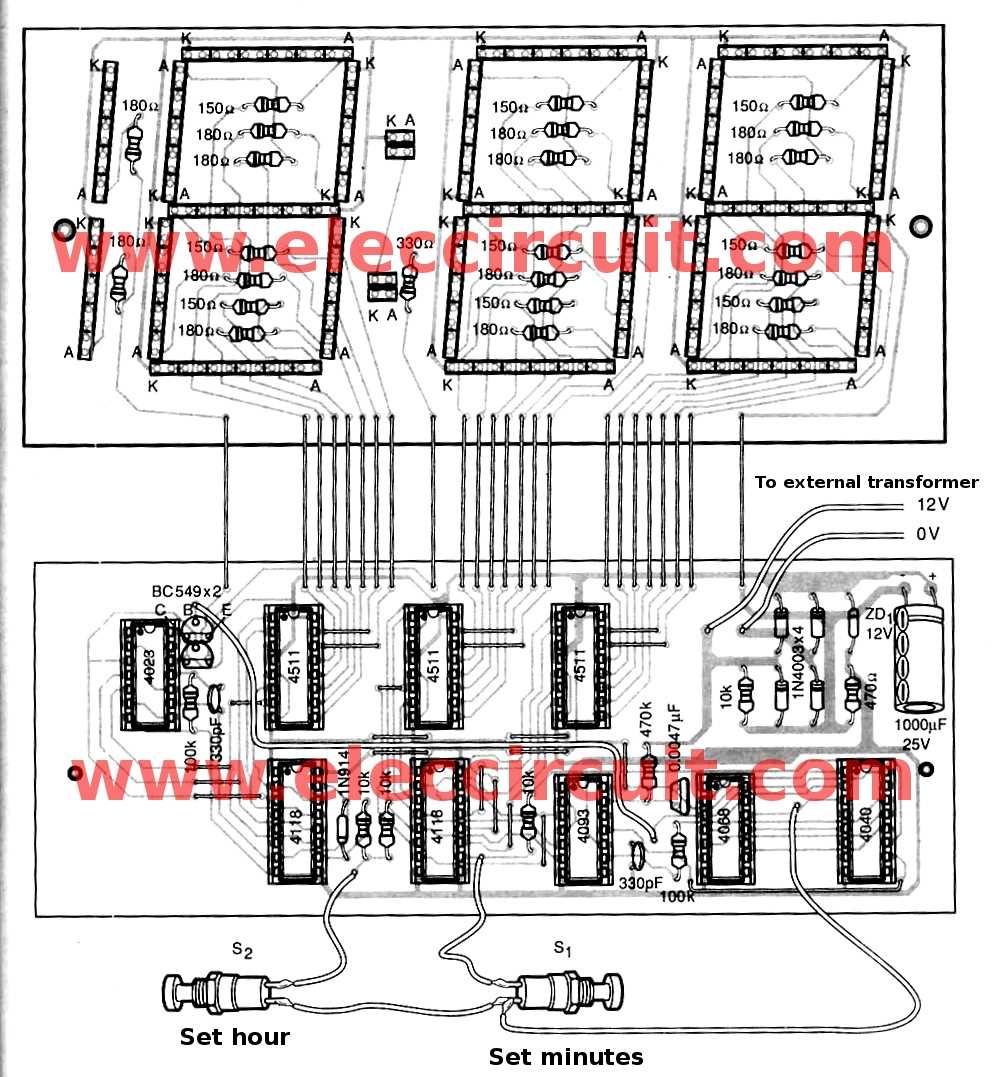
Choose a 32.768 kHz кварцевый резонатор together with a divider chain built on CMOS counters; this immediately provides stable one-second pulses suitable for a numeric time indicator. A common approach uses binary divider stages such as 74HC4060 or 74HC390, reducing the quartz frequency step-by-step until a precise 1 Hz signal appears. That pulse drives sequential counters responsible for seconds, minutes, and hours.
The counting section usually consists of cascaded decade chips like 74HC90 or CD4017. Each stage advances after receiving a pulse from the previous unit: the first counts 0–9 seconds, the next forms the tens of seconds (0–5), followed by minute counters built in the same pattern. For hour indication, configure the logic so the sequence resets after 23 → 00 when a 24-hour format is required. Such reset behavior is achieved through simple gate combinations using NAND or AND elements.
Numeric output is typically sent to seven-segment LED indicators through decoder drivers like 74HC4511 or CD4511. These chips translate binary values from the counters into segment control signals. Place current-limiting resistors of about 220–470 Ω on each segment line. Power the entire logic network from a stable 5 V supply, and add 100 nF bypass capacitors close to every integrated chip to reduce switching noise.
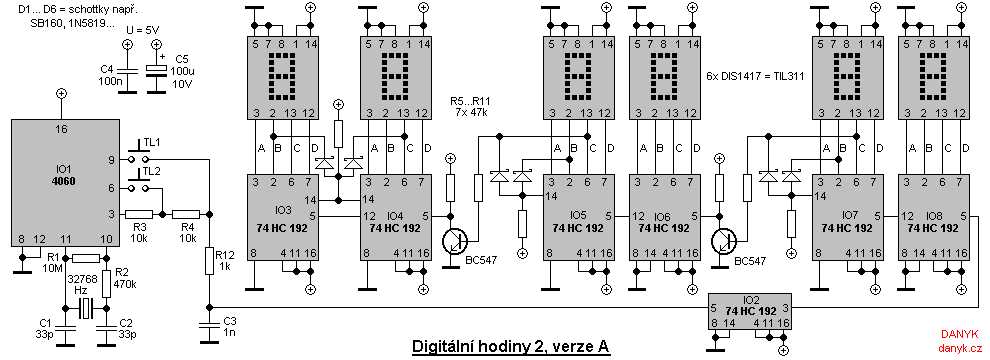
Manual correction buttons connect to the minute and hour stages through debounced inputs. A simple method uses an RC pair (≈10 kΩ and 100 nF) followed by a Schmitt trigger inverter. Pressing the button injects pulses directly into the corresponding counter stage, allowing quick time adjustment while the quartz-based pulse stream maintains accurate progression between corrections.
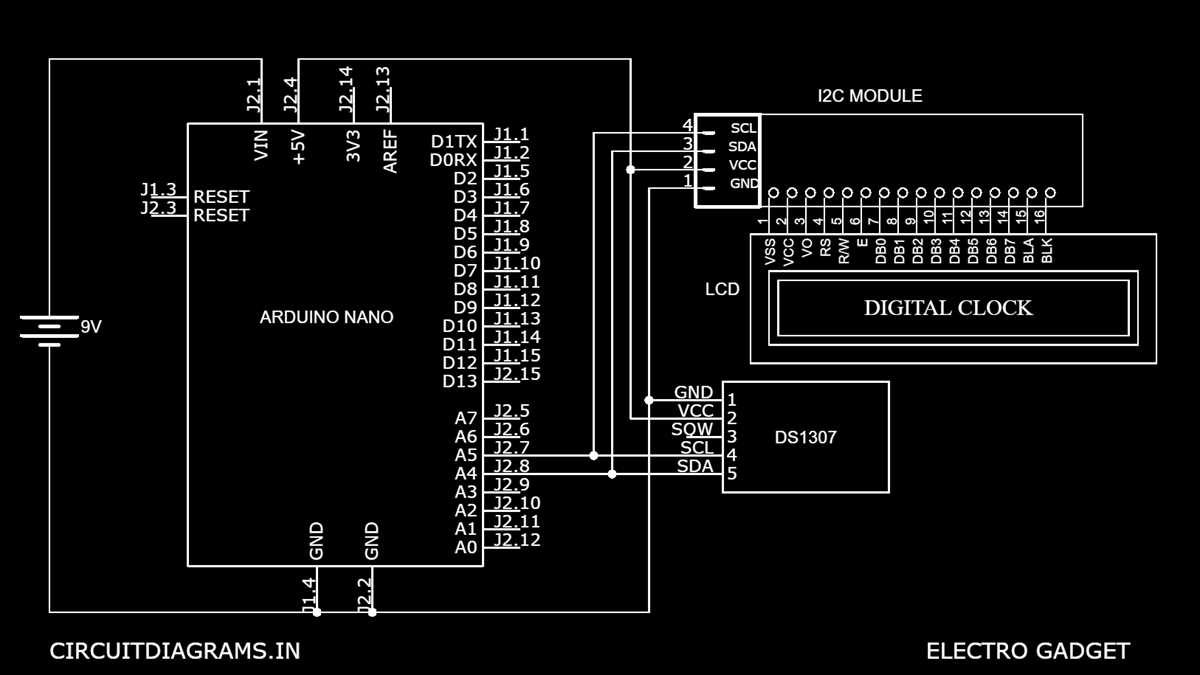
Connection Layout for an Electronic Timekeeping Device
Select a quartz oscillator rated at 32.768 kHz and route its output to a frequency divider such as a binary counter IC (for example CD4060 or a pair of 74HC390 units). This crystal frequency simplifies reduction to a 1 Hz pulse through sequential division by powers of two. Stable supply voltage near 5 V keeps the oscillator drift below ±20 ppm when paired with standard watch-grade quartz.
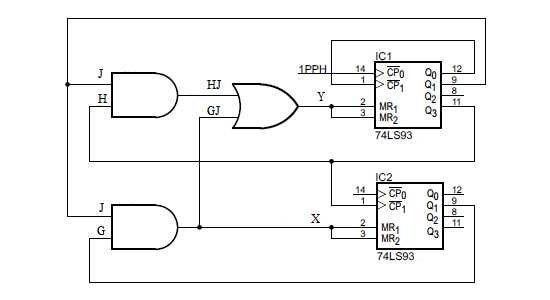
Use the 1 Hz pulse as the timing reference for a chain of BCD counters. A typical arrangement contains three counting stages: seconds (0–59), minutes (0–59), and hours (0–23 or 1–12 depending on format). Integrated circuits like 74HC90 or 74HC192 allow reset lines that force rollover at 60 or 24 counts. Connect the reset pins through AND gates so the stage clears immediately after reaching its maximum value.
Segment drivers convert BCD outputs into visible numerals. Components such as the 74HC4511 accept four-bit input and control seven display segments. Each segment requires a resistor between 220 Ω and 470 Ω to limit current. Choose LED displays with forward voltage around 2.0 V for red types or near 3.0 V for blue or white modules. With a 5 V supply, segment current typically ranges from 5–10 mA.
Power stability influences time accuracy. Add a 100 nF ceramic capacitor close to each integrated circuit’s supply pins, combined with a 10 µF electrolytic across the main rail. These capacitors reduce noise spikes generated when counters switch states every second.
Manual adjustment requires two push buttons connected to the minute and hour increment lines. Route each switch through a debounce network composed of a 10 kΩ resistor and a 100 nF capacitor or through a Schmitt trigger gate such as 74HC14. This prevents multiple counts from a single press.
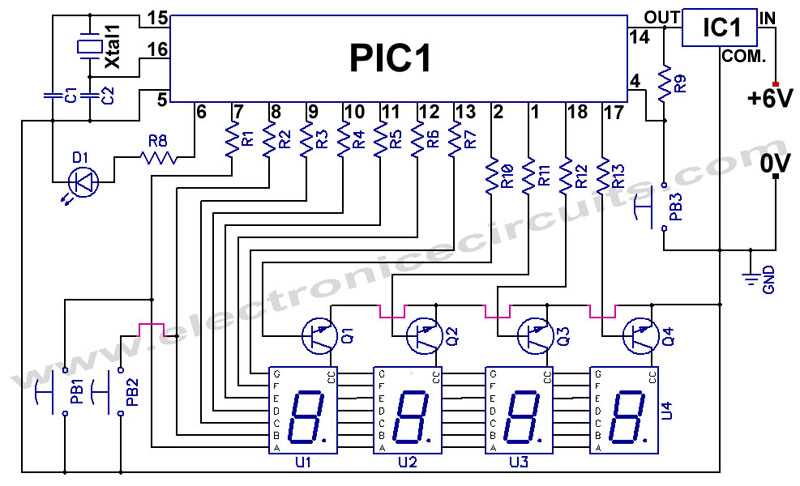
Display multiplexing reduces component count when many digits are present. Instead of separate driver chips for each numeral, a microcontroller or multiplex counter activates one digit at a time at roughly 1 kHz refresh. Persistence of vision causes the numerals to appear steady while reducing total current draw.
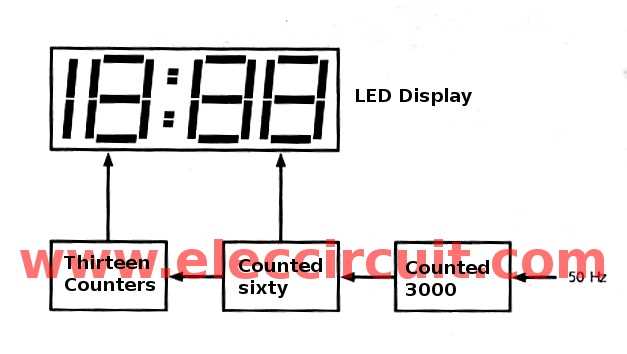
Battery backup can maintain counting during power loss. A diode isolates the main supply while a 3 V lithium cell feeds only the divider and counting stages. CMOS logic draws microamp-level current in this mode, allowing multi-year standby operation.
Test the layout by probing the oscillator output, the 1 Hz pulse, and each BCD line with an oscilloscope or logic analyzer. The seconds stage must toggle exactly once per second; deviation suggests incorrect divider wiring or unstable crystal load capacitance, typically corrected by adjusting capacitors in the 18–33 pF range.