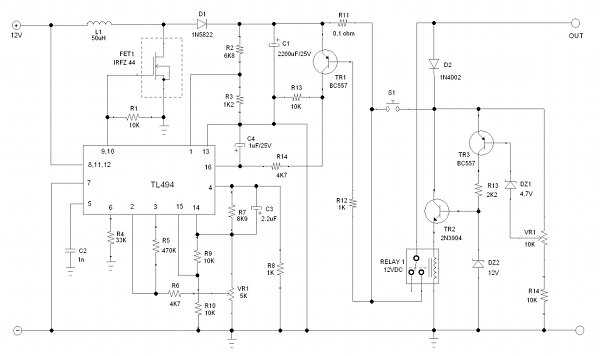
Check the DC input section first by measuring voltage at the power jack pins. A normal adapter supplies 19V to 20V. This voltage passes through protection components such as input fuses, transient suppressors, and a pair of MOSFET transistors that control the power path toward the mainboard.
Trace the power path from the adapter connector to the battery management controller. This controller regulates current flow into the lithium battery pack while also supplying system power. Typical controller chips monitor temperature, cell voltage, and current through a shunt resistor located near the power stage.
Identify the high-side and low-side MOSFET pair placed near the DC input connector. These transistors switch the incoming adapter voltage and protect the system from reverse polarity or short conditions. A multimeter reading across the drain and source pins helps detect damaged components.
Observe the lithium battery connector pins on the mainboard. Many packs use a three-cell or four-cell configuration with nominal voltages between 10.8V and 14.8V. The management controller adjusts current through the switching stage while monitoring data lines connected to the embedded controller.
Follow the board schematic sheet to locate measurement points labeled VIN, ACDET, CMSRC, and BAT+. These labels mark key nodes used during repair work. Voltage differences between these points reveal whether the adapter input stage, switching MOSFETs, or battery management controller blocks are malfunctioning.
Laptop Charging Circuit Diagram With Battery Controller and DC Input Path
Check voltage at the DC adapter connector before analyzing the power path. A normal adapter output measures 19V–20V. This input passes through a protection fuse and transient suppressor, then reaches a pair of MOSFET switches responsible for controlling power flow toward the mainboard.
Input power stage
The DC input section contains reverse-polarity MOSFETs and detection resistors connected to the power management controller. These transistors act as electronic gates that allow current from the adapter while blocking incorrect polarity. Measure resistance between drain and source pins with the board unpowered to detect shorted components.
After the protection stage, power reaches the battery management controller. This integrated chip regulates current delivered to the lithium pack and distributes system voltage across motherboard rails such as 3.3V and 5V standby.
Battery control section

The lithium pack connector usually includes power terminals plus communication lines used by the embedded controller. Typical packs contain three or four cells, producing nominal levels from 10.8V to 14.8V. The management chip measures these values through a current sense resistor placed between the battery line and the system power rail.
Locate measurement nodes labeled VIN, ACDET, CMSRC, and BAT+. Differences between these points reveal faults inside the input stage or battery control IC. For example, VIN near 19V combined with zero voltage at BAT+ often indicates a failed gate drive transistor in the power path.
Identifying DC Jack Input MOSFET and Protection Components in Laptop Charging Circuit
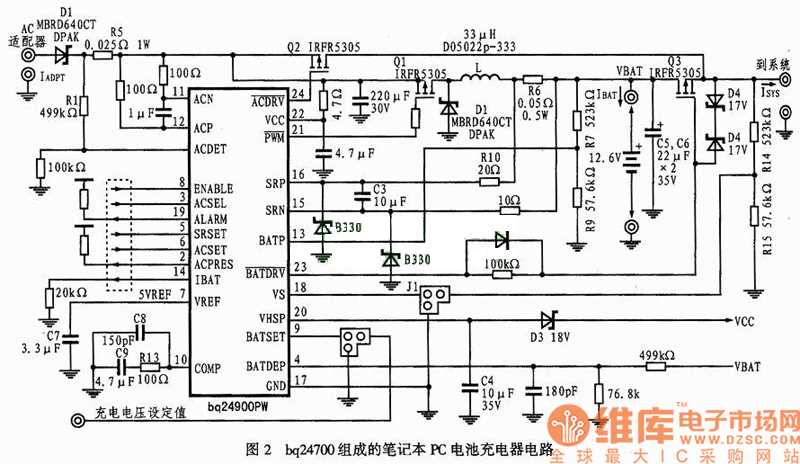
Measure voltage at the DC adapter connector first. A stable reading near 19V–20V confirms the power supply is delivering correct input to the motherboard. This voltage immediately enters a protection section placed a few millimeters from the connector pads.
The protection block usually contains several components arranged along the incoming power path.
- Input fuse marked F1 or FUSE
- Transient suppression diode for surge protection
- Two N-channel MOSFET transistors controlling power flow
- Current sense resistor near the battery management controller
Locate the MOSFET pair positioned close to the DC connector traces. These transistors often appear as 8-pin packages labeled with short codes such as AO4407, PQFN, or 4435. One transistor handles reverse polarity protection while the second regulates current delivery toward the system power rail.
Check resistance between drain and source pins using a multimeter while the board remains disconnected from power. A reading near 0 ohms may indicate a shorted transistor. High resistance or open readings suggest the component remains intact.
Gate pins receive control signals from the power management controller. These signals determine whether adapter voltage reaches the system. Without correct gate voltage, the MOSFET pair blocks current flow and the board remains unpowered.
- Measure adapter voltage at the connector
- Verify continuity through the input fuse
- Check MOSFET drain voltage
- Measure gate voltage relative to source
- Confirm voltage reaches the main power rail
Transient suppressor components protect the board from voltage spikes produced by unstable power adapters. These devices clamp sudden voltage increases that exceed the normal input range.
Trace copper lines from the connector pads to the MOSFET pair and then toward the battery management controller. Following this power route on the motherboard layout quickly reveals faults such as burned components, cracked solder joints, or shorted transistors.