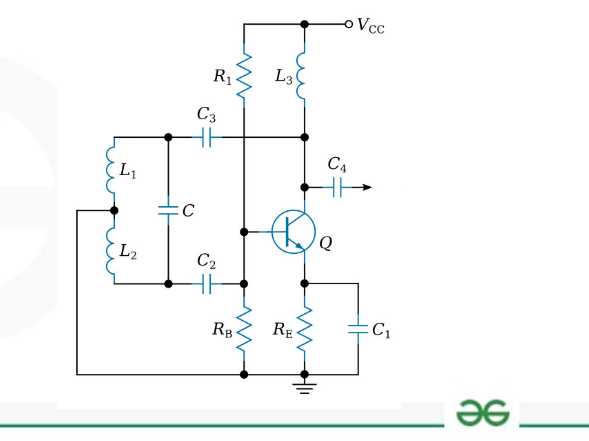
To achieve precise frequency generation, begin by designing a stable waveform-producing setup. The key components like transistors, capacitors, and inductors form a feedback loop that dictates the desired frequency output.
The core of your design is the tank circuit, which controls frequency resonance. Accurately calculate the inductance and capacitance values to ensure your output matches specifications. This setup is typically used in radio transmitters and receivers to produce a consistent signal.
When assembling, check for phase noise or harmonic distortion that may affect signal clarity. For improved stability and reduced interference, consider integrating a phase-locked loop to lock your signal to a reference frequency.
Designing a Frequency Generation System
To build a reliable frequency-generating system, use a resonant circuit that ensures stable and precise waveform generation. The main building blocks include a feedback loop, inductance, and capacitance, which combine to define the output frequency. Pay close attention to component selection and their values to maintain accuracy in the generated signal.
Choosing Key Components
The success of this setup hinges on choosing the right components. A high-quality inductor and capacitor are crucial for achieving stable oscillation. Inductance controls the rate of change of current in the circuit, while the capacitance determines how the voltage fluctuates. Both must be carefully calculated to avoid instability or distortion.
- Inductors: Select low-loss inductors to reduce energy dissipation and improve efficiency. A high Q factor is ideal.
- Capacitors: Choose capacitors with minimal temperature coefficient to ensure stability across a range of conditions.
Feedback Mechanism and Control
The feedback mechanism plays a pivotal role in determining whether the system will oscillate at the desired frequency. Feedback should be carefully balanced to maintain a consistent signal output. A negative feedback loop is typically used to stabilize the system and prevent runaway oscillation, which would result in erratic performance.
Consider the phase shift around the loop, which must equal 360 degrees (or 0 degrees) for sustained oscillation. If the feedback is too weak, oscillations may fail to start. If too strong, distortion and harmonic content will increase.
Stability Considerations
Stability is key in maintaining accurate frequency generation, particularly when the circuit is exposed to external factors like temperature fluctuations. Using temperature-compensated components, such as ceramic or COG (Class I) capacitors, will help maintain frequency stability over a wide temperature range.
Additionally, implementing a phase-locked loop can reduce drift by locking the system’s output to a reference signal. This is particularly useful in communication applications, where frequency precision is critical.
Common Issues and Troubleshooting
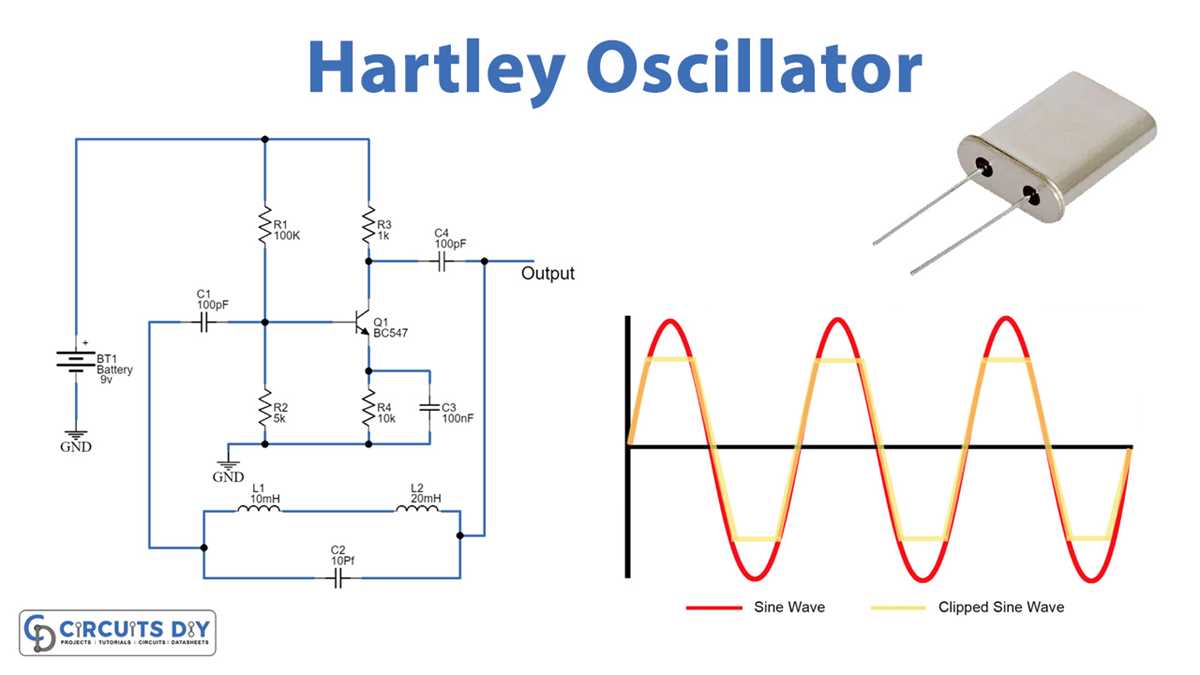
One common issue in these setups is phase noise, which causes unwanted variation in the frequency. This can be minimized by improving the quality of the feedback path and reducing parasitic capacitances. Additionally, ensuring that components are well-matched to the circuit’s operating frequency will help minimize harmonic distortions.
- Check the power supply: Voltage instability can lead to fluctuations in frequency. Use a regulated power source.
- Grounding and shielding: Ensure proper grounding to prevent external noise from interfering with the signal.
By addressing these factors, the design will be more resilient and capable of producing a cleaner, more reliable signal.
How to Design a Local Oscillator Circuit for RF Applications
Begin with selecting a suitable frequency range for your application. For RF designs, consider the required output frequency and the available components. The frequency stability is paramount, so choose components with low tolerances and temperature variations.
The next step is choosing the right type of active device for generating the signal. Common choices include transistors, FETs, and vacuum tubes, depending on the power output and frequency range. Transistors are typically used in low-power designs, while vacuum tubes may be preferred for higher power levels in HF and VHF ranges.
Inductor and Capacitor Selection
The tank circuit is crucial for frequency determination. A LC resonator circuit, consisting of a combination of inductance and capacitance, defines the desired frequency. Carefully calculate the inductance and capacitance values to maintain the desired resonance frequency. Use high-Q inductors to minimize energy losses and ensure efficient operation.
The quality factor (Q) of the inductor directly impacts the sharpness of the resonant frequency and the overall efficiency of the system. Choose capacitors with stable characteristics, such as ceramic or tantalum capacitors, to maintain consistency across a wide temperature range.
Feedback and Amplification
The feedback network is crucial for sustaining oscillation. A positive feedback loop needs to be established, where the signal is fed back in-phase with the input to ensure continuous oscillation. Adjust the feedback network’s gain to reach the desired stability.
Amplifiers are typically used to provide the necessary gain. Ensure that the amplifier operates within its linear range to avoid distortion. The choice of amplifier, such as emitter follower or common base configurations, will depend on the power and frequency needs of your application.
For better control over the output signal, incorporate a phase-locked loop (PLL). The PLL can lock the output to a reference signal, ensuring phase coherence and minimizing frequency drift. This is especially useful in systems requiring precise frequency stability, such as communication devices.
Lastly, ensure proper filtering to minimize harmonics and spurious signals. Use band-pass filters or low-pass filters to smooth the output and remove unwanted frequency components. This is especially critical in RF applications where signal purity is necessary for proper reception and transmission.