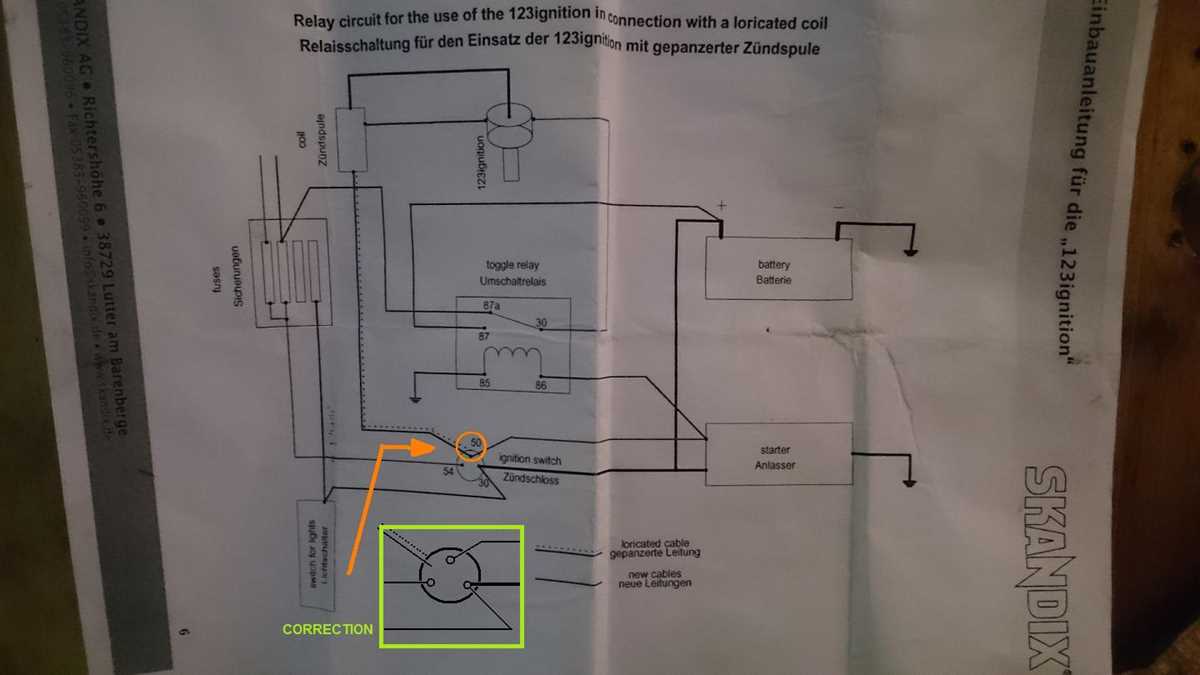
Use the factory electrical schematic before connecting the battery, starter solenoid, and ignition switch on this 22 HP V-twin utility engine. The drawing shows how the starter motor, charging stator, regulator module, ignition coils, and safety switches connect through color-coded conductors. Follow each line from the battery positive terminal toward the starter relay and key switch to avoid incorrect connections that may damage the ignition module.
The starting system uses a 12-volt battery linked to a heavy starter cable and a solenoid relay. When the key switch reaches the start position, a control lead energizes the relay coil, closing the main contacts and sending battery current to the starter motor. Ground return travels through the engine block and battery negative terminal. Loose ground points often cause slow cranking or intermittent starting.
Power for charging comes from a stator assembly under the flywheel. This component produces alternating current during engine rotation. Output wires feed a regulator-rectifier unit that converts AC to stable DC, typically around 13.5–14.5 volts while running. The regulator output connects to the battery positive line to maintain charge during operation.
The ignition system uses two separate coils mounted near the flywheel magnets. Each coil receives a trigger signal from the rotating magnet and generates high voltage for the spark plugs. A kill switch lead connected to the ignition switch can ground the coil control line, stopping spark generation and shutting down the engine. Understanding this electrical layout helps locate faults such as no-start conditions, weak charging output, or intermittent ignition.
Engine Electrical Layout With Starter Ignition and Charging Connections
Connect the 12 V battery positive terminal directly to the starter solenoid input stud using a heavy cable rated for at least 6 AWG. From the solenoid output stud, route another cable to the starter motor terminal mounted on the engine block. The ignition switch sends a small control signal to the solenoid coil terminal, which closes the relay contacts and allows high current to reach the starter during engine cranking.
The ignition system uses two magnet-triggered coils positioned near the flywheel. Each coil connects to its own spark plug lead and produces high voltage when the flywheel magnets pass the coil laminations. A kill wire from both coils runs to the ignition switch. When this lead connects to ground through the switch, spark stops immediately and the engine shuts down.
The charging section begins with the stator located under the flywheel cover. During engine rotation, this component generates alternating current through copper windings. Output wires leave the engine housing and connect to a regulator rectifier module. This unit converts AC output into DC voltage typically ranging between 13.5 V and 14.5 V while the engine runs above idle speed. The regulator output line returns to the battery positive terminal, maintaining charge for the starting system and electrical accessories.
Ground connections must attach firmly to the engine block and frame. Poor contact points cause weak starter operation, unstable charging voltage, and ignition interruptions. Clean mounting surfaces, tighten ring terminals securely, and check resistance between the battery negative terminal and engine housing using a multimeter; the reading should remain near zero ohms.
Reading the Engine Electrical Schematic and Locating Main Electrical Lines
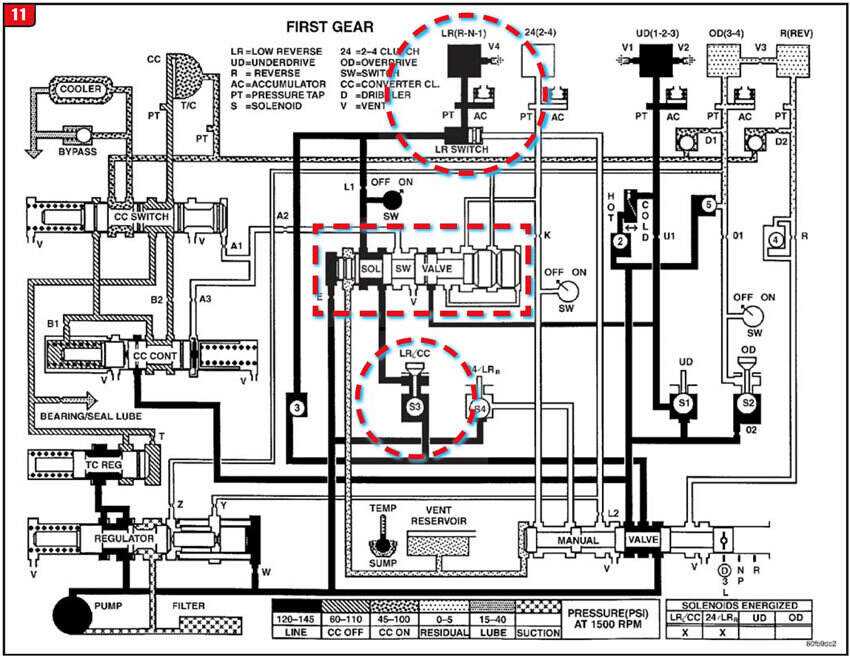
Trace the main power route from the 12 V battery through the ignition switch and starter relay using the electrical schematic for this V-twin utility engine. The heavy positive cable leads from the battery to the solenoid input terminal, while a smaller control lead from the key switch activates the relay coil. From the relay output stud, current flows directly to the starter motor. Ground return passes through the engine block to the battery negative terminal. Identifying these paths on the schematic sheet allows quick checks with a multimeter when the starter fails to engage or turns slowly.
Main power and charging lines
The next group of conductors connects the stator under the flywheel to the regulator rectifier module mounted on the engine frame. Two AC leads from the stator feed the regulator input. The regulator output wire returns DC voltage near 13.5–14.5 V to the battery line. Mark these conductors on the electrical layout and follow them visually across the page. This step helps locate test points for charging output and detect broken connectors, damaged insulation, or loose terminals.
Ignition and shutdown lead
Two ignition coils positioned beside the flywheel generate spark for each cylinder. A thin kill lead from both coils runs toward the ignition switch and safety interlock switches. When this lead connects to ground, spark stops immediately. Recognizing this control line on the schematic helps diagnose no-spark problems caused by grounded safety switches or damaged conductors.