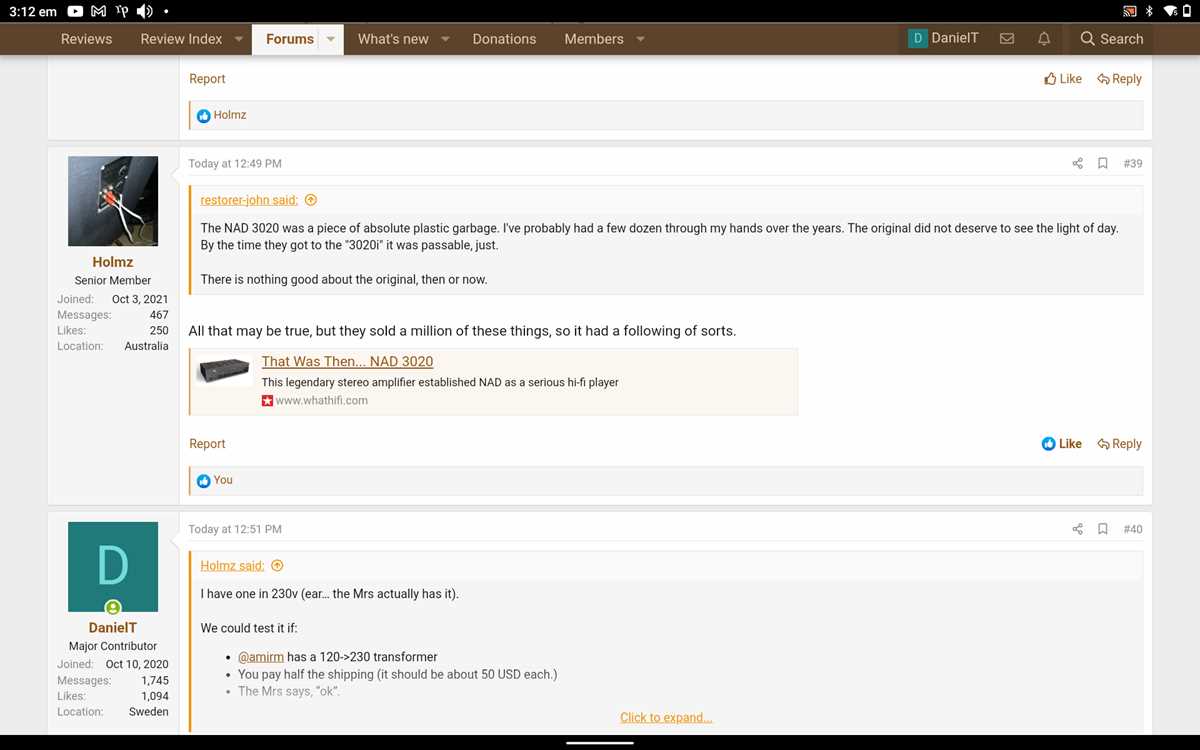
Use the original service schematic of the classic 1980 stereo integrated amplifier as the primary reference before troubleshooting or modification. The drawing shows the full electrical layout, including the power supply block, pre-amplifier stages, tone control network, protection relay, and the discrete output transistor pair used in the final amplification stage.
This vintage unit relies on a dual-rail power supply around ±35 V, generated by a transformer, bridge rectifier, and large electrolytic capacitors typically rated near 6800 µF. From that supply section the voltage feeds several subsections: phono preamp, line amplifier, tone control board, and the power output stage. Understanding the routing between these parts allows quick identification of faults such as hum, channel imbalance, or weak output.
The audio path begins at the input selector and phono preamp board, where low-level cartridge signals are amplified through a transistor-based RIAA stage. Line-level sources bypass this block and move through the tone control network containing bass, treble, and balance controls. After that stage the signal enters the driver transistors that control the push-pull output pair mounted on the heatsink.
Output transistors operate in a class AB configuration and connect to the speaker terminals through a relay protection module. The protection board monitors DC offset and power-on delay, preventing speaker damage. Reading the wiring map of these sections helps locate measurement points for bias adjustment, voltage checks, and component replacement during restoration of this well-known hi-fi amplifier.
Amplifier Schematic With Power Supply Signal Path and Component Details
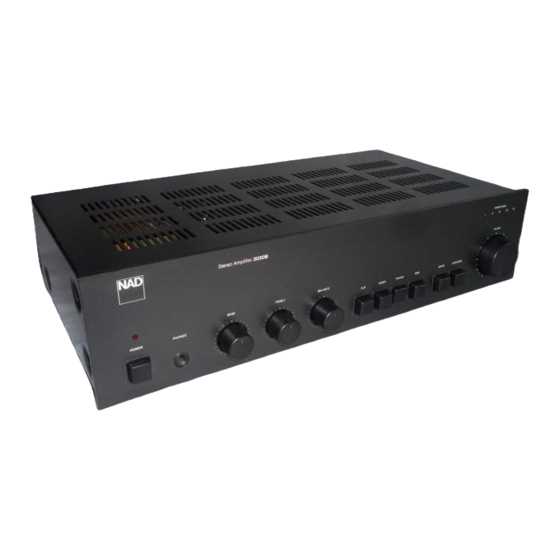
Check the power supply block first using the service schematic of this well-known late-1970s stereo amplifier. The transformer feeds a full-wave bridge rectifier that produces dual rails near ±35 V DC. Large filter capacitors rated about 6800 µF to 8200 µF smooth the rails before voltage reaches the preamp board and the output stage. Measure DC voltage directly across the main capacitors and confirm symmetry between positive and negative rails; a difference larger than 1–2 volts often signals aging electrolytics or rectifier issues.
The signal route shown in the electrical layout follows a clear order from input connectors to speaker terminals. Key sections include:
- Input selector network that switches between phono, tuner, tape, and auxiliary sources
- Phono preamp board with transistor gain stages and an RIAA equalization network for magnetic cartridges
- Tone control stage containing bass, treble, balance, and volume potentiometers
- Driver transistors that raise signal level before the power stage
- Push-pull output pair mounted on the heatsink operating in class AB
- Speaker protection relay that disconnects outputs during power-on delay or DC fault
Follow these blocks on the schematic sheet and mark test points such as bias adjustment trimmers, emitter resistors near 0.22 Ω, and coupling capacitors around 100 µF–220 µF. Tracking these nodes makes troubleshooting channel distortion, hum, or low output much faster.
Reading the Amplifier Schematic and Identifying Main Sections
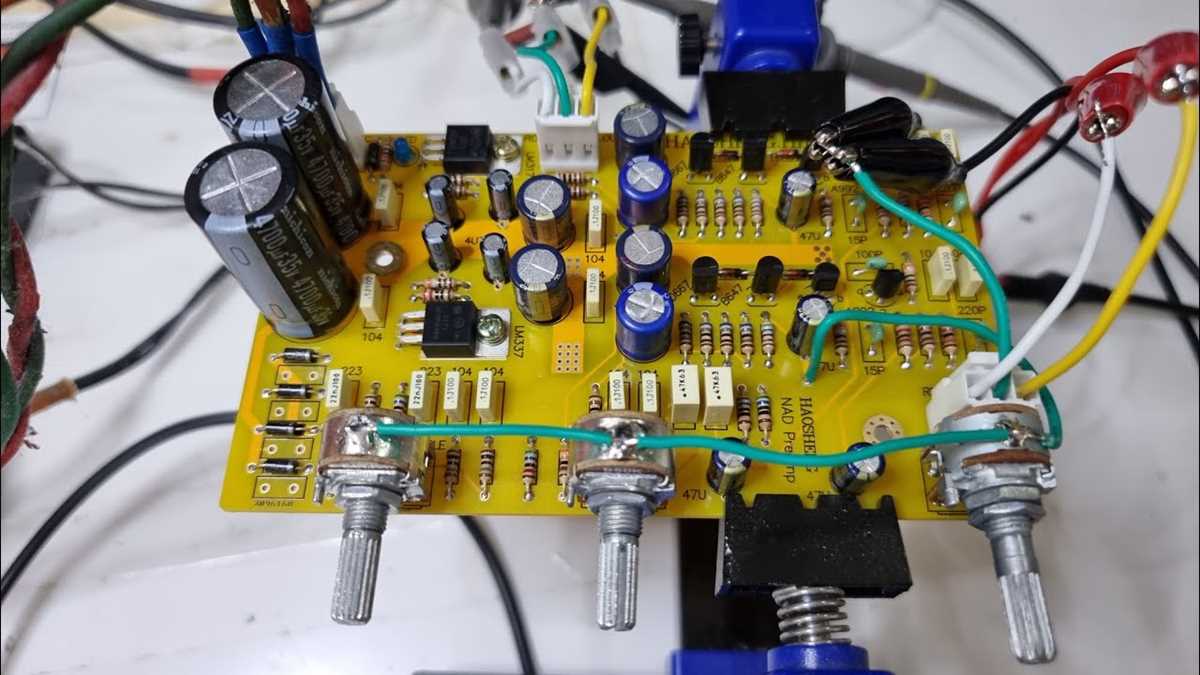
Trace the signal path from the input connectors toward the speaker terminals using the service schematic of this classic stereo integrated amplifier. The sheet is divided into clear functional blocks: input selector, phono preamp, tone control stage, driver stage, output transistors, and the protection relay. Begin with the RCA input sockets on the left side of the drawing and follow the lines through coupling capacitors, small-signal transistors, and potentiometers until the path reaches the power stage mounted on the heatsink.
Use component numbering and voltage markings printed on the electrical layout to separate each section quickly. Typical groupings appear in predictable locations:
Input and phono stage: low-level amplification with RIAA equalization using several small transistors and resistors around tens of kilo-ohms.
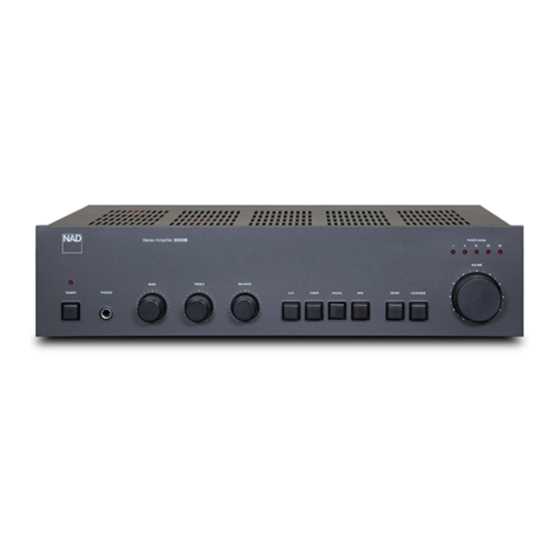
Tone control board: bass and treble network built with capacitors ranging from about 4.7 nF to 220 nF connected to dual potentiometers.
Driver stage: medium-power transistors that raise voltage before the final pair.
Output section: complementary power transistors linked through emitter resistors around 0.22 Ω and connected to the speaker relay.
Mark these blocks directly on a printed copy of the schematic sheet. Doing this once allows quick navigation during voltage checks, bias adjustment, or component replacement.