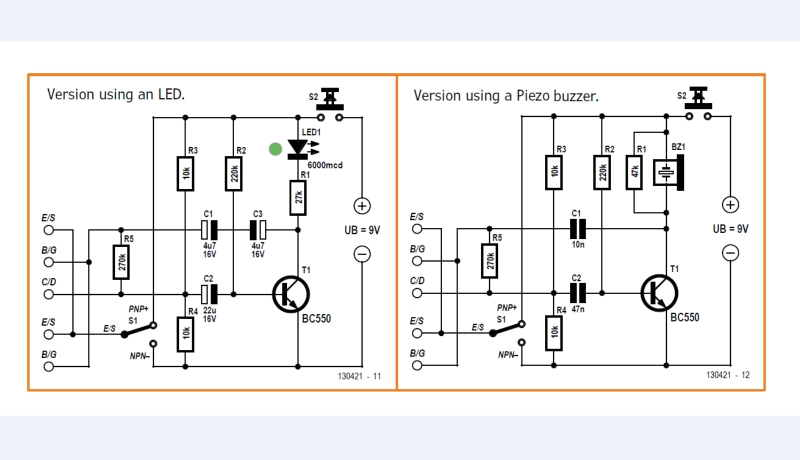
Choose a sound emitter rated for your power supply to prevent overcurrent and ensure consistent tone production. Verify the voltage and current specifications before connecting.
Use a current-limiting resistor in series with the device to protect both the module and the controlling board. Calculate resistor value using Ohm’s law based on the supply voltage and desired current.
Connect signal inputs directly to microcontroller or switch outputs while keeping wire lengths short to reduce interference. Twisted pairs can help minimize electromagnetic noise in longer runs.
Install a decoupling capacitor across the power terminals to filter voltage spikes and prevent distortion. A 0.1 µF ceramic capacitor is suitable for low-power modules, while higher currents may require 10 µF or more.
Test the sound output under various supply conditions to confirm reliability. Measure tone amplitude with a multimeter or audio sensor to ensure proper operation across the expected load range.
Tone Generator Setup and Connections
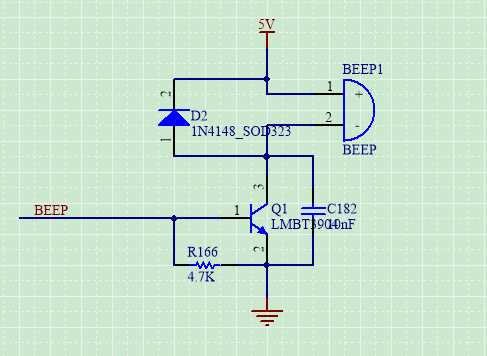
Connect the sound module directly to the power source using short, insulated wires. Ensure the polarity matches the positive and negative terminals to avoid damage.
Include a series resistor to limit current according to the module rating. For a 5 V supply drawing 20 mA, use a 220-ohm resistor to maintain safe operation.
Attach the control signal input to a microcontroller or switch output with minimal wire length to reduce interference. Use a pull-down resistor if the input floats to prevent false activation.
Verify audio output under different voltage conditions to ensure stable tone generation. Test with varying supply levels, and observe for distortion or reduced amplitude, adjusting series resistance as needed.
Selecting Sound Module Type and Component Ratings
Choose a module rated above the maximum supply voltage to prevent damage and ensure longevity. For a 5 V system, select devices rated at 6 V or higher with current consumption below 30 mA.
- Pick a resonant frequency that suits your alert or signal requirement, typically 2–4 kHz for audible alerts.
- Check current draw under continuous operation to avoid overheating traces or power supply stress.
- Use components with tolerance ratings that maintain stable output despite temperature variations.