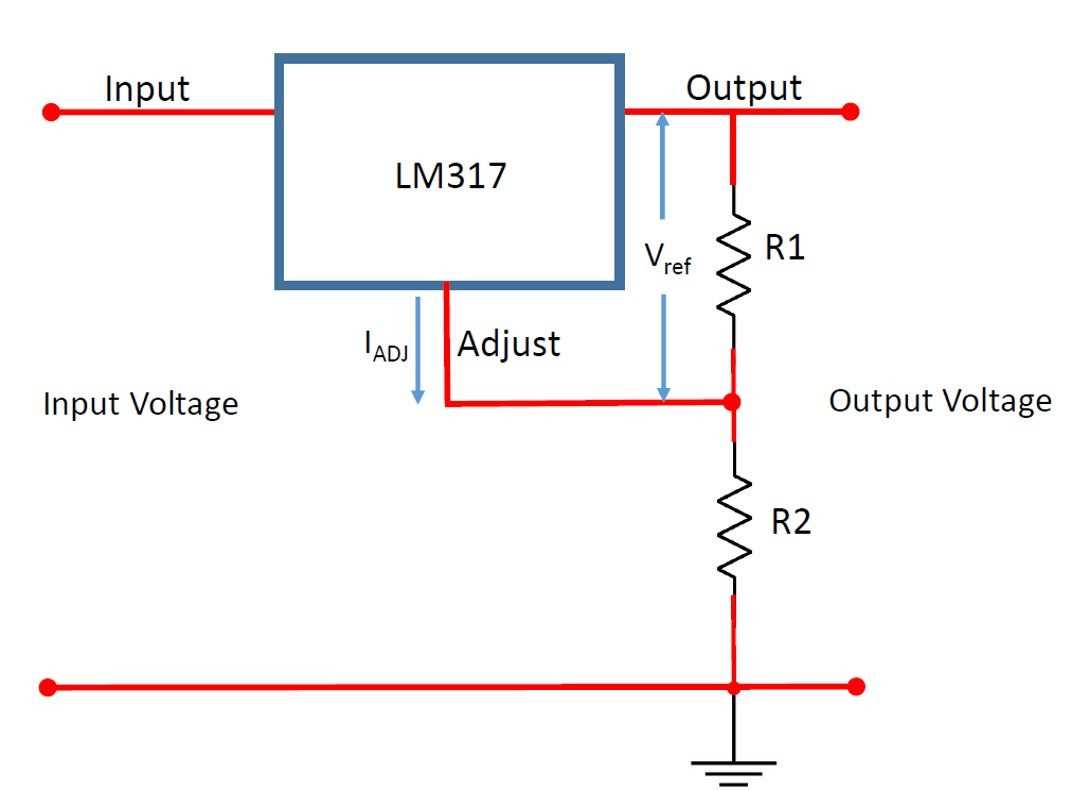
Use precision resistors to set output levels accurately and prevent overloading sensitive components. Select resistors with at least 1% tolerance for stable performance.
Include a heatsink with the main transistor or module to manage heat dissipation when drawing higher currents. Ensure thermal paste or pads are applied properly for maximum contact.
Place the input capacitor close to the supply terminals to reduce ripple and voltage spikes. A 100 µF electrolytic capacitor is recommended for low-current applications.
Install a feedback loop with a potentiometer to fine-tune the output level. Turn the potentiometer slowly while monitoring with a multimeter to avoid overshoot or undervoltage.
Check polarity before powering the system to avoid damage to diodes and transistors. Reverse connections can destroy semiconductors instantly.
Use protective fuses on the input and output rated slightly above expected load. For example, a 2 A fuse for small electronics and 5 A for motor or LED projects.
Building a Custom DC Power Control Setup
Use a precision potentiometer to control output levels gradually and avoid sudden surges. Ensure the potentiometer is rated for the expected current range to prevent overheating.
Install a filtering capacitor at the input to smooth incoming fluctuations. A 100 µF electrolytic capacitor combined with a 0.1 µF ceramic capacitor reduces both low- and high-frequency noise.
Include a heatsink with the main pass transistor to manage thermal load under high current. Attach thermal pads or paste to maintain proper conduction between the transistor and heatsink.
Selecting Components
Choose diodes with a voltage rating at least twice the input supply to prevent breakdown during transients. Fast-recovery diodes improve response when loads change rapidly.
Wire output terminals with thick stranded cable to minimize voltage drop under load. Use 18 AWG for low-power devices and 14 AWG for higher currents above 5 A.
Testing and Adjustment
Measure output with a multimeter while adjusting the control knob slowly. Observe for any heating in the transistor or excessive ripple; if present, increase input capacitance or reduce load.
Selecting Components and Calculating Resistor Values
Choose transistors and ICs rated above the maximum expected load to prevent overheating or failure. Check datasheets for collector-emitter voltage and current limits.
Use precision resistors with 1% tolerance when setting output levels to maintain stable performance. Avoid carbon film resistors in high-current sections.
- Calculate series resistor values using Ohm’s law: R = (Input – Target Output) / Load Current.
- Ensure resistors can handle at least twice the expected power: P = I² × R.
- Select resistor packages with proper wattage rating for safety and longevity.
Capacitors must match voltage requirements and maintain low ESR for filtering applications. For smoothing, combine electrolytic and ceramic types to cover a broad frequency range.
Diodes should have a reverse voltage rating at least double the input and fast recovery time for switching loads. Verify maximum forward current aligns with load requirements.
- Test resistor network on a breadboard before final assembly.
- Measure actual output with a multimeter while varying load.
- Adjust resistor values in small increments to fine-tune output without exceeding thermal limits.