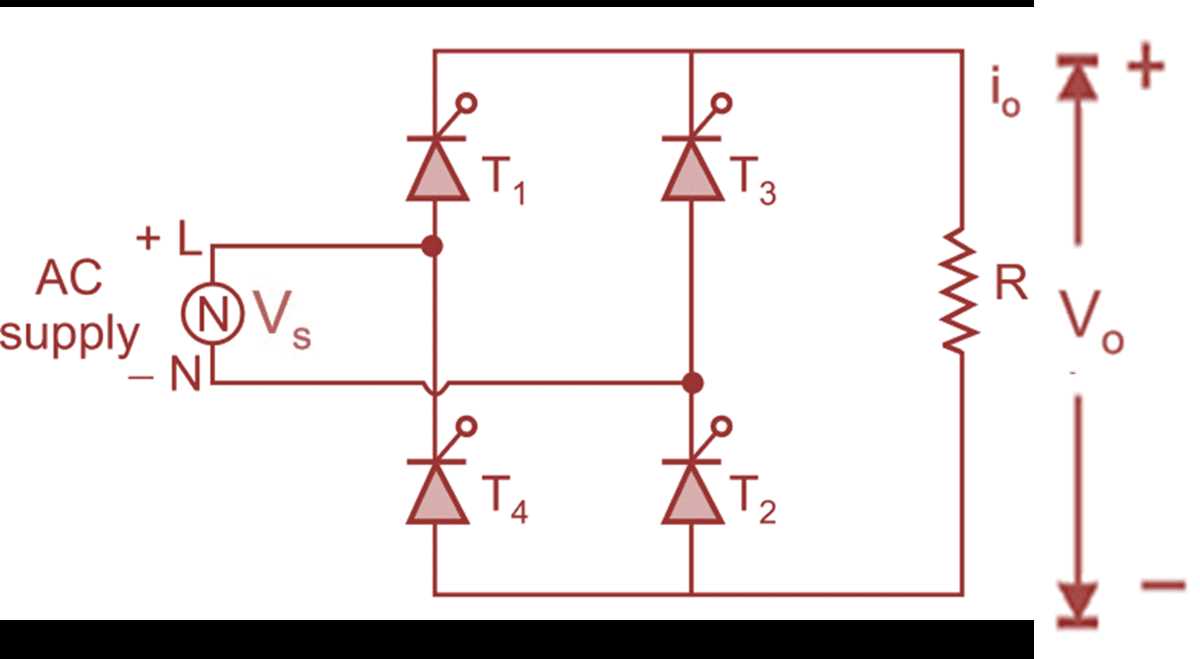
To convert alternating current (AC) to direct current (DC), a simple yet effective method is to use a four-diode configuration. This design provides smoother power delivery and is ideal for powering sensitive electronics. It ensures that the output is consistently positive, which is necessary for most devices to function properly.
First, identify the components used in this setup. You’ll need four diodes, each with the proper current rating for the load. The diodes are arranged in such a way that both halves of the AC waveform are utilized. The input AC voltage is fed through the diodes, and during each half-cycle, the diodes conduct, allowing current to flow in one direction, creating a consistent output.
By using this method, you can achieve a higher level of efficiency in energy conversion. This system not only helps to smooth out voltage fluctuations but also minimizes ripple, which can disrupt the operation of some electronic components. Proper understanding of how the diodes interact is key to ensuring a stable power supply for your devices.
Full Wave Bridge Rectifier Circuit Overview
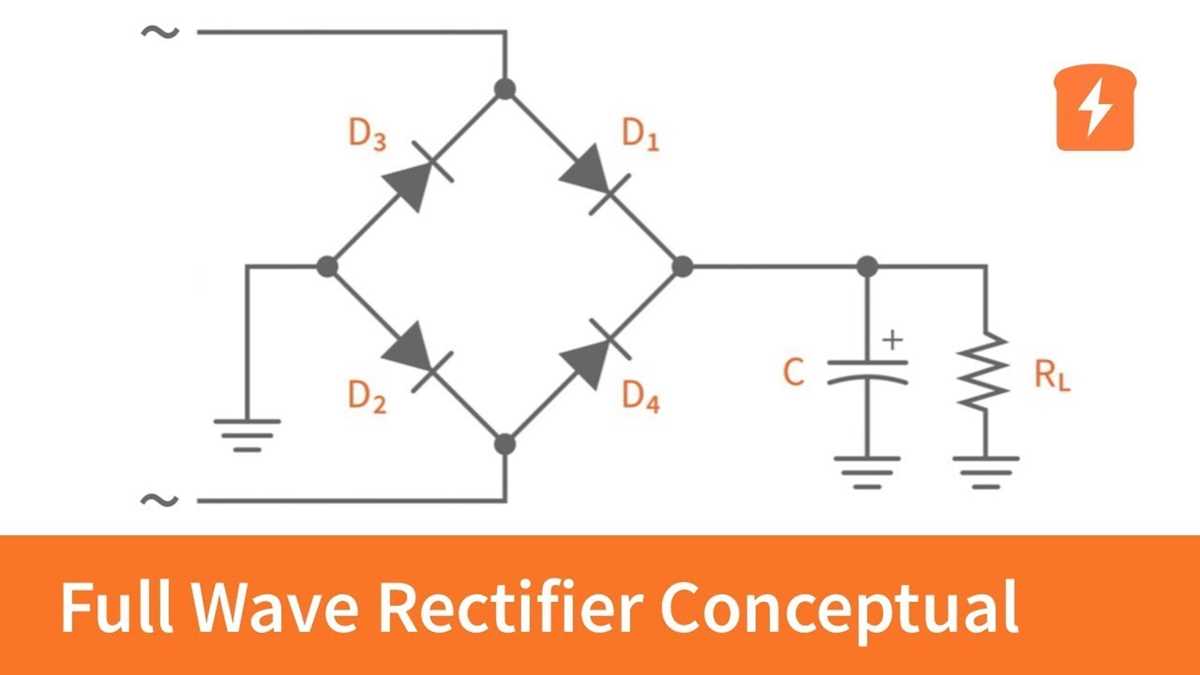
A four-diode setup effectively converts alternating current (AC) to direct current (DC) by utilizing both halves of the AC waveform. This configuration ensures that current flows in only one direction, producing a smoother output voltage, which is required for many electronic devices. It is one of the most reliable and widely used methods for rectification.
The diodes are arranged in such a way that during both the positive and negative halves of the input signal, two diodes conduct, allowing current to flow in the same direction. This results in a steady DC output, making it suitable for use in applications like power supplies for audio systems, motor controllers, and other sensitive electronics.
One of the key advantages of this setup is its ability to provide a higher average output voltage compared to a half-wave rectifier. Because it uses both half-cycles of the input signal, it effectively doubles the output frequency, reducing ripple and ensuring a more stable DC voltage.
When working with this configuration, it’s crucial to consider the diode’s reverse voltage rating. If the diodes cannot handle the peak voltage of the input signal, they could break down and fail. Always ensure the diodes are rated higher than the peak voltage of your AC supply to avoid damage.
The efficiency of the system also depends on minimizing the internal resistance of the diodes. Low-resistance diodes reduce power loss, ensuring that the maximum amount of energy is transferred to the load. This is particularly important when the rectified power is used to drive high-power applications such as motors or heating elements.
Additionally, the transformer used in conjunction with this system must be chosen carefully. It should match the voltage levels required by the load while also providing enough current. An undersized transformer may lead to insufficient power delivery, while an oversized transformer could result in wasted energy and unnecessary heat production.
In summary, this configuration is an excellent choice for applications requiring stable DC voltage from an AC source. Understanding how the diodes work together and how to properly select components ensures reliable performance in various electronic systems.
How the Full Wave Bridge Rectifier Works
In this setup, four diodes are arranged in a specific manner to convert alternating current (AC) into direct current (DC). The diodes are positioned so that two conduct when the input signal is positive, and the other two conduct when the input signal is negative, ensuring that current flows in only one direction.
During the positive half of the input waveform, the current flows through two diodes, while the other two remain reverse-biased and do not conduct. In this phase, the positive half of the AC signal is rectified and passed through to the load, resulting in a positive output.
When the input signal reverses during the negative half of the waveform, the roles of the diodes switch. Now, the other two diodes conduct while the first two become reverse-biased. This action ensures that the current continues to flow in the same direction, effectively rectifying the negative half of the AC waveform as well.
This continuous flow of current in one direction results in a pulsating DC signal, which still has ripples. To smooth the output, a filter capacitor can be used to reduce the ripple, providing a more stable DC voltage for sensitive electronic components or power supplies.
Understanding this process is critical when designing power supplies, as the correct placement of diodes and the proper choice of components, such as transformers and capacitors, will significantly influence the performance and reliability of the system.