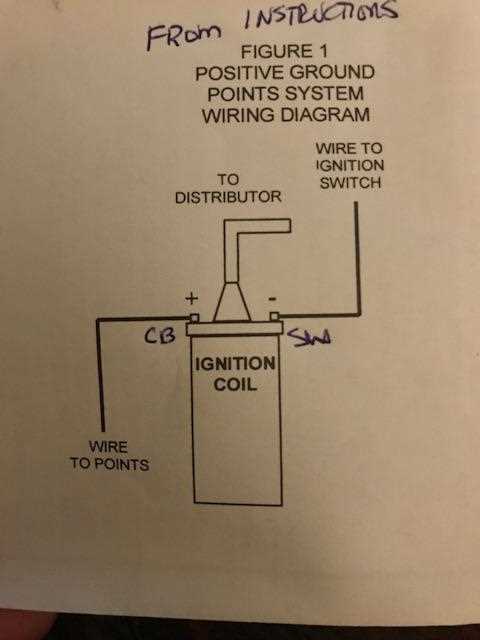
Connect the red lead directly to a switched +12V source that remains powered while the ignition key is in the RUN and START positions. A common mistake is attaching this lead to the coil’s positive terminal when a ballast resistor is present; this drops voltage below 12V and causes weak spark events. If a resistor block exists in the circuit, route the red conductor to the supply side of that resistor or bypass the resistor entirely when the module manufacturer specifies full battery voltage.
The black lead should attach to the negative terminal of the ignition coil. This point acts as the trigger path that interrupts current through the primary winding. Ensure the coil’s primary resistance matches the specification of the electronic trigger unit. Many installations operate reliably with coils rated between 1.5 and 3.0 ohms. Lower resistance coils can overheat the switching transistor inside the distributor module.
Secure the internal pickup assembly firmly to the breaker plate and verify that the magnetic sleeve sits evenly over the distributor cam lobes. A misaligned sleeve creates irregular timing signals that lead to misfire at higher engine speeds. Maintain an air gap within the tolerance stated by the manufacturer, usually around 0.030 inches. Use non-magnetic feeler gauges to measure this clearance.
Route both conductors away from rotating components inside the distributor housing. Excess slack may contact the advance mechanism and damage insulation. After completing the connections, rotate the engine manually and confirm that no internal parts touch the wires. Once verified, reconnect the battery and test ignition output by observing a stable spark during cranking.
Vehicles equipped with tachometers require an additional check. The tach signal typically reads from the coil negative terminal, the same location used by the module’s black lead. Confirm that the gauge receives a clean pulse after installation; erratic readings often indicate poor ground or a coil with incompatible primary resistance.
Practical Installation and Connection Guide for the Magnetic Pickup Ignition Module
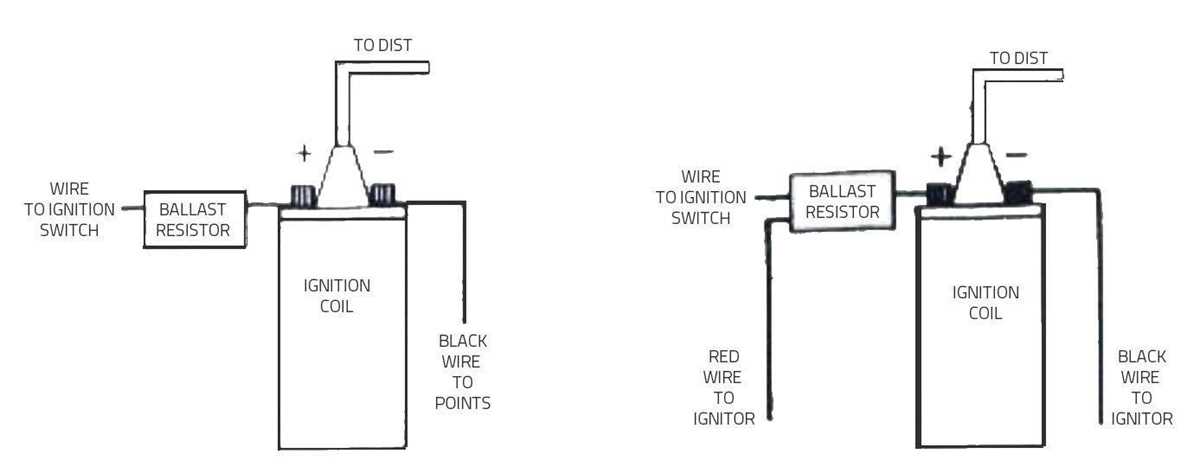
Connect the red lead from the magnetic trigger unit directly to the positive terminal of the ignition coil that receives switched 12-volt power from the ignition key. The black lead goes to the negative coil terminal. This direct pairing ensures the module switches coil grounding correctly and prevents unstable spark timing. Avoid routing these conductors through factory ballast resistors unless the module version specifically requires reduced voltage.
Distributor preparation determines reliability. Remove breaker points, condenser, and the mechanical contact plate, then clean the mounting surface inside the distributor housing. A flat surface allows the electronic pickup plate to sit perfectly parallel with the rotating magnet sleeve. Misalignment greater than about 0.5 mm may cause irregular triggering or misfires at higher RPM.
Typical connection layout inside the ignition system:
- Red lead → coil positive (+) terminal supplied by ignition switch
- Black lead → coil negative (−) terminal
- Coil positive → switched 12 V source
- Coil negative → tachometer input if equipped
Install the magnetic sleeve over the distributor cam carefully. It should slide down evenly without forcing. If resistance appears, polish the cam lightly with fine abrasive cloth. The sleeve must rotate concentrically with the shaft; wobble leads to fluctuating trigger signals and unstable spark timing.
Recommended installation sequence:
- Disconnect battery negative terminal.
- Remove distributor cap and rotor.
- Take out contact points and condenser.
- Mount the electronic trigger plate using supplied screws.
- Place the magnet sleeve over the cam.
- Route the two leads through the distributor grommet.
- Reconnect coil terminals following the connection layout.
Voltage supply should remain between 11.5 V and 14.2 V during engine operation. Systems using resistance wire from the factory often drop voltage to 6–9 V, which prevents proper switching of the electronic trigger. In those cases, run a new switched 12-volt feed from the ignition switch or fuse panel directly to the coil positive terminal.
Secure all conductors away from moving distributor parts and hot exhaust components. Leave slight slack where the wires exit the distributor body to prevent tension when the engine vibrates. Use heat-resistant loom or braided sleeve if routing near the intake manifold.
After installation, rotate the engine until cylinder one reaches top dead center on the compression stroke and set base ignition timing according to the engine specification. Engines that previously used mechanical contacts usually require a small timing adjustment, typically advancing initial timing by 2–4 degrees to compensate for the faster switching behavior of the electronic trigger system.