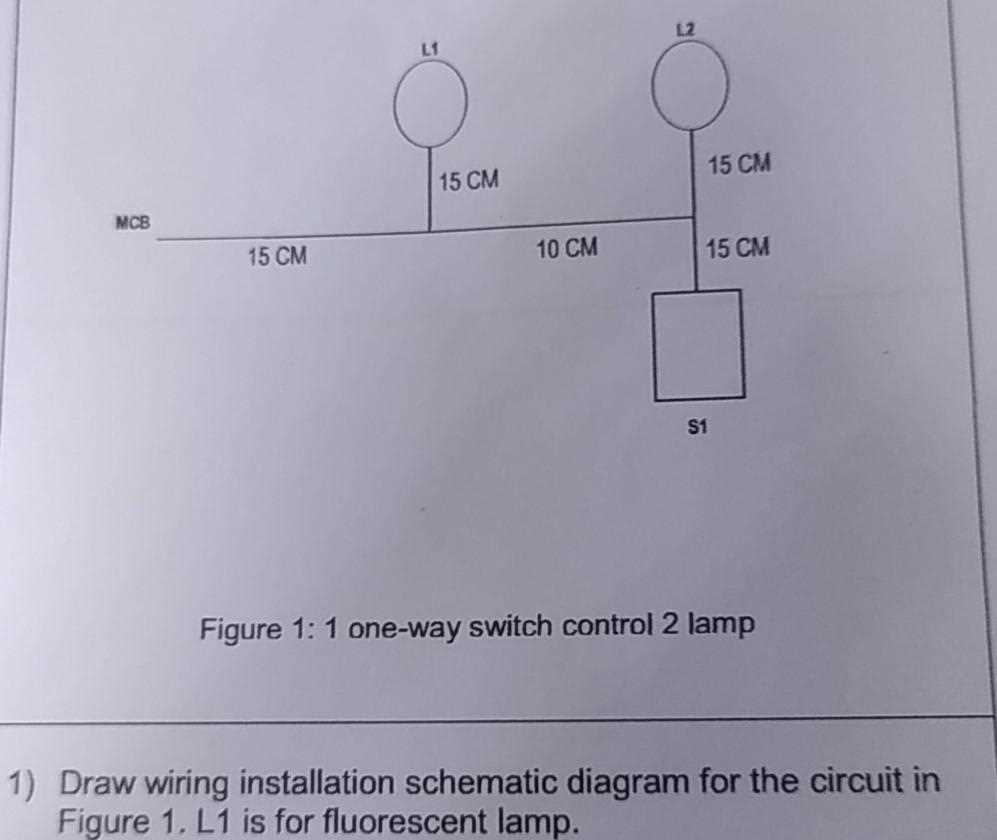
Connect the feed line directly to the first toggle point using a secure terminal block to prevent loose contacts. Ensure the neutral path remains uninterrupted for consistent operation.
Link the outgoing line from the first toggle to the second toggle with appropriately rated conductors. Verify polarity at both points to maintain reliable switching from either location.
Use color-coded insulation for each conductor to distinguish between live, return, and traveler lines. This reduces errors during installation and simplifies future maintenance.
Install protective covers on all terminals and maintain at least 1.5 cm clearance between exposed connections. This prevents accidental shorts and enhances overall safety.
Test the fixture from each toggle point individually before finalizing the assembly. Cycle the operation multiple times to confirm consistent response and detect potential misrouting early.
Single Fixture Operated from Dual Toggle Points Setup
Connect the main feed directly to the first toggle device using insulated terminals rated for the system’s current. Ensure the return line remains continuous to maintain consistent energy flow.
Run a pair of traveler conductors between the two toggle points using color-coded insulation to avoid misidentification. Confirm connections at each end to prevent reversed operation.
Attach the fixture lead to the second toggle point with a secure clamp or screw terminal. Test each toggle independently to verify that the energy flow can switch the load from either location without interruption.
Use protective housings and maintain clearance between exposed connections to minimize short circuits. Perform multiple operational cycles and inspect for loose or damaged links before finalizing the setup.
Selecting Appropriate Toggle Units for Dual-Point Operation
Use intermediate or three-way mechanisms with ratings that match the system’s voltage and load. These units allow energy to be directed from either end without risk of overload or arcing.
Prioritize devices with clearly marked terminals and consistent mechanical action. This ensures travelers are connected correctly and prevents misfiring when alternating control from both locations.
Consider mounting style and durability for areas with frequent use. Metal toggles with screw terminals provide long-term stability, while plastic units with snap connectors offer easier installation in tight spaces.
Test each unit individually by temporarily connecting the load and cycling both toggles. Confirm that switching at one point consistently energizes and de-energizes the fixture, then repeat for the opposite point to verify reliability.