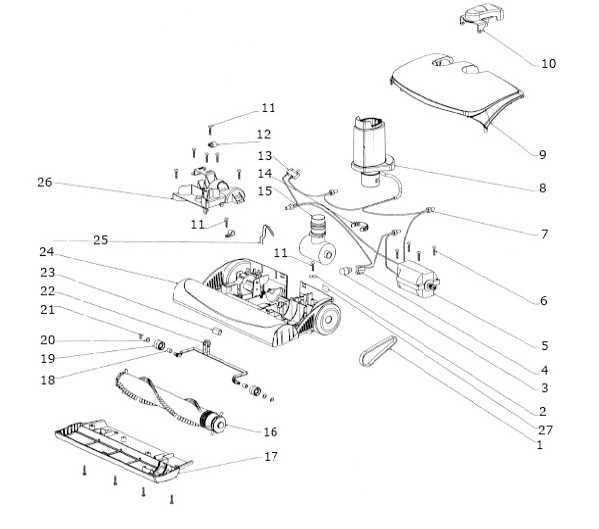
If your cleaner has stopped working or is underperforming, the problem might be due to a worn or broken component. The first step is to identify which part is faulty, whether it’s the motor, hose, filter, or any other essential section. Using a detailed schematic of the system’s parts can help pinpoint where the issue lies and guide you through the replacement process. Be sure to inspect each section carefully to ensure that everything is functioning as it should.
Start by examining the most common components: the hose, which can often become clogged or cracked, or the motor, which may overheat or lose power over time. A detailed visual guide can help you understand the connection between various sections, making the troubleshooting process more straightforward. If you notice any irregular sounds or a decrease in suction power, these are clear signs that something needs attention.
When replacing parts, always use high-quality replacements specific to your model. Generic components may not fit properly or could cause more harm in the long run. After identifying the faulty piece, carefully follow the replacement instructions to ensure proper installation, and test the system once the new part is in place. This will extend the life of your device and restore its full functionality.
Canister Cleaner Parts and Component Guide
The primary components of your cleaner include the motor, hose, filter, and brush head. The motor is the heart of the device, responsible for generating suction. If your cleaner is losing suction power, this could be a sign of motor wear or malfunction. Check the motor for signs of overheating or damage and replace it if necessary.
The hose can easily become clogged or cracked. A blocked hose will reduce suction and make cleaning less effective. Regularly check for any obstructions or visible damage. If you find a hole or tear, replacing the hose will restore suction power.
The filter plays a crucial role in trapping dirt and debris, preventing them from recirculating into the air. Over time, filters become clogged and should be cleaned or replaced. Make sure to check the filter at least once every few months. If your filter is beyond cleaning, replace it with a compatible one.
The brush head and its rotating brushes are key for lifting dirt from the floor. Inspect the brush regularly for tangled hair or debris. If the brushes are not spinning, check the belt. If it is broken, replace it to restore functionality.
By understanding these components and keeping track of their condition, you can prolong the life of your cleaner. Use high-quality replacements for damaged parts to ensure the unit functions optimally. Regular maintenance will keep it running efficiently for years to come.
How to Identify and Replace Common Parts in Vacuum Cleaners
If your cleaner is losing suction or not performing as expected, it could be due to worn-out or damaged components. First, check the filter for any buildup. A clogged filter prevents airflow and reduces cleaning power. Clean or replace the filter regularly to maintain optimal performance.
Inspect the hose for any cracks or blockages. A damaged hose can cause a significant drop in suction. Look for visible signs of wear, and replace the hose if necessary. If there’s a blockage, use a long object to push through any debris, ensuring the airflow is restored.
Next, examine the brush head. A common issue is the brushes not spinning properly. This could be due to tangled debris or a broken belt. Check for any hair or fibers wrapped around the brush and remove them. If the belt is broken, replace it with a compatible one to restore brush movement.
Another part to inspect is the motor. If the machine is making strange noises or showing little suction power, the motor could be failing. Make sure it’s free from obstructions and that the motor is not overheating. If the motor is damaged, replace it with an identical model to ensure compatibility.
Regularly maintaining these key components will help extend the life of your cleaner and ensure it operates at peak efficiency. Always use original or recommended replacement parts for best results. Keep your unit in top condition by performing routine checks on these areas.
Troubleshooting and Repair Tips for Canister Models
If the machine isn’t picking up dirt efficiently, start by checking the hose for clogs or cracks. Use a long object to push through any debris that might be obstructing airflow. If the hose is cracked, replace it to restore proper suction.
When there’s a noticeable drop in suction power, inspect the filter. Over time, filters can become clogged with dust and debris. Remove the filter, clean it thoroughly, or replace it if it’s too damaged. A dirty filter is a common cause of decreased performance.
If the unit starts making unusual noises, the brush head might be the cause. Look for tangles of hair, threads, or fibers around the brush, as these can prevent it from spinning. Clean the brush area and check the belt. If the belt is broken or loose, replace it with a new one.
If the motor seems to be overheating or the machine shuts off unexpectedly, it could be caused by a blocked air path. Check for any obstructions in the intake area and remove them. Overheating can also be a sign that the motor is failing, in which case, replacing the motor is necessary.
Ensure that all connections, such as the hose and attachments, are properly secured. Loose parts can cause air leaks and reduce suction. Tighten or replace any faulty connectors to improve performance.