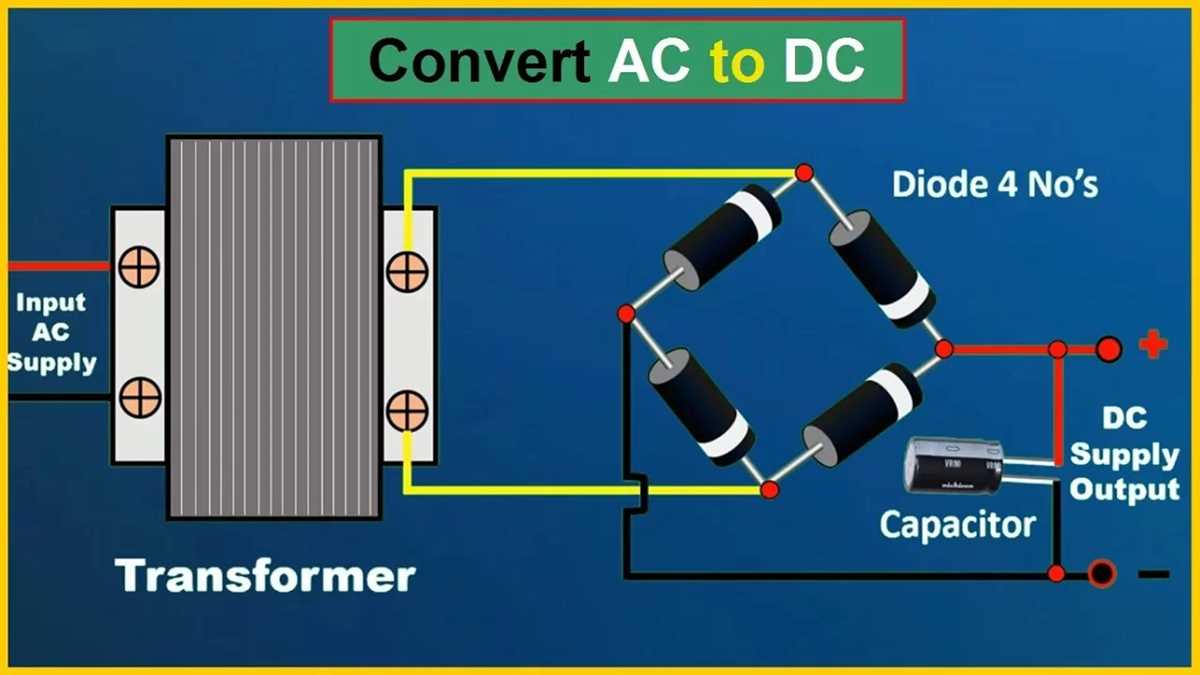
To convert alternating current into direct current, a basic understanding of the components involved and how they function together is critical. The most straightforward configuration typically involves a transformer, a diode bridge, and a filter capacitor. These elements play a pivotal role in shaping the input into a usable output that can power DC-based devices.
Start by considering the role of the transformer, which steps down the voltage to a more manageable level. Following this, the diode bridge is used to rectify the AC, ensuring that the current only flows in one direction. Finally, a filter capacitor smooths out the ripples in the output, providing a stable DC supply. Each component should be carefully selected to match the desired input and output specifications.
Understanding the interactions between these components is vital for constructing a reliable power supply. Once the arrangement is in place, you can experiment with the values of the capacitors or diodes to meet specific needs such as minimizing ripple or handling different voltage requirements. This approach provides a practical and effective solution for most low- to medium-power applications.
Circuit of AC to DC Power Transformation
To successfully transform AC into a stable DC output, it is important to understand the role of the individual components involved. The most common setup starts with a transformer that steps down the voltage to a safe level. This is followed by a set of diodes, arranged typically in a bridge configuration, to rectify the AC current. Lastly, a capacitor is used to filter out any remaining ripple, ensuring a smooth and steady DC flow.
Key Components of the System
- Transformer: Reduces the voltage of the AC input to a level suitable for the load.
- Diode Bridge: Ensures the current flows in only one direction, converting AC to pulsating DC.
- Capacitor: Smooths the fluctuations in the output voltage, providing a steady DC signal.
The size and ratings of each component will depend on the desired output specifications, such as the required voltage and current. For example, a higher voltage requires a transformer with a greater turns ratio, while the diodes must be rated for the maximum current expected in the circuit. Capacitors should be chosen to match the level of ripple that is acceptable for the application.
Practical Considerations
It is also important to take heat dissipation into account. Both the diodes and transformer will generate heat during operation. Proper cooling measures should be incorporated to ensure the components do not overheat, as this can lead to premature failure. Additionally, if a very stable DC output is required, a more advanced filtering method, such as a regulated power supply, might be necessary.
Understanding the Components of AC to DC Power Supply
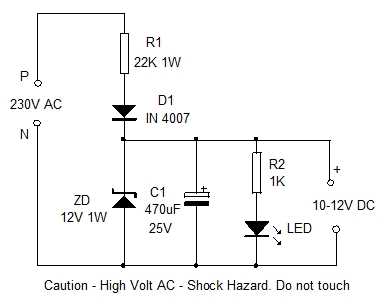
The first component of any setup for transforming AC to DC is the transformer. It is responsible for stepping down the incoming AC voltage to a lower level, depending on the needs of the system. For example, if you’re converting 120V AC into 12V DC, the transformer must reduce the AC input voltage accordingly. Always choose a transformer rated for the required output voltage and current to avoid damage to the load.
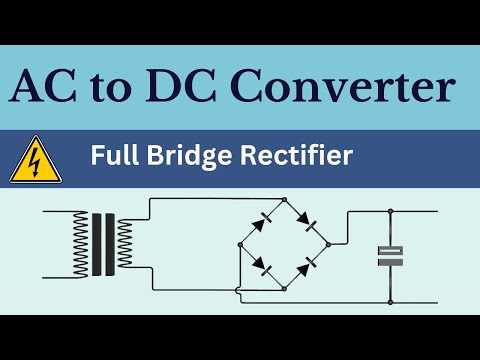
Next, you’ll need a diode bridge, which consists of four diodes arranged in a specific configuration. These diodes are responsible for rectifying the AC signal, meaning they allow current to flow in only one direction. The result is a pulsating DC current that still has fluctuations. The diodes should be chosen based on their current rating and voltage tolerance, as excessive load can cause them to fail.
After rectification, the output is a series of pulses, not a smooth constant voltage. To smooth out these pulses, a capacitor is added to the circuit. The capacitor acts as a filter, charging up during the peaks of the waveform and discharging during the valleys. This reduces the ripple in the DC output and makes it more stable. The size of the capacitor must be chosen to match the amount of ripple you are willing to tolerate in the output signal.
For those looking to achieve even smoother DC output, an LC filter or a more advanced regulation method may be necessary. An LC filter uses an additional inductor along with the capacitor to further reduce the ripple. The combination of inductors and capacitors can provide a cleaner, more consistent output, which is ideal for sensitive equipment.
The choice of diodes is important for the overall efficiency and durability of the system. Fast-recovery diodes are often preferred in modern setups, as they can handle high-frequency switching with minimal loss. Additionally, Schottky diodes are sometimes used due to their lower forward voltage drop, which helps reduce energy loss during rectification.
Another important consideration is the heat dissipation of the components. When current flows through the transformer, diodes, and capacitors, they will generate heat. Excessive heat can lead to component failure or reduced lifespan. Adequate heat sinking or ventilation should be considered, especially when dealing with high currents or high-frequency signals.
Finally, the overall load resistance of the system must be considered. The output voltage of the system will be influenced by the resistance of the load. Higher resistance will lead to a higher voltage, while lower resistance will result in a lower voltage. Ensuring the load matches the output characteristics of the system is critical for optimal performance.