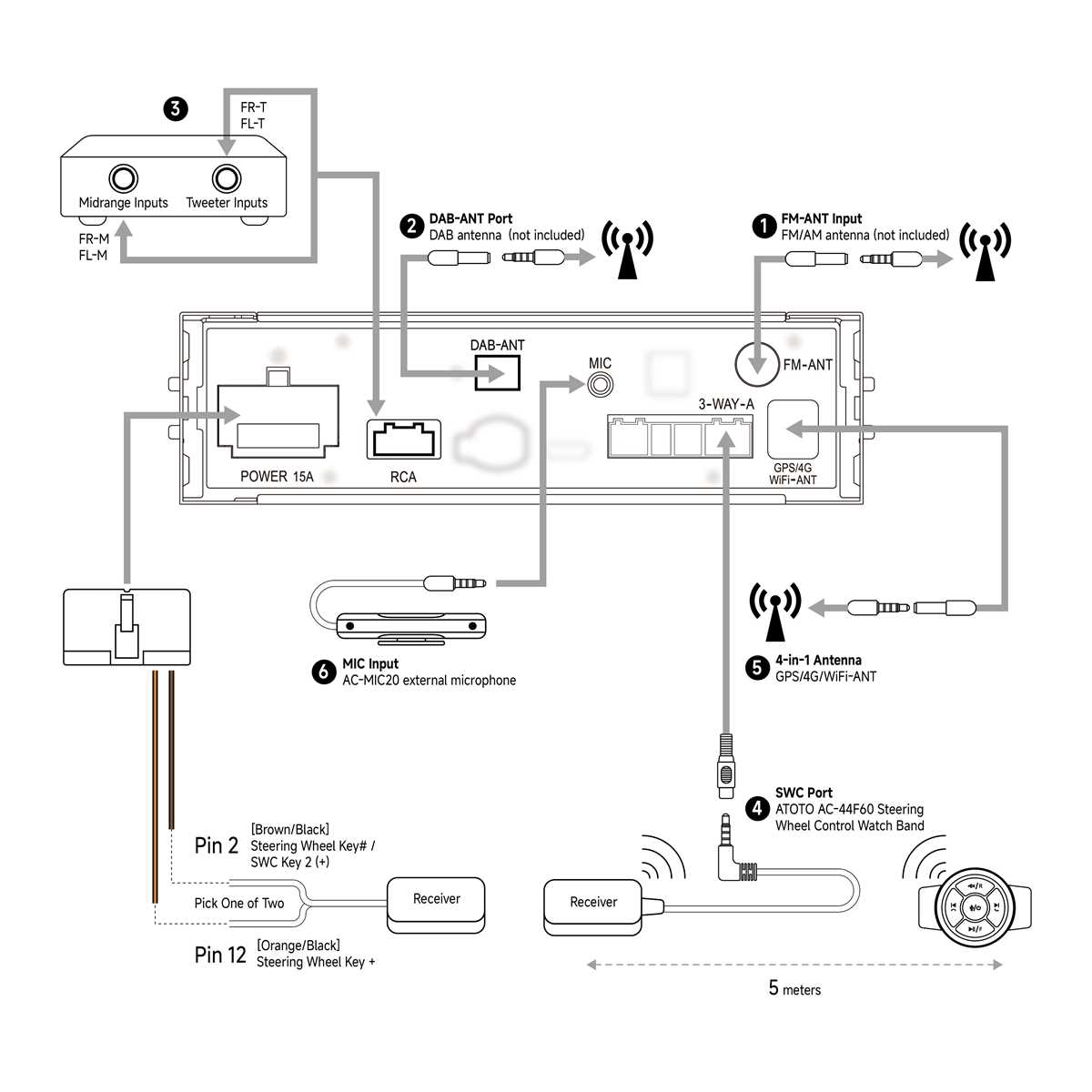
Match each lead from the dashboard audio receiver to the vehicle harness using color codes before applying power. Yellow typically links to constant 12V supply, preserving memory for presets and clock, while red connects to the ignition-controlled 12V line, allowing the unit to power only when the key is turned. A black conductor attached to bare chassis metal serves as ground; poor grounding often causes noise, random resets, or failure to power on.
Speaker channels follow a paired pattern. Solid colors indicate positive terminals, while the same color with a black stripe marks negative polarity. For example, white and white/black feed the front left speaker, gray and gray/black handle the front right, green and green/black drive the rear left, and purple with purple/black operate the rear right. Maintaining polarity prevents phase cancellation that weakens bass and shifts stereo imaging.
Vehicles equipped with an external amplifier or powered antenna require an additional control lead. A blue or blue-white conductor sends a +12V trigger signal that activates amplifiers or raises a motorized antenna once the head unit powers up. Without this signal the amplifier remains idle, producing silence even when speakers and power lines appear correctly linked.
Before connecting the receiver, check voltage with a multimeter: constant supply should read about 12–12.6V with the engine off, while the ignition line shows voltage only after the key is turned. Secure joins with crimp connectors or solder plus heat-shrink tubing. Loose twists often lead to intermittent contact behind the dashboard where vibration and temperature changes are common.
Vehicle Audio Head Unit Connection Layout
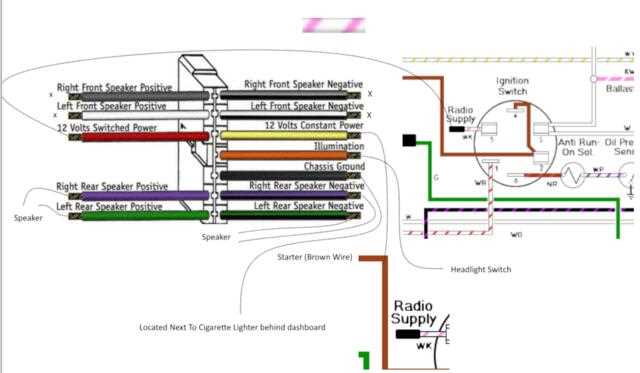
Disconnect the negative terminal of the battery before touching any conductors behind the dashboard; this prevents blown fuses and damage to the head unit. Identify the constant 12-volt lead (usually yellow in aftermarket harness sets) and verify it with a multimeter–expect about 12.4–12.7 V with the engine off. The accessory power lead often appears red and should only show voltage when the ignition key is in ACC or ON. Ground must attach to bare chassis metal; resistance between that point and the battery negative should remain below 0.3 ohms.
Speaker channels follow a predictable color pattern in most aftermarket harness kits: white pair for front left, gray pair for front right, green pair for rear left, and purple pair for rear right. The solid color conductor carries positive signal, while the matching cable with a black stripe carries negative. Maintain polarity consistency; reversed polarity reduces bass response and shifts the stereo image. Typical impedance of door speakers ranges from 4 to 8 ohms, so confirm compatibility with the head unit’s amplifier stage before connecting.
Memory retention requires a direct battery feed separate from the ignition-controlled supply. Without that constant line, presets and clock data reset each time the vehicle powers down. Fuse this line at 10–15 A if the harness does not already include protection. Many dashboards include an illumination control lead–often orange or orange/white–which dims the display when the vehicle lights activate. Measure voltage changes across this conductor while toggling the headlight switch to confirm function.
Amplifier triggering uses a thin blue or blue/white lead that outputs about 12 V once the head unit powers up. This signal activates external amplifiers or powered antennas. Current capacity rarely exceeds 300 mA, so it should drive relay coils or control inputs only, not large loads directly.
Before securing the dashboard panel, test every channel: turn on the head unit, play a track with strong stereo separation, and fade sound from front to rear and left to right. Each speaker should respond without distortion or crackling. If noise appears during engine operation, inspect ground points and route signal cables away from power conductors to reduce electromagnetic interference.
Identifying Standard Car Stereo Wire Colors and Their Functions Before Connection
Check conductor colors against common aftermarket audio harness standards before joining any leads. A 12-volt constant supply is typically marked by a yellow lead; it maintains memory for presets and clock data. The switched ignition feed is usually red and provides power only after the key turns to ACC or ON. Black normally indicates chassis ground and must connect directly to a solid metal grounding point to avoid voltage instability or audio noise.
Typical Power and Control Lead Identification
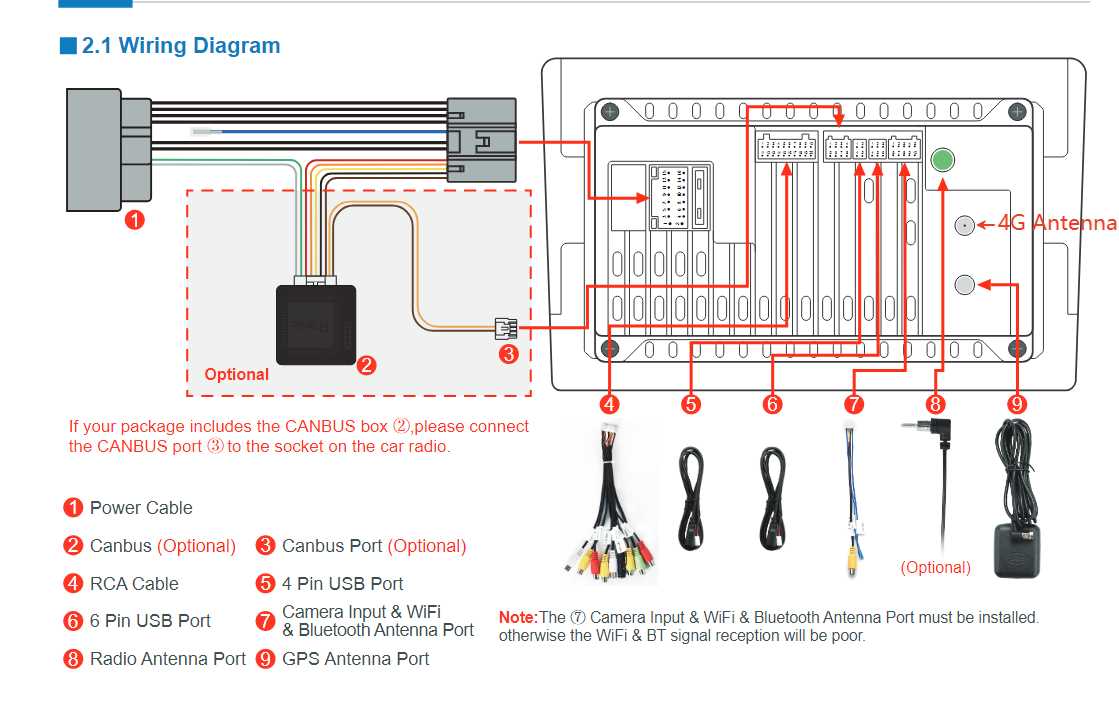
- Yellow – constant 12 V battery feed for memory retention.
- Red – ignition-switched 12 V supply.
- Black – ground connection to vehicle chassis.
- Blue – power antenna trigger or amplifier activation signal.
- Orange or Orange/White – dashboard illumination control.
Speaker channels follow a consistent pair structure: a solid color wire carries the positive signal, while the same color with a black stripe represents the negative lead. Front left usually appears as white (+) and white/black (−). Front right uses gray (+) and gray/black (−). Rear left is commonly green (+) with green/black (−), while rear right appears purple (+) and purple/black (−). Pair polarity must stay correct; reversed polarity reduces bass response and distorts stereo imaging.
Quick Verification Procedure
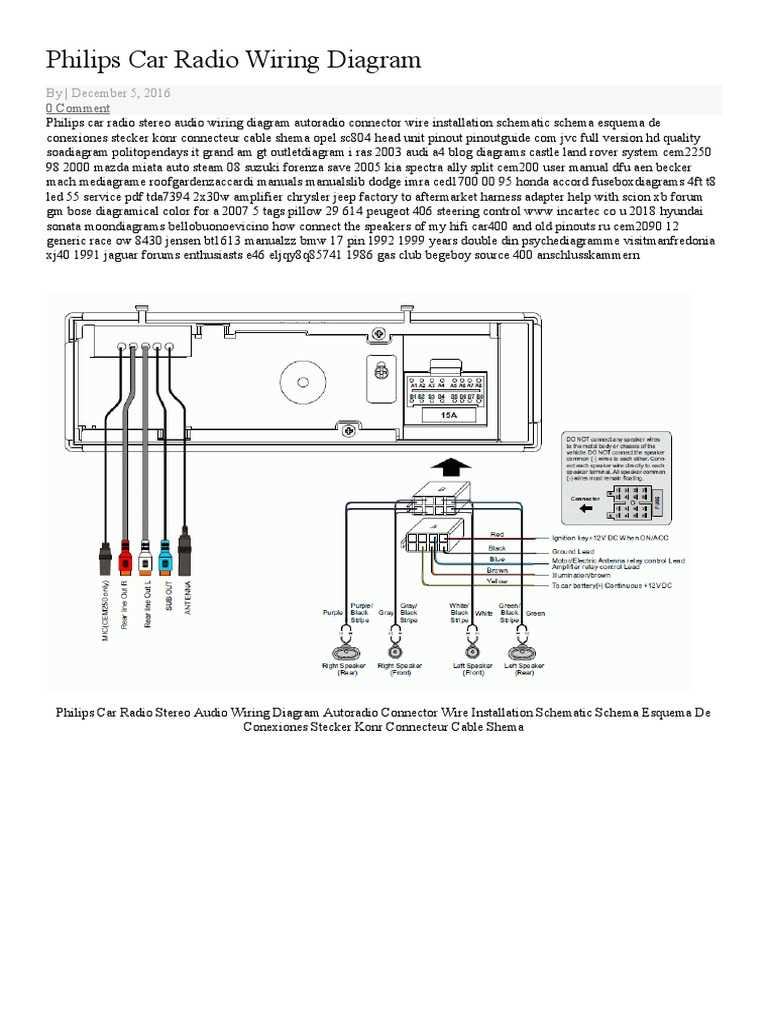
- Use a digital multimeter to confirm constant voltage on the yellow lead (~12–12.6 V with ignition off).
- Turn the key to ACC and check the red lead for voltage presence.
- Measure resistance between the black conductor and metal chassis; value should approach 0 Ω.
- Test speaker pairs with a 1.5 V battery pulse; the cone should move outward when polarity matches.
- Label each lead with tape before joining connectors to prevent channel crossover.
Color standards appear widely across aftermarket head units, yet factory harnesses may vary by manufacturer. A plug adapter matching the vehicle’s connector avoids cutting the original loom and preserves factory circuitry integrity while simplifying signal routing.