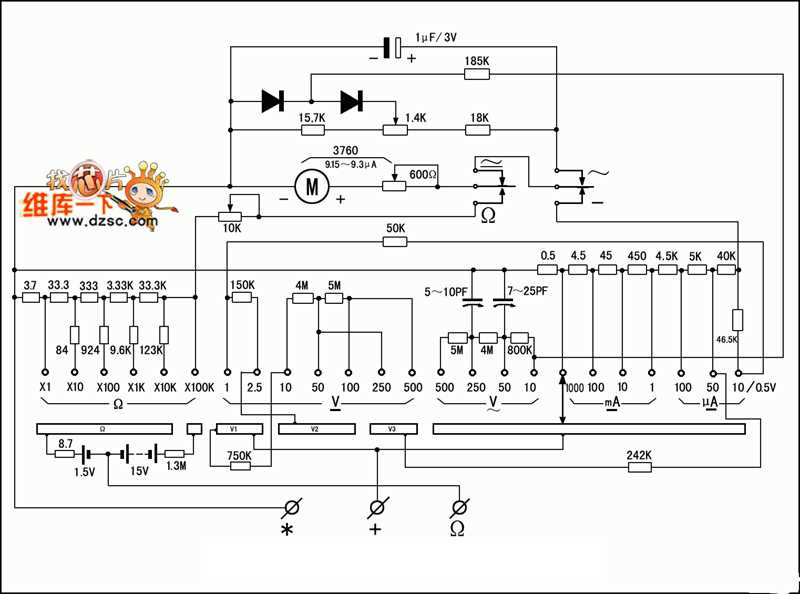
Begin by identifying the main sections of your electronic tester: the input probes, the selection dial, and the display unit. Accurate voltage and current readings depend on proper probe placement and correct mode selection. For low-voltage circuits, use the dedicated high-resistance input channel to minimize interference.
The sensing network integrates resistive and semiconductor elements to route signals safely to the processing module. Precision resistors define the scale for current and voltage measurements, while protective diodes prevent damage from accidental overvoltage. Observe the orientation of these components carefully, as reversed diodes can distort readings.
Current sensing relies on shunt resistors paired with an amplification stage. Shunt calibration ensures that milliampere and microampere measurements remain reliable. For AC measurements, the tester employs a rectifier bridge followed by a smoothing capacitor to convert alternating signals into a measurable level for the internal meter.
Capacitive and inductive elements influence the response speed and stability of the device. Filter capacitors reduce noise from transient spikes, while small inductors prevent oscillations in sensitive measurement ranges. Proper understanding of their placement allows you to diagnose faults or modify the tester for specialized tasks.
Battery management circuits supply steady power to analog and digital sections. Check for voltage drops across these paths to maintain consistent performance, especially when the device operates under high load. Replacing aged batteries or worn connectors restores accuracy without altering the functional design.
Circuit Layout of a Measurement Device
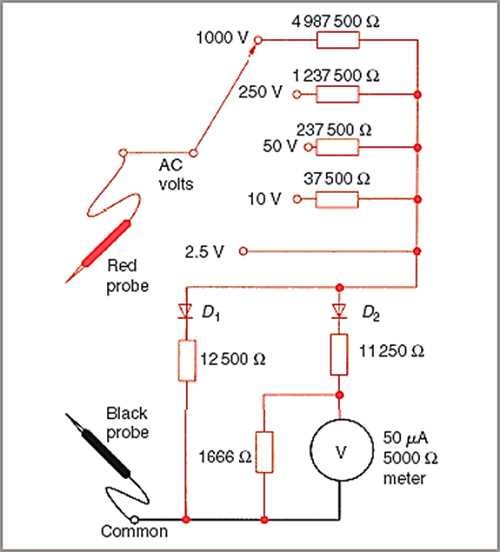
Connect the input probes through a precise switching network to avoid overloading the sensing element when measuring high voltages. Use a 10 MΩ resistor in series for safety when testing circuits above 50 V.
The main sensing unit employs a moving-coil mechanism linked to a series of shunts for current detection. A 0.1 Ω shunt allows accurate readings up to 10 A, while a 1 kΩ resistor branch limits voltage inputs to 200 mV.
Voltage scaling requires a resistor ladder. Arrange the resistors in parallel and series combinations to obtain ranges such as 200 mV, 2 V, 20 V, and 200 V. Each step should be connected to a selector switch that isolates unused branches.
For resistance measurement, incorporate a constant current source of 1 mA. The unknown resistor is connected across this source, and the resulting voltage drop is fed into the measuring coil. Include a zero-adjust potentiometer to calibrate short-circuit readings.
- Include diode protection for AC inputs above 250 V.
- Integrate a capacitor of 0.01 µF across sensitive branches to filter transient spikes.
- Ensure the internal battery powers the ohm scale only, with automatic disconnection during voltage readings.
The display section can use an analog needle with a damping resistor of 100 Ω in series to reduce oscillations. For digital variants, a high-impedance buffer amplifier protects the input stage from back-feed currents.
Internal grounding should be linked to the negative probe to prevent floating voltages. Connect metal casing to chassis ground through a 220 kΩ resistor to discharge static charges safely.
Understanding the Role of Each Component in a Multimeter Circuit
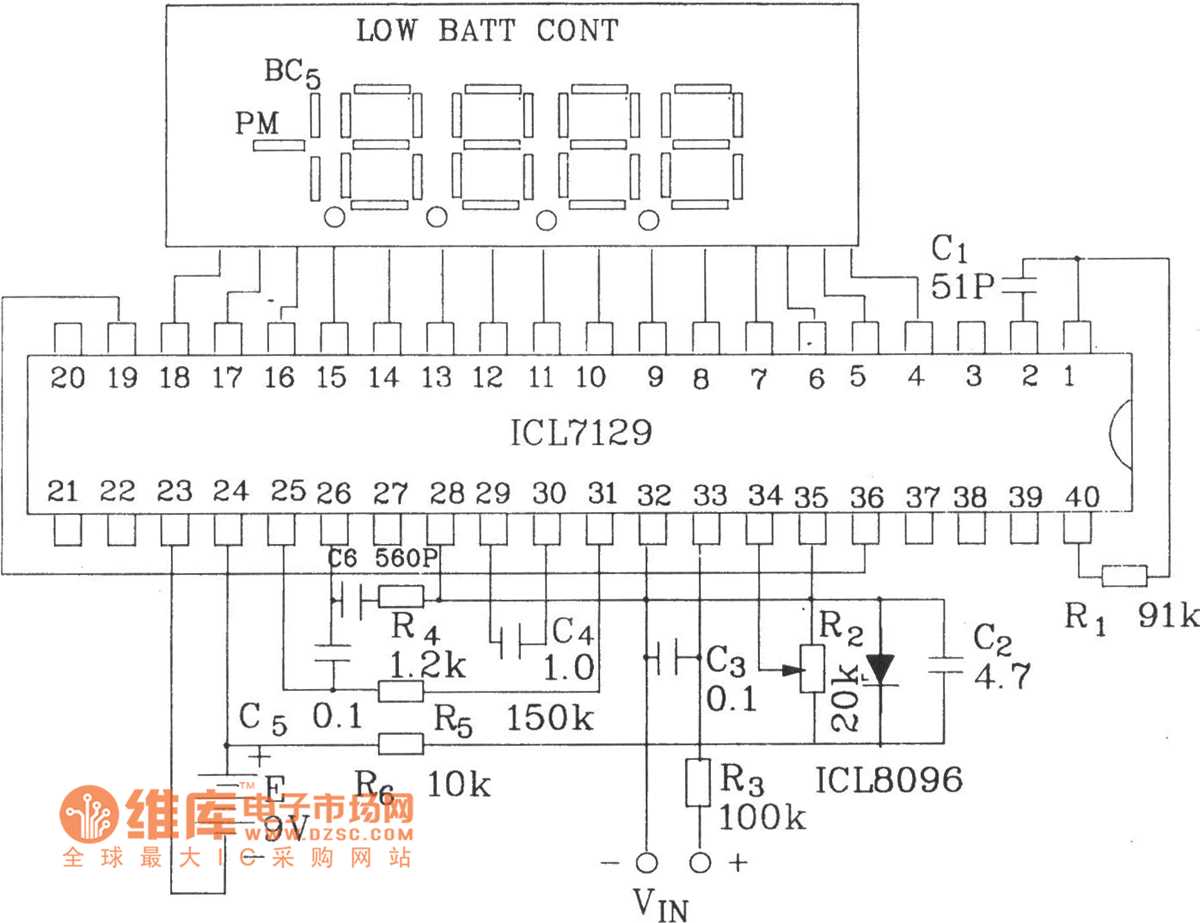
Always check the fuse rating before measuring high currents; a 200 mA fast-blow fuse prevents damage to sensitive transistors and protects the internal sensing shunt. Replace with one of identical specifications–3 AG 250 V is common for handheld models. Skipping this step risks burning the protective resistor and triggering permanent faults.
The rotary selector interacts directly with resistive networks, enabling voltage, current, and resistance readings. Each range is calibrated with precision resistors, often metal-film, with tolerances as low as ±0.1 %. Misalignment or wear on the selector switch can produce erratic readings, so inspecting contact points for corrosion is recommended.
Input Terminals and Signal Flow
Input jacks guide the signal through protective diodes and series resistors before reaching the analog or digital measuring stage. High-voltage inputs typically pass through 1 MΩ series resistors and transient suppression diodes to prevent spikes from reaching the microcontroller or analog meter movement. Testing continuity involves a separate low-resistance path with a dedicated buzzer circuit to indicate contact.
Capacitors stabilize the internal reference voltage and filter high-frequency noise from AC measurements. Ceramic capacitors of 100 nF across voltage dividers reduce transient errors, while electrolytic capacitors (10–47 µF) maintain steady display readings. Removing or bypassing these components can produce unstable results, especially in fluctuating input conditions.