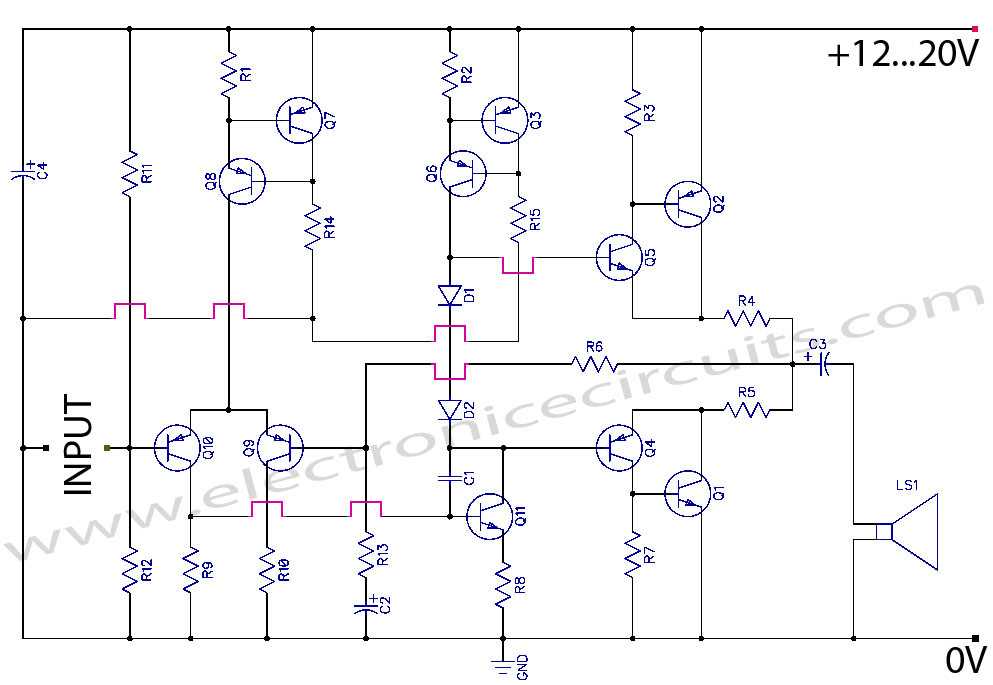
Check the input stage, gain stage, and output stage before assembling any audio gain device. These three sections determine how a weak signal from a microphone, guitar pickup, or line source grows from a few millivolts to several volts capable of driving speakers or another stage.
A typical signal path begins with a small-signal transistor or operational module that receives input through a coupling capacitor. This capacitor blocks DC while allowing AC audio to pass. After that stage, the signal moves through a gain block built around bipolar transistors, field-effect devices, or integrated op-amp units. Resistor networks around these components define voltage multiplication and stability.
Power rails must remain stable. Many audio gain systems operate from ±12 V, ±15 V, or single 9–24 V supplies. Filtering capacitors between the supply rail and ground remove ripple from rectified AC sources. Without proper filtering, the output produces audible hum at 50 or 60 Hz.
Feedback paths control distortion and stabilize output level. A portion of the output signal travels back to the input stage through a resistor network, lowering harmonic distortion and flattening frequency response. Small capacitors in that loop shape high-frequency behavior and prevent oscillation.
Output sections often use push-pull transistor pairs that deliver current to a load such as an 4 Ω or 8 Ω loudspeaker. Heat sinks attached to these devices dissipate thermal energy produced during high signal levels. Without sufficient cooling, junction temperature rises beyond safe limits.
Amplifier Circuit Diagram Showing Audio Signal Gain Stages and Power Supply Layout
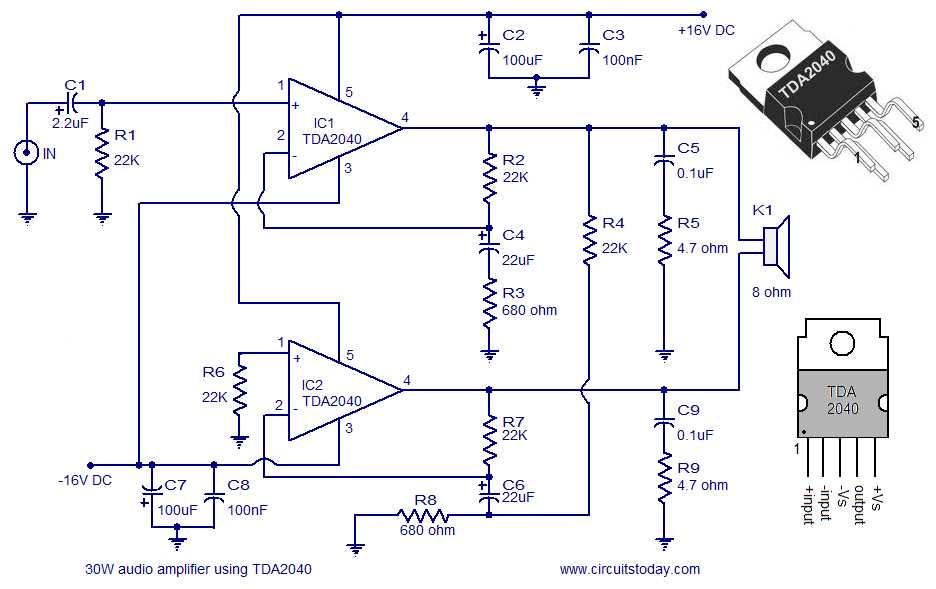
Trace the audio path from input coupling capacitor through successive gain blocks before examining the supply rails. A small signal from a microphone or line source usually enters through a capacitor of 1–10 µF that blocks DC bias. The signal then reaches a voltage gain stage built around a transistor or operational module. Resistors connected to the base or input pin establish bias current, while an emitter or source resistor stabilizes operating point. The output from this stage feeds a driver section that increases current capability, preparing the signal for the final push-pull power pair that drives a load such as a 4 Ω or 8 Ω speaker.
Power distribution must remain clean across the entire layout. A typical supply uses a transformer, rectifier bridge, and smoothing capacitors rated between 2200 µF and 6800 µF for each rail. These capacitors reduce ripple after AC conversion and maintain steady DC levels for every gain stage. Smaller ceramic capacitors, often 0.1 µF, sit near active devices to suppress high-frequency noise. Ground paths should converge at a single star point near the supply filter capacitors to avoid hum caused by circulating return currents.
How to Read an Amplifier Circuit Diagram Input Stage Feedback Path and Output Section
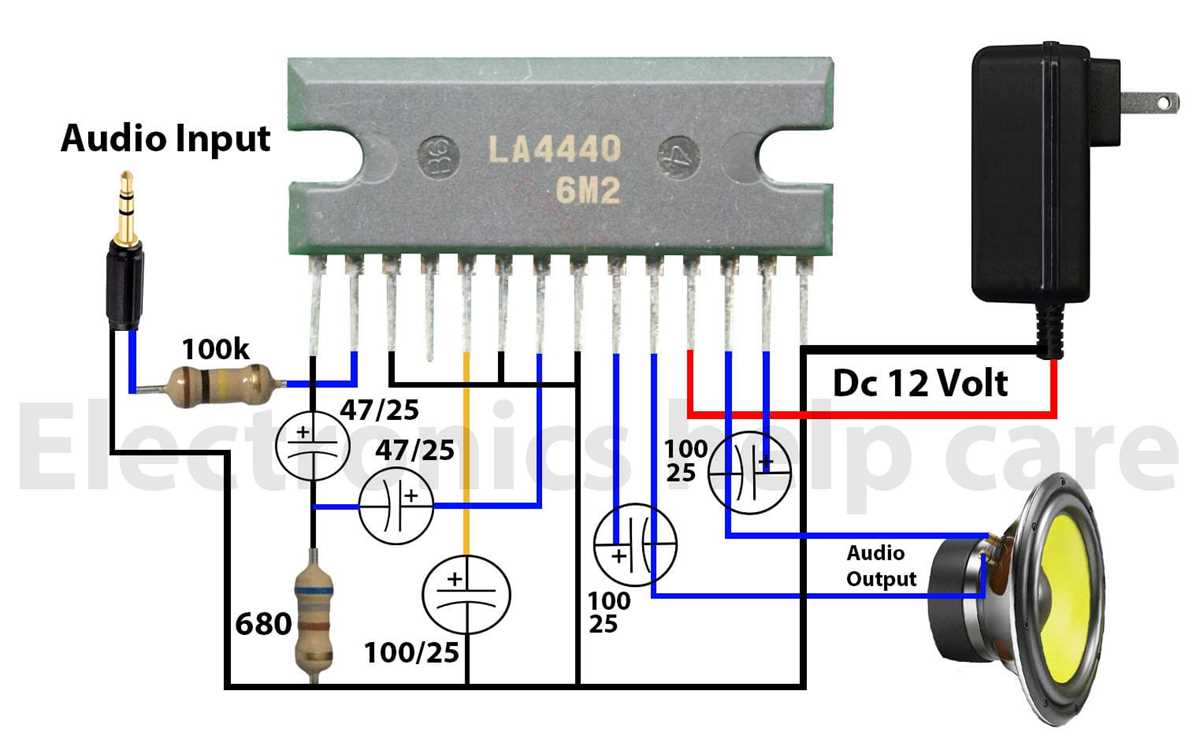
Locate the signal entry point first and follow the path step by step across the schematic layout. The entry section usually contains a coupling capacitor and a bias network that prepares a small AC signal for voltage gain. Typical resistor values range from 10 kΩ to 1 MΩ, setting the operating point for a transistor or operational module.
Input Stage Identification
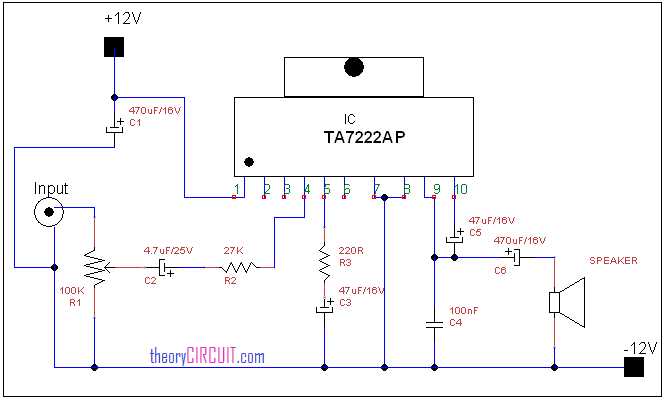
Inspect the components around the first active device. This stage conditions the incoming signal before large voltage multiplication occurs. Look for these elements:
- Coupling capacitor between source and input node
- Bias resistors forming a voltage divider
- Emitter or source resistor stabilizing current
- Small bypass capacitor increasing AC gain
After the input section, the signal moves into one or more gain blocks. These stages raise amplitude from millivolt range to several volts. Transistor collectors or op-amp outputs usually feed the following stage through capacitors rated between 0.47 µF and 10 µF.
Feedback Path Tracking
Search for a resistor or resistor–capacitor network running from the output node back toward the input section. This return path stabilizes operation and reduces distortion. Common feedback resistor values fall between 10 kΩ and 100 kΩ. Capacitors placed in parallel shape frequency response and prevent oscillation at high frequencies.
Next examine the power output section. This stage delivers current to the load and often uses complementary transistor pairs arranged in push-pull form. Devices connect to a heat sink since power dissipation can exceed several watts during high audio levels.
Typical elements found in the final stage include:
- Driver transistors feeding the power pair
- Emitter resistors between 0.22 Ω and 0.47 Ω balancing current
- Output coupling capacitor for single-supply layouts
- Direct connection to speaker terminals in dual-rail designs
Follow the signal path from entry node through each stage until it reaches the load connection. This approach reveals how small voltage variations transform into a strong audio signal capable of driving headphones or loudspeakers.