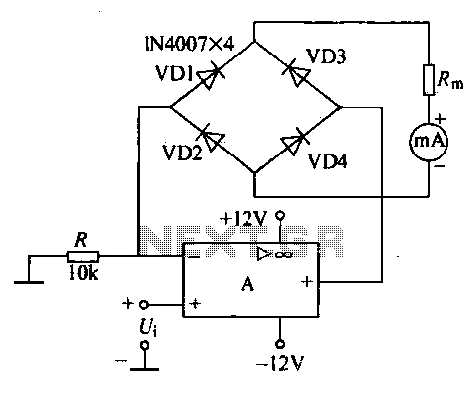
To effectively measure alternating current voltage, use a setup that incorporates the correct components and layout. Begin by ensuring your device uses a high-impedance input to avoid affecting the measurement. A resistor network often helps in scaling down the voltage to a readable level, ensuring accuracy across various ranges.
One common configuration involves using a rectifier and filter to convert the AC signal into a DC value that can then be displayed on a meter. This setup allows for the precise measurement of fluctuating voltages without distortion. Additionally, using a voltage divider network can help adjust the input voltage to the required range for your display unit.
When building this setup, selecting the right components is crucial. Choose resistors with tight tolerance for accuracy, and ensure the rectifier diodes are rated for the maximum input voltage. A well-designed capacitor for filtering is also necessary to smooth out the signal for more stable readings.
AC Measurement Device Design and Its Practical Applications
To design an accurate AC voltage measurement system, first ensure that the input impedance is sufficiently high to prevent current draw from the source. Typically, resistors with high resistance values are used to avoid interfering with the circuit under test.
Next, incorporate a rectification stage. A diode bridge is commonly used to convert the alternating current signal into a pulsating direct current. After rectification, a smoothing capacitor is necessary to filter out the ripple and provide a steady DC output that can be read by the display.
For accurate measurement, the scaling of the input voltage is crucial. A voltage divider is often used to reduce the signal amplitude to a level that is compatible with the meter’s input range. This ensures that even high voltages can be safely measured without causing damage to the internal components.
Component Selection
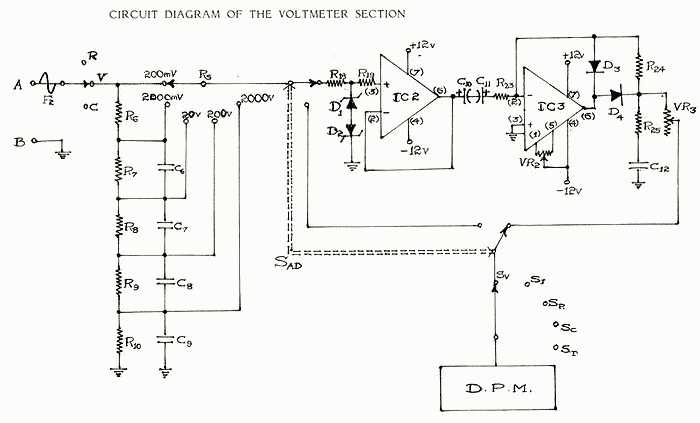
Choosing the right components for an AC measurement device is critical for its accuracy and reliability. Use precision resistors with a low temperature coefficient to maintain accuracy over varying environmental conditions. Additionally, selecting a fast-response rectifier diode ensures accurate tracking of fast-changing AC signals.
Capacitors used for filtering must be chosen based on the expected frequency range and voltage levels. Electrolytic capacitors are typically used for filtering lower frequencies, while ceramic capacitors are more suitable for high-frequency applications.
Practical Applications
This type of measurement device is widely used in electrical maintenance, troubleshooting, and calibration. It allows technicians to check the voltage levels of AC-powered equipment, ensuring they operate within specified parameters. Furthermore, it is often used in power generation and distribution systems to monitor the voltage delivered to various loads.
Another key application is in home appliance testing, where it helps assess the performance of equipment such as air conditioners, refrigerators, and microwave ovens. These devices often operate at different voltage levels, and accurate measurement ensures their safe and efficient functioning.
In industrial environments, the ability to monitor AC voltages across various systems is crucial for equipment protection and failure prevention. The measurement device provides operators with real-time data to make informed decisions about system maintenance and repairs.
Understanding the Components of an AC Measurement Device
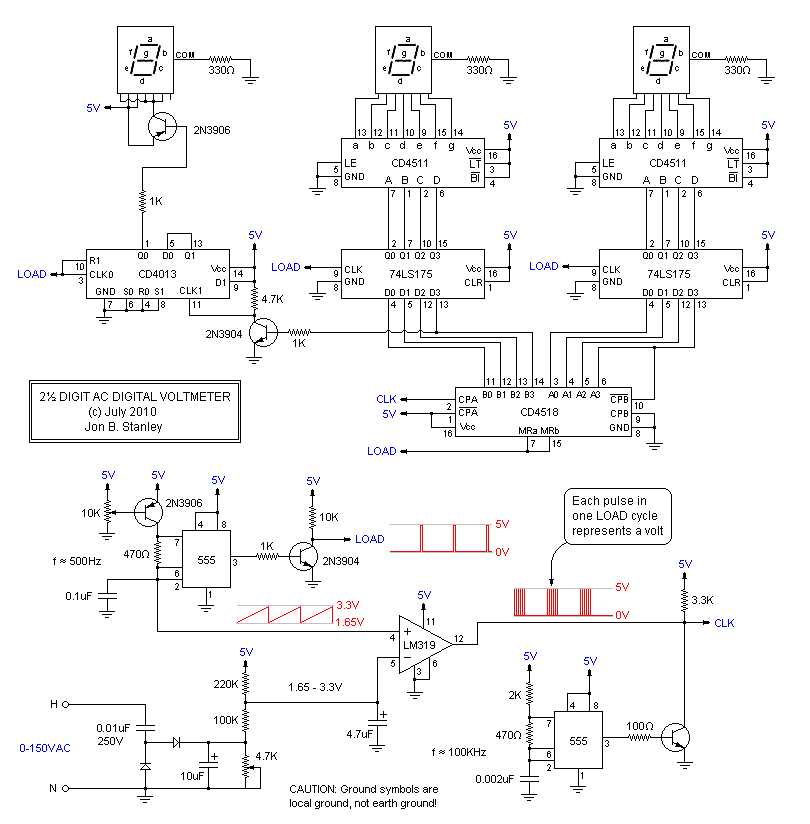
To build a reliable AC measurement tool, the first component to focus on is the input stage, which includes a high-impedance resistor to avoid drawing current from the source. This ensures accurate readings without altering the voltage of the tested circuit.
Next, you need a rectification stage. A diode bridge is commonly used to convert the alternating current into a direct current signal. By choosing fast-response diodes, you can ensure that the device can keep up with rapid voltage changes, which is crucial for accurate measurement.
Once rectified, the signal often needs smoothing. A capacitor is used to filter the ripples from the rectified current. The type and size of the capacitor depend on the frequency range you intend to measure and the voltage levels involved. Larger values will filter more efficiently for lower frequencies, while smaller capacitors are used for higher-frequency measurements.
Voltage Scaling Components
Scaling resistors are another key part of the design. A voltage divider made of high-precision resistors is typically used to bring the signal into a readable range. This is especially useful when measuring high-voltage AC signals that need to be reduced to safer, manageable levels.
To ensure the measurement device works across a broad range of input voltages, a switchable resistor network may be employed. This allows the user to change the measurement range based on the expected voltage levels, making the device versatile for various applications.
Display and Output Stage
After the signal is conditioned, the next step is the output stage. The output signal is typically fed into a digital or analog display for easy reading. A microcontroller or operational amplifier is often used to process the signal and display the voltage in readable units, such as volts or millivolts, depending on the application.
Finally, safety components like fuses are crucial. These prevent damage to the device from high voltage spikes or short circuits, ensuring both the equipment and user remain safe during operation.