Set the magneto module gap between the flywheel magnet and the armature legs to about 0.010–0.014 inch. Use a non-magnetic feeler gauge or a thin business card during installation. This spacing allows the rotating magnet to induce strong voltage pulses while preventing contact with the metal laminations.
The magneto unit generates high voltage for the spark plug without a battery. As the flywheel rotates, its permanent magnets pass the armature core and induce current in the primary winding. Internal electronics interrupt the current at the correct moment, producing a high-voltage pulse in the secondary winding that travels through the spark lead to the plug.
A single stop lead exits the module housing. This conductor connects to the engine stop switch or equipment safety controls. When the switch closes, the lead is grounded against the engine block, which disables spark generation and stops the engine immediately.
The spark lead runs directly from the magneto module to the plug cap. Keep this cable away from sharp metal edges and moving components. Cracked insulation or loose connectors reduce spark strength and can cause misfiring under load.
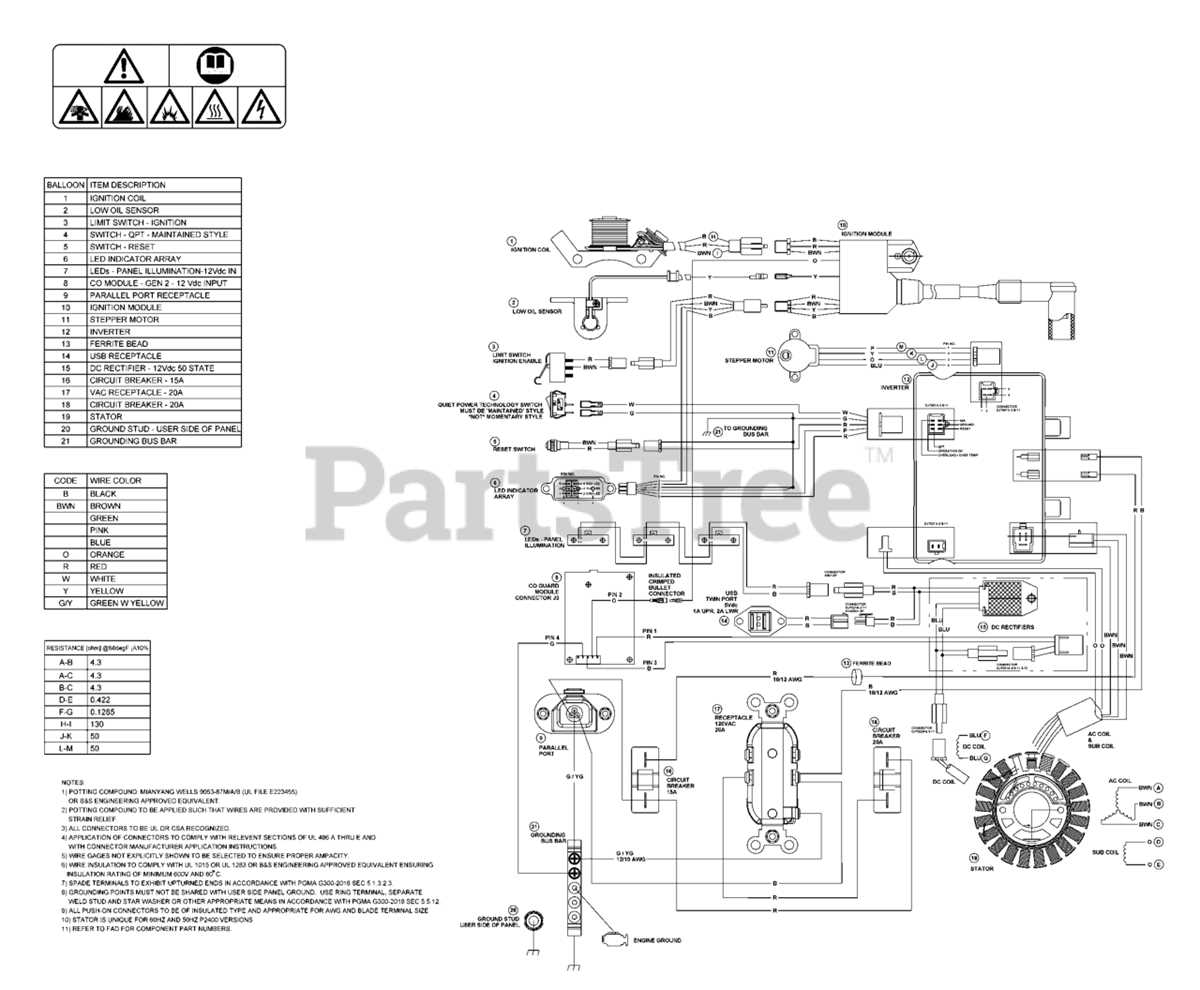
Briggs and Stratton Ignition Coil Wiring Diagram With Magneto and Kill Switch Connections
Mount the armature module next to the flywheel magnet and set the air gap to about 0.010–0.014 inch. The rotating magnet induces current in the primary winding each time it passes the laminated core. A high-voltage pulse then travels through the spark lead directly to the plug terminal. The metal body of the engine serves as the ground return path, so the module base must contact clean metal without paint or corrosion.
A single stop lead exits the armature housing and connects to the engine shutoff control. This conductor normally remains isolated from ground while the engine runs. Closing the stop switch connects the lead to the engine block, which collapses the magnetic field inside the module and prevents high-voltage generation. Keep this control lead separated from the spark cable and secure it with clips so vibration or contact with rotating parts does not damage the insulation.
Ignition Coil Mounting and Air Gap Adjustment on Briggs and Stratton Flywheel Magnet
Set the armature module gap between the flywheel magnet and the laminated core to 0.010–0.014 inch. Rotate the flywheel until the magnet aligns with the armature legs, place a feeler gauge or thin card between them, then tighten the mounting bolts while holding the module flat against the gauge.
Follow this installation sequence:
- Rotate the flywheel until the magnet faces the armature legs
- Insert a 0.010–0.014 inch gauge or a thin business card between magnet and module
- Loosen mounting screws slightly
- Allow the magnet to pull the module toward the flywheel
- Tighten the screws while the gauge remains in place
- Rotate the flywheel once to confirm no contact occurs
Mount the module on clean metal surfaces. Paint, rust, or oil between the module base and engine block reduces electrical grounding and weakens spark generation. Lightly sand the mounting pad if corrosion is present before installing the fasteners.
Check the spark lead orientation after installation. Route the high-voltage cable away from the rotating flywheel, starter cup, and sharp metal edges. Secure it with clips so vibration does not loosen the connection at the plug cap.
Incorrect gap spacing often causes weak spark or no spark. A gap wider than about 0.015 inch reduces magnetic coupling, while a gap smaller than 0.008 inch risks contact between the rotating magnet and armature laminations.