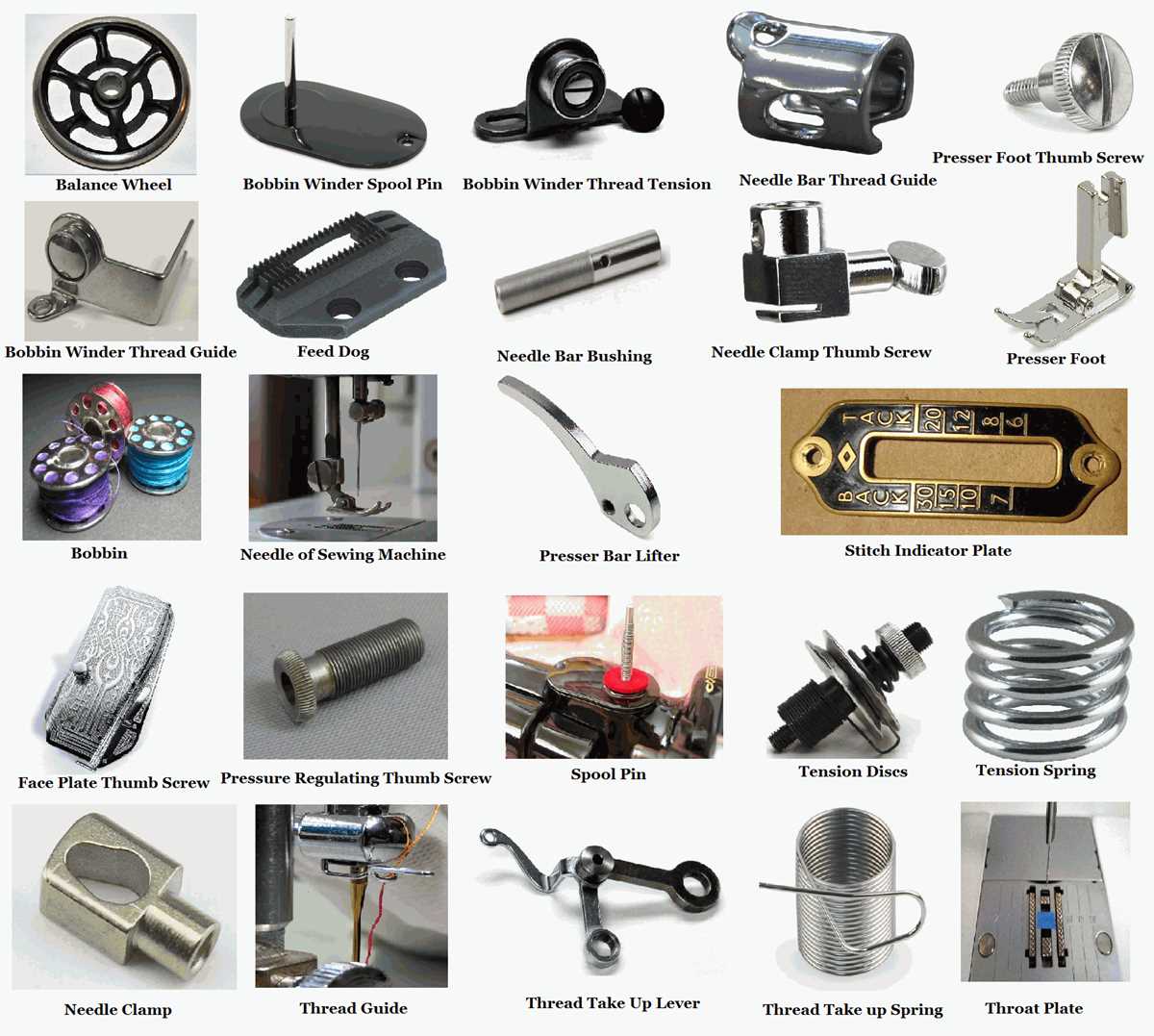
To maintain optimal functionality, it’s vital to understand the individual elements that make up your equipment. Each component plays a specific role in the overall operation, and identifying these parts can save you time and money in repairs.
Regular maintenance starts with knowing what each part does and how to troubleshoot common issues. Key components such as the needle bar, bobbin case, and tension discs must be cleaned and adjusted periodically. Overlooking these parts can lead to poor stitch quality or operational failure.
For more advanced repairs, having a clear visual reference of the individual components allows you to pinpoint exactly where malfunctions occur. Knowing how each part connects and works in unison helps in reassembly, especially after cleaning or replacing worn-out components.
Components Breakdown for Efficient Operation
Understanding the function and placement of each element within the setup is key to smooth operation. Here’s a breakdown of the major components:
- Needle Bar: Holds and moves the needle up and down, creating the stitch.
- Feed Dogs: Move the fabric through the mechanism while the stitching is being formed.
- Bobbin Case: Holds the bobbin and ensures the proper formation of the lower stitch.
- Tension Discs: Regulate the tension of the top thread for balanced stitches.
- Spool Pin: Holds the thread spool, ensuring continuous thread supply.
- Foot Pedal: Controls the speed of operation, allowing the user to start, stop, and adjust the speed of stitching.
- Presser Foot: Keeps the fabric in place as the needle stitches through it.
- Throat Plate: Covers the area around the needle, preventing the fabric from getting caught and ensuring smooth stitching.
- Stitch Selector: Allows the user to choose between different stitch types and patterns.
Each of these elements works together to form a precise and efficient stitching process. Regular cleaning and maintenance of these parts will ensure that the setup continues to perform optimally for longer periods.
Identifying the Key Elements for Maintenance
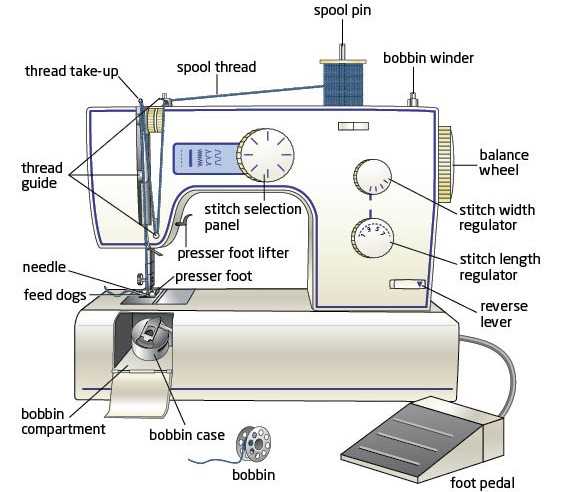
Regular maintenance requires knowing which components need attention. Below are the critical elements to inspect for proper upkeep:
- Needle: Inspect for wear or bending. A damaged needle can lead to poor stitching quality or damage to fabric.
- Thread Tension Mechanism: Ensure that the tension discs are clean and not jammed. Improper tension affects stitch consistency.
- Feed Dogs: Clean the feed dogs regularly to prevent fabric from snagging or uneven feeding.
- Bobbin Area: Keep the bobbin area free of lint and debris, as this can affect thread movement and cause jamming.
- Presser Foot: Ensure the presser foot is properly attached and functioning smoothly. Check for blockages or damage that may interfere with its movement.
- Foot Pedal: Inspect for responsiveness. A sticky or unresponsive pedal can lead to uneven stitching speeds.
- Spool Pin: Make sure the spool pin is secure and functions properly. A loose spool pin can cause thread tangling.
- Stitch Selector: Check that the stitch selector moves easily and aligns with your chosen settings.
- Throat Plate: Regularly check for scratches or build-up of thread remnants that may affect fabric movement.
By focusing on these elements, you can maintain optimal performance and extend the life of your setup. Regular cleaning, lubrication, and timely replacement of worn components will prevent unexpected breakdowns and improve overall stitching quality.
How to Troubleshoot Common Issues with Sewing Components
If you encounter issues with your setup, follow these steps to identify and resolve common problems:
- Skipped Stitches: If stitches are skipped, check the needle. It may be bent or dull. Replace with a new needle suitable for your fabric. Additionally, ensure the thread tension is correctly set and the needle is inserted correctly.
- Jammed Thread: A jam often occurs when the bobbin area is dirty. Clean the bobbin case and surrounding area to remove lint or thread remnants. Verify the bobbin is wound evenly and inserted properly.
- Uneven Stitching: This is commonly caused by improper tension settings. Adjust the upper and lower tension dials to balance the stitch formation. If the issue persists, check that the feed dogs are clean and not obstructed.
- Fabric Sticking: If fabric doesn’t move smoothly, inspect the feed dogs. They may be clogged with fabric or thread. Clean the area, ensuring the dogs are free to move. If the issue remains, check the presser foot pressure and adjust accordingly.
- Thread Breaking: If the thread breaks frequently, check the thread spool. Ensure it is wound correctly and the thread is not tangled. Also, inspect the needle for damage or the wrong size, which could cause excessive tension.
- Uneven Foot Pressure: If the presser foot doesn’t apply even pressure, the foot may need adjustment. Check for debris under the foot or its mechanism. If worn, replace it with a new one for even pressure during stitching.
By systematically checking these components and making necessary adjustments, many common issues can be resolved without professional assistance. Regular cleaning and proper maintenance will help prevent problems in the future.
How to Troubleshoot Common Issues with Sewing Components
If you encounter issues with your setup, follow these steps to identify and resolve common problems:
- Skipped Stitches: If stitches are skipped, check the needle. It may be bent or dull. Replace with a new needle suitable for your fabric. Additionally, ensure the thread tension is correctly set and the needle is inserted correctly.
- Jammed Thread: A jam often occurs when the bobbin area is dirty. Clean the bobbin case and surrounding area to remove lint or thread remnants. Verify the bobbin is wound evenly and inserted properly.
- Uneven Stitching: This is commonly caused by improper tension settings. Adjust the upper and lower tension dials to balance the stitch formation. If the issue persists, check that the feed dogs are clean and not obstructed.
- Fabric Sticking: If fabric doesn’t move smoothly, inspect the feed dogs. They may be clogged with fabric or thread. Clean the area, ensuring the dogs are free to move. If the issue remains, check the presser foot pressure and adjust accordingly.
- Thread Breaking: If the thread breaks frequently, check the thread spool. Ensure it is wound correctly and the thread is not tangled. Also, inspect the needle for damage or the wrong size, which could cause excessive tension.
- Uneven Foot Pressure: If the presser foot doesn’t apply even pressure, the foot may need adjustment. Check for debris under the foot or its mechanism. If worn, replace it with a new one for even pressure during stitching.
By systematically checking these components and making necessary adjustments, many common issues can be resolved without professional assistance. Regular cleaning and proper maintenance will help prevent problems in the future.