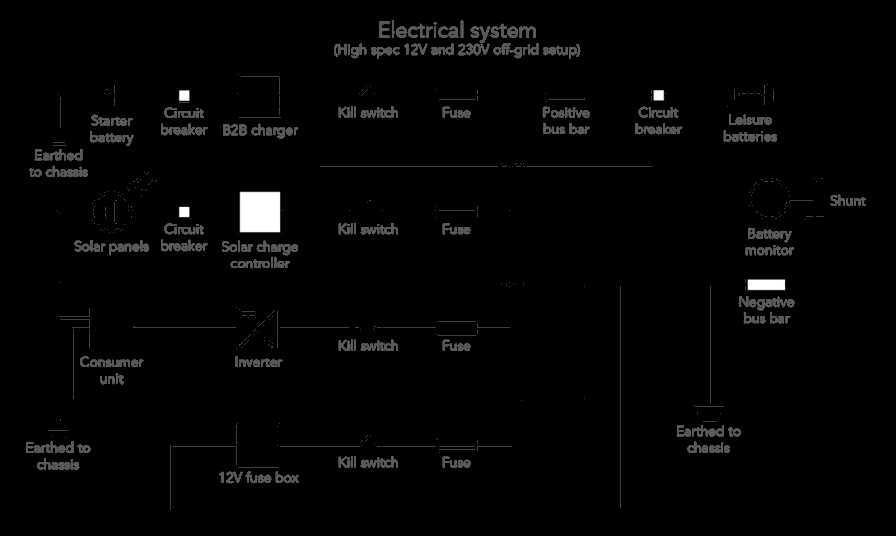
Use a 12-volt distribution layout with a single leisure battery, fused branch lines, and a compact control panel; this arrangement suits most small recreational vans and avoids unnecessary complexity. Place the battery within 1–1.5 meters of the main fuse block to reduce voltage drop. Copper conductors rated at 10–16 AWG for lighting and accessory circuits maintain stable current delivery for LED fixtures, ventilation fans, USB outlets, and a small water pump.
Install a main protective fuse within 15–20 cm of the battery positive terminal. A rating between 40A and 60A works for many compact vehicle systems supplying lights, charging ports, and a refrigerator under 80W. From this point, route a thicker positive lead to a distribution block. Each branch line should include its own fuse: 5A for LED lighting, 10A for ventilation equipment, 15A for a compressor fridge. This separation prevents a single fault from disabling every device.
Ground return paths should connect to a central negative busbar rather than scattered chassis points. Attach the busbar to the vehicle frame using a short 8–10 AWG conductor and a clean metal contact surface. A star-style ground arrangement reduces interference and voltage fluctuations. For circuits longer than three meters, choose thicker copper leads to keep voltage loss below 3%, which maintains steady brightness and proper motor operation.
Include a battery monitor and a 20–30A DC charging line from the alternator through an isolator relay. This allows the battery to recharge during driving while protecting the starter battery during overnight stops. Label each conductor and fuse position clearly; clear identification speeds troubleshooting and prevents incorrect replacements during maintenance.
Basic Electrical Layout for a Van-Based Living Setup
Use a 12 V battery bank connected through a 40–60 A fuse block placed within 20 cm of the positive terminal; this short distance reduces fire risk during a short circuit. Route the main positive line (6 AWG for loads up to 50 A) to a distribution panel with individual fused outputs: 10 A for LED lighting, 15 A for a compressor refrigerator, 5 A for USB outlets, and 20 A for a roof fan. Ground each device to a shared negative bus bar attached directly to the battery’s negative pole using the same gauge cable as the supply line. A solar controller rated around 20 A can link photovoltaic panels to the battery, with panel leads typically using 10 AWG conductors. Add a battery monitor shunt between the negative terminal and the bus bar so that current flow from every device passes through the sensor, enabling precise charge tracking.
Load Separation and Protection
Divide circuits by function: lighting, ventilation, refrigeration, and charging ports should each run on their own fused line rather than sharing a branch. This arrangement isolates faults and reduces voltage drop under load. For runs longer than 4 m, upgrade conductor size one step (for example from 12 AWG to 10 AWG) to maintain voltage loss below 3 %. Install a master cutoff switch rated at least 100 A between the battery and the distribution block; it allows quick power isolation during maintenance. Route cables through flexible conduit and secure them every 30–40 cm with insulated clamps so vibration from road travel cannot loosen terminals or damage insulation.
How to Connect a Leisure Battery, Fuse Box, and 12V Appliances in a Basic Camper Electrical Layout
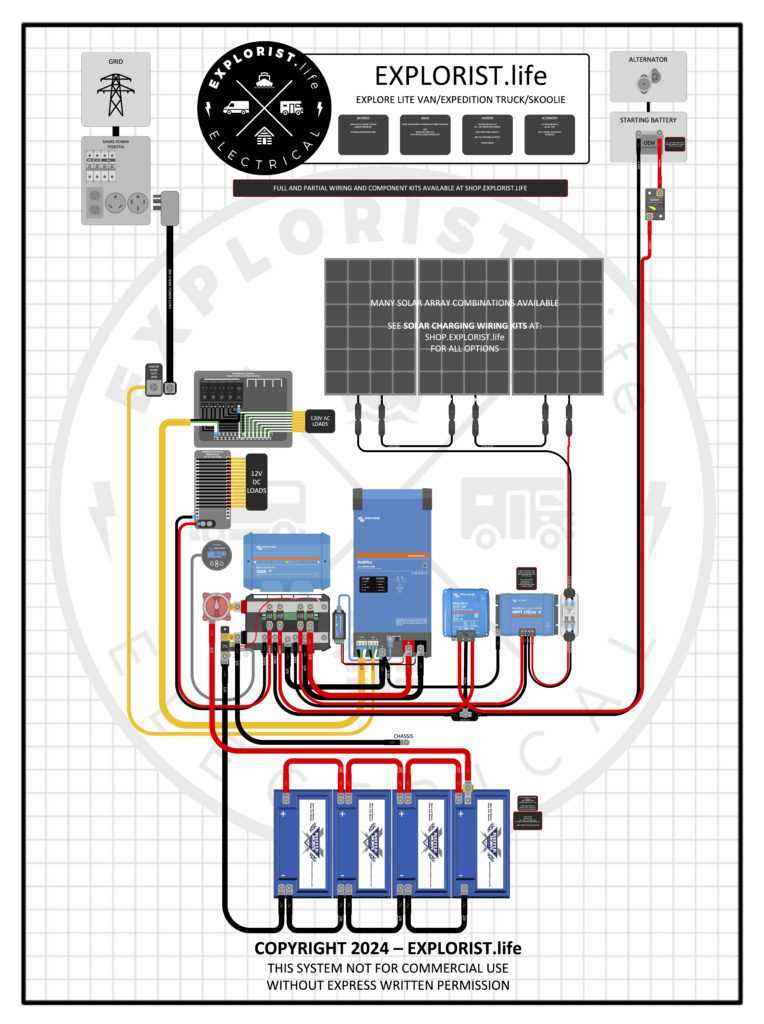
Place the leisure battery as close as possible to the power distribution block and connect the positive terminal through a main fuse rated between 40A and 80A depending on expected load. The fuse must sit within 20–30 cm of the battery terminal to protect the cable from short circuits. Use copper cable with a cross-section of 6–10 mm² for the primary feed line; thinner conductors increase voltage drop and heat buildup. Attach the negative terminal directly to a ground busbar rather than distributing ground wires individually.
The distribution block divides battery power into separate protected circuits for lights, water pump, refrigerator fan, USB sockets, and ventilation. Each circuit receives its own blade fuse sized slightly above normal operating current. For example, LED interior lighting typically draws 1–3A, while a pressure water pump may require 7–10A during operation.
Typical Fuse Ratings for 12V Circuits
- LED ceiling lights – 3A fuse
- Roof ventilation fan – 5A fuse
- Water pressure pump – 10A fuse
- 12V compressor fridge control circuit – 15A fuse
- USB charging outlets – 5A fuse
Route a single heavy positive cable from the battery fuse to the distribution block input terminal. From that point, each outgoing circuit uses smaller conductors sized according to load and cable length. For runs under 3 meters, 1.5 mm² works for lighting circuits, while pumps and sockets usually require 2.5 mm². Longer runs may require thicker cable to keep voltage drop under 3%.
Grounding must remain centralized. Install a negative busbar near the distribution block and connect it to the battery negative terminal using the same gauge as the main positive feed. Every appliance returns to this busbar instead of attaching to the vehicle body randomly. A consistent ground path prevents unstable voltage and eliminates troubleshooting confusion later.
Connection Order
- Install battery with terminal protection and mounting bracket.
- Add main fuse holder on the positive cable.
- Connect the main positive line to the distribution block.
- Install the negative busbar and connect it to battery negative.
- Run individual circuits from the distribution block to each device.
- Attach ground wires from each device to the busbar.
- Insert correct fuse values only after verifying polarity.
Before energizing the system, check resistance between positive and negative lines using a multimeter; a near-zero reading indicates a short circuit somewhere in the network. After confirmation, insert fuses one by one and test each circuit individually. This staged activation allows faults to be isolated without risking damage to the battery or connected equipment.