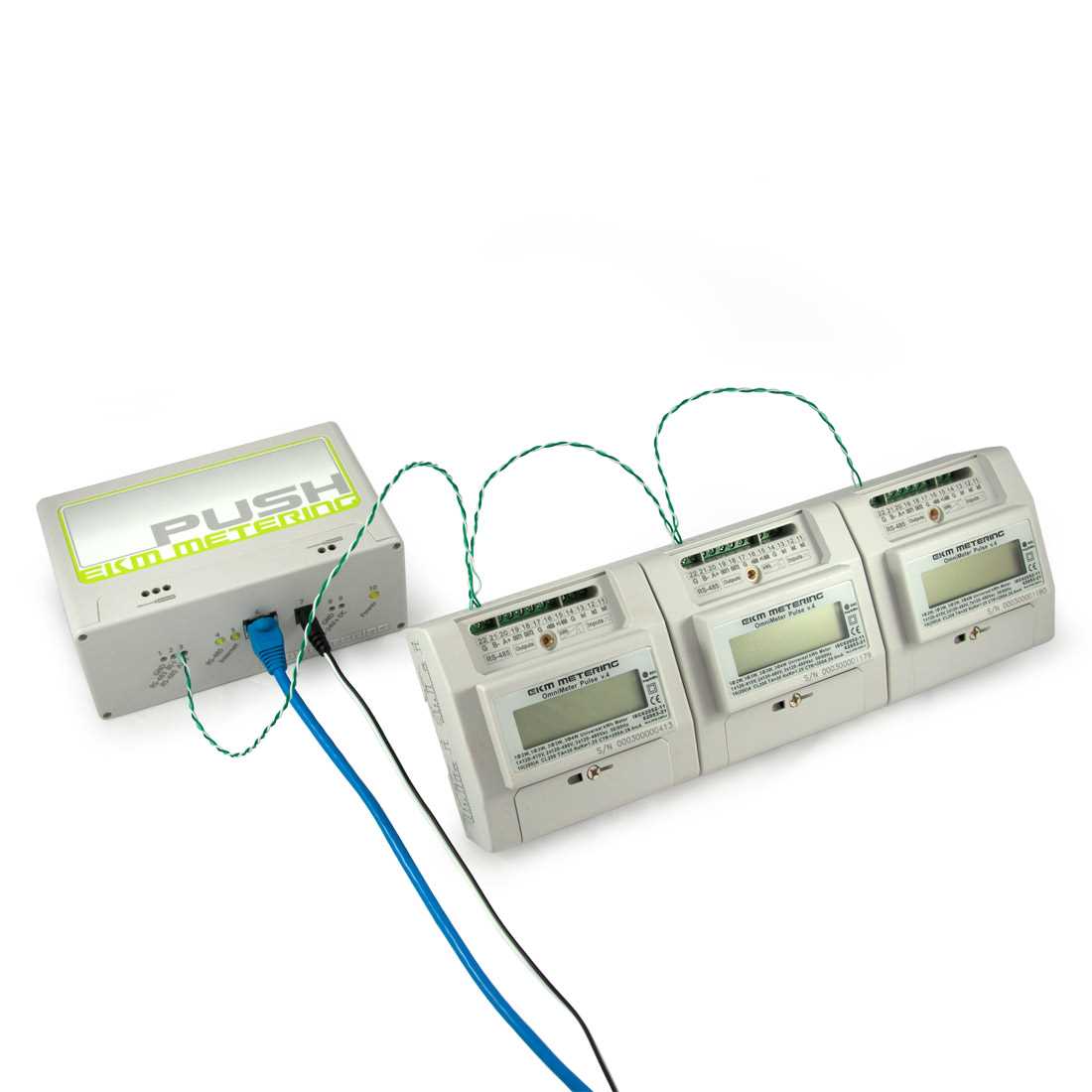
Connect the differential pair as a single linear bus and place a 120-ohm termination resistor at both physical ends of the line. This layout keeps signal reflections low and allows stable data exchange between controllers, sensors, and industrial modules across long distances. Branch connections longer than 30 cm often cause noise and packet loss, so devices should attach directly to the main pair.
The interface uses differential signaling across two conductors labeled A and B. Data is transmitted as the voltage difference between them rather than a reference to ground. Typical transceivers accept a common-mode range from −7 V to +12 V, which allows communication across cables reaching 1200 meters at low data rates such as 9.6 kbps. Higher speeds require shorter runs; for example, 1 Mbps usually limits the line to about 100 meters.
Choose a twisted pair cable with characteristic impedance close to 120 ohms. Shielded variants reduce interference in factories with motors, drives, and switching power supplies. Keep polarity consistent across all nodes: A connects to A, B connects to B. Reversed polarity does not damage hardware but prevents devices from reading the signal correctly, which leads to silent communication failures.
Many networks also include bias resistors that hold the differential pair in a known idle state while no device is transmitting. A common setup uses a pull-up resistor on line B and a pull-down resistor on line A, each between 560 and 680 ohms. This prevents floating signals that might trigger false data frames on receivers.
2 Wire RS485 Wiring Diagram With A and B Line Connections Termination and Network Layout
Connect all devices along a single linear bus using the differential pair labeled A and B. Maintain the same polarity from the first node to the last: terminal A on one device connects to A on the next, and the same rule applies to B. Crossing the pair prevents receivers from detecting the voltage difference that represents data frames.
Install a 120-ohm termination resistor between the A and B conductors at both physical ends of the bus. These resistors match the typical characteristic impedance of twisted pair cabling and suppress reflections created when signal edges reach the end of the line. Without proper termination, reflections travel back along the pair and corrupt bits during high-speed communication.
Use a daisy-chain network layout rather than star connections. Each device should attach directly along the main transmission path with the shortest possible drop lead. Stub lengths longer than about 30 cm increase capacitance and distort differential signals, especially above 115200 bps.
Choose twisted pair cable rated near 120 ohms impedance and keep total length consistent with the data rate. A segment around 1200 meters works at low speeds such as 9600 bps, while faster transfers require shorter runs. Shielded cable reduces electromagnetic noise near motors, drives, and switching power supplies.
Add bias resistors on the bus if no device provides them internally. A typical configuration uses a pull-up resistor on line B and a pull-down resistor on line A with values between 560 and 680 ohms connected to the supply rails. This holds the pair in a defined idle state and prevents receivers from reading random transitions while the network is silent.
RS485 A and B Line Connection Scheme for Two Wire Bus Networks
Keep polarity identical across every device: terminal A connects only to A and terminal B only to B along the entire bus. Use twisted pair cable with impedance near 120 ohms and route the pair as a single continuous line passing from node to node. Do not split the path into multiple branches. Each controller, sensor, or PLC module should attach along the same trunk path so that the differential signal remains stable over long distances.
Follow a consistent terminal layout across equipment:
- A terminal → A terminal of the next device
- B terminal → B terminal of the next device
- Optional signal ground → common reference between distant nodes
- Shield connection → grounded at one point only, usually near the master controller
Keep drop connections short and attach devices in sequence along the main pair. Recommended limits for stable communication include:
- Stub length under 30 cm
- Total bus length up to about 1200 meters at 9600 bps
- Up to 32 transceivers on one segment without repeaters
- Termination resistors placed only at the two physical ends of the bus
This layout maintains a stable differential signal and reduces data corruption during transmission.